
What endures as manufacturers change
Mezzaluna
In the 1970s, a 500-watt halogen lamp produced more light than any other domestic light source, with a corresponding amount of heat. It was commonly placed at the top of a floor-lamp stem or mounted on a wall, protected by a glass or sheet-metal shade. In both arrangements, the light direction was fixed.
- Company
- Skipper
- Product
- Mezzaluna, floor lamp, wall and ceiling versions
- Year
- 1974
- Design
- Bruno Gecchelin
- Status
- In production by DCW éditions
The project
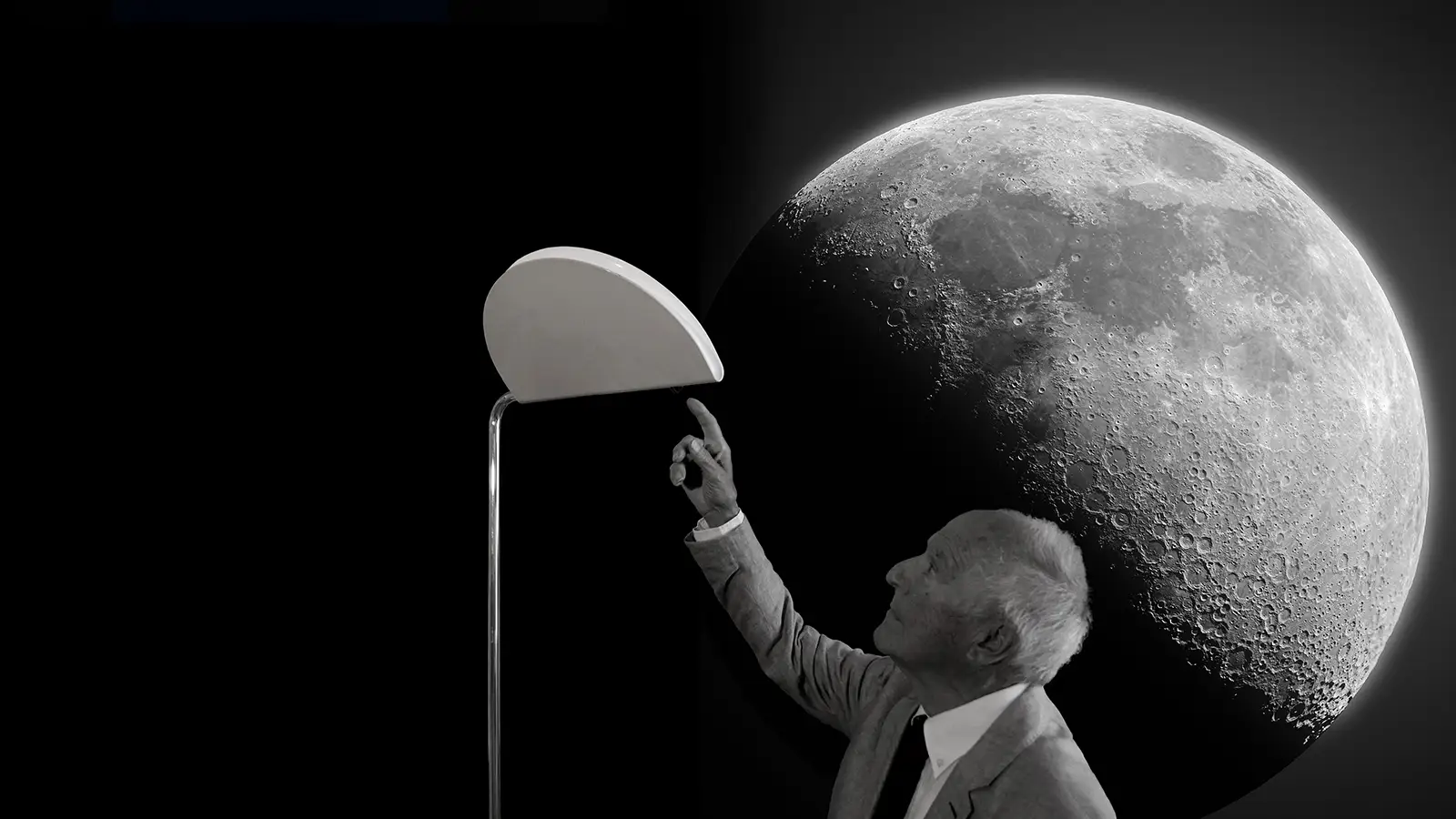
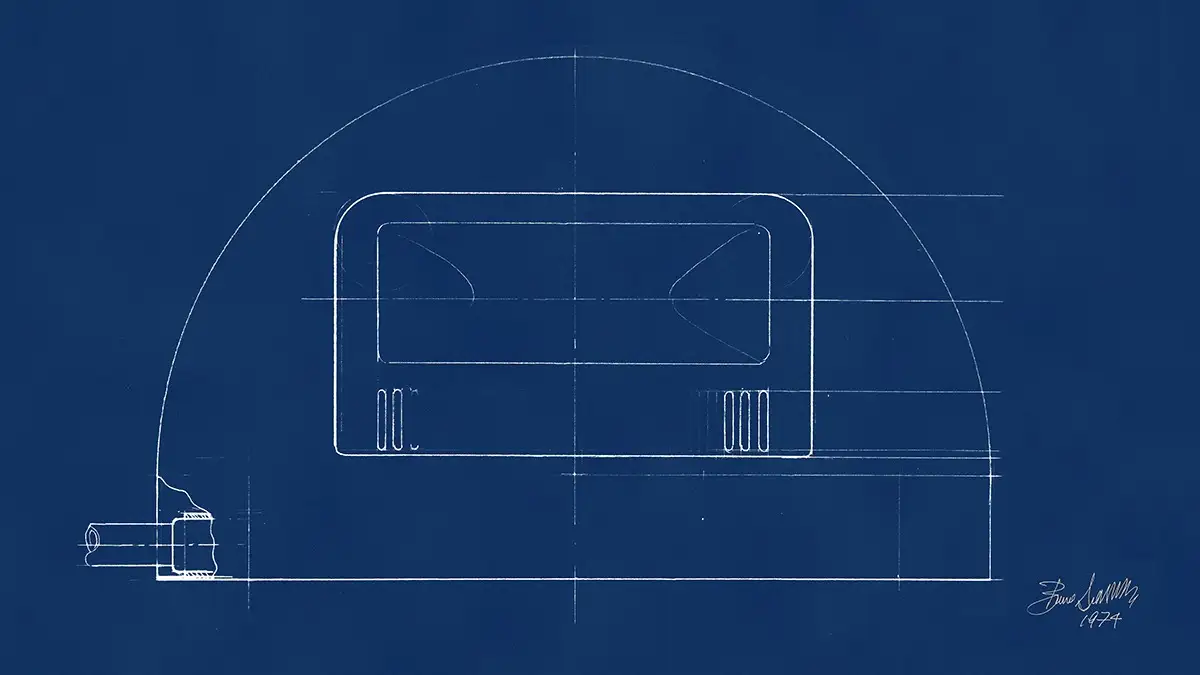
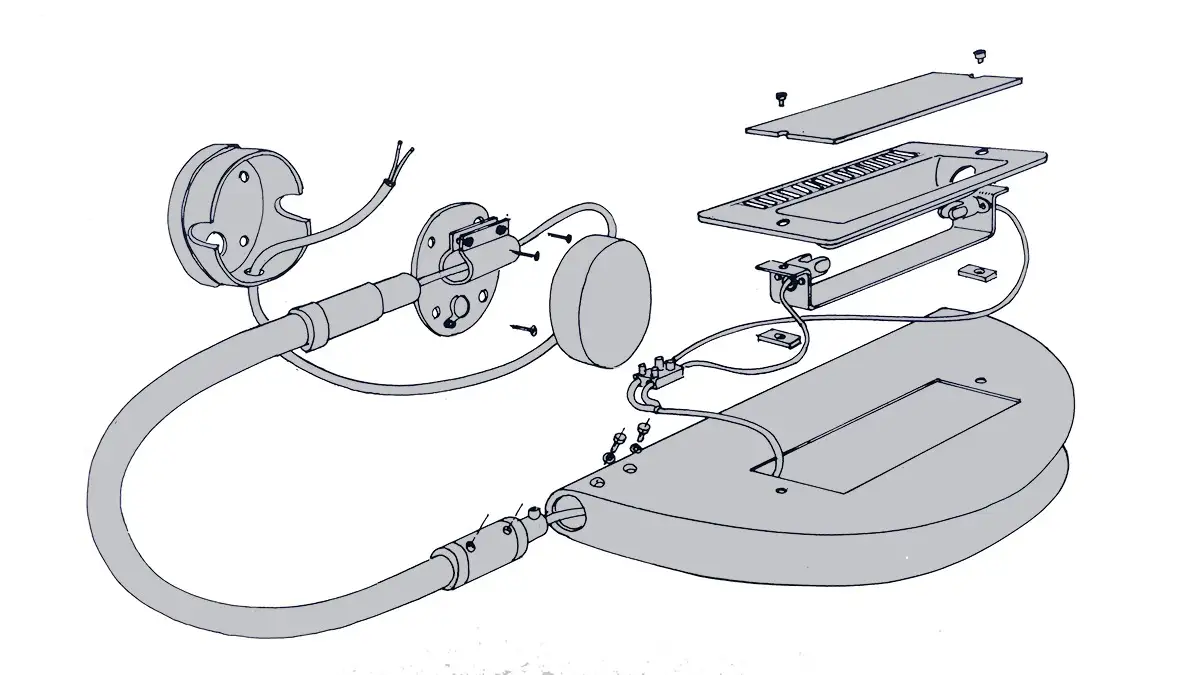
Mezzaluna starts from this thought: if that light could be directed, a floor lamp would stop being an object and become an instrument. But one problem had to be overcome: to direct the head you have to touch it with your hand, and inside it there is a very hot source.
The semicircular sheet-metal head accommodates the lamp holder, bulb, dimmer and aluminium reflector within its depth. Its thickness is kept to a minimum and appears slimmer still thanks to a gently contoured groove running around the curved perimeter. The eye reads the rounded edges rather than the depth, giving the head a blade-like appearance. It is hinged to a vertical stem that bends through ninety degrees, with the bent section forming the horizontal pivot axis.
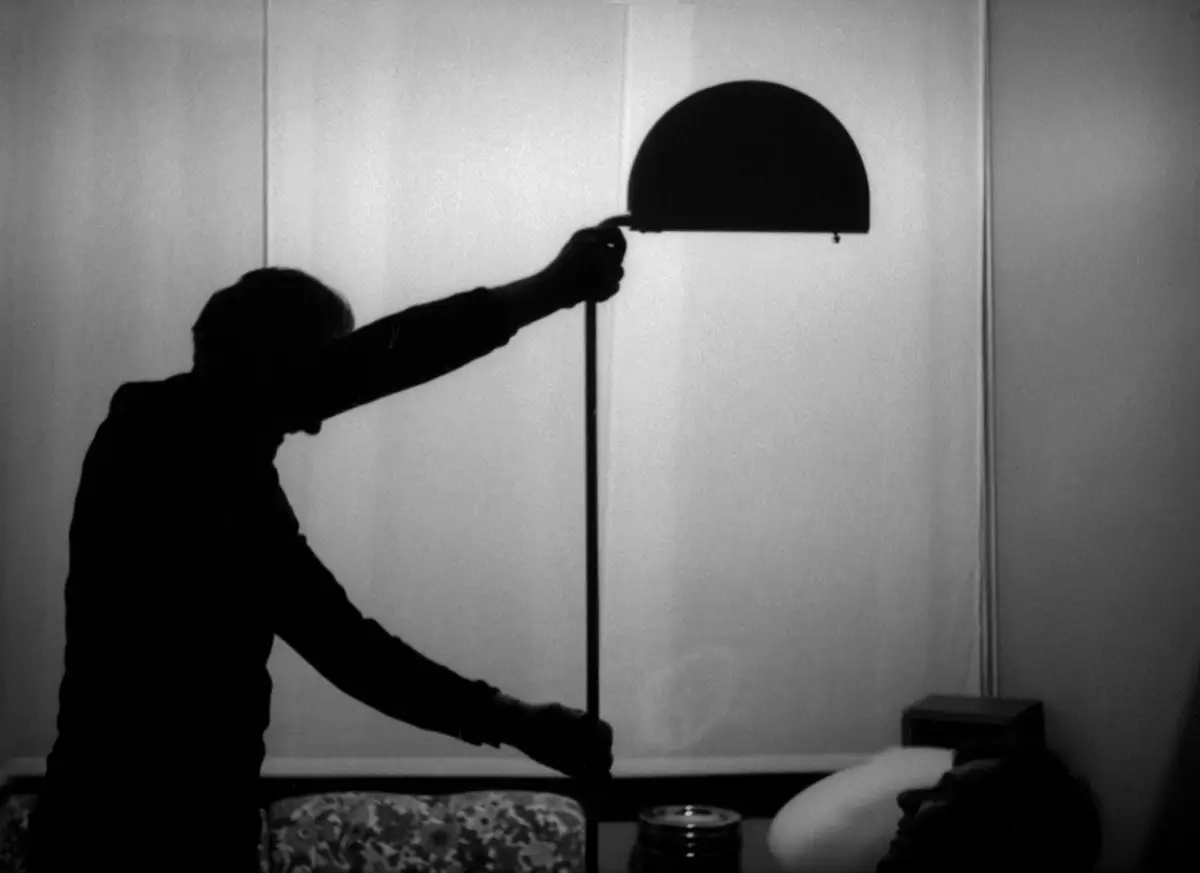
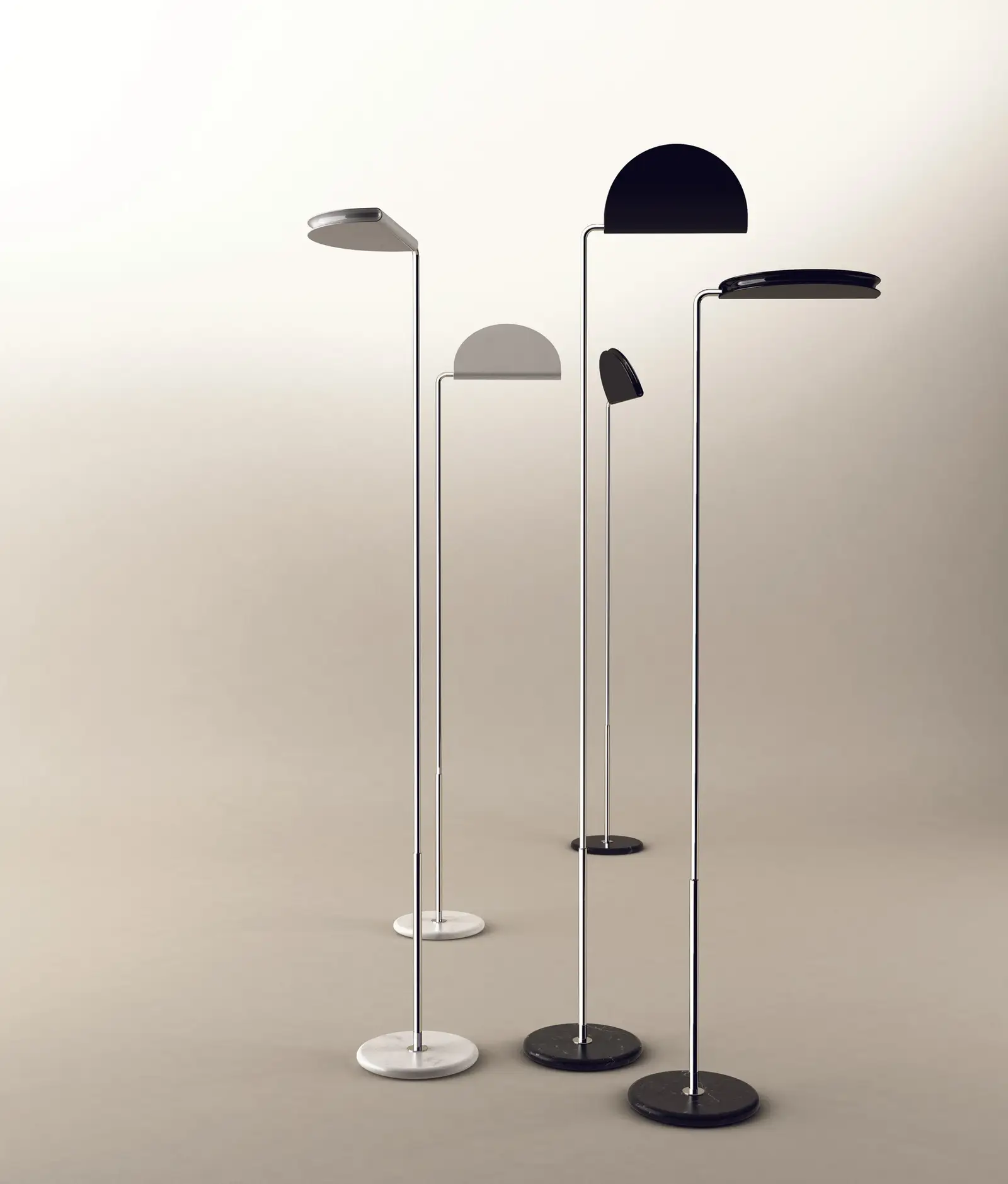
The design offered two functions rarely found together in a floor lamp in 1974. A telescopic stem lets the user adjust the height of the head, while a dimmer controls the light output and sets the atmosphere of the room.
Skipper kept it in the catalogue for many years, then it passed to Blu Italia. In 2005 Ivela came forward, bought the rights to the brand and went on producing some models, changing the construction of the head from welded and painted sheet metal to die-cast aluminium. The source remained the R7s: the LEDs of the time could not reach the light output of the halogen.
Of the floor lamps of the time, only the type remains: a heavy base and a vertical stem. Everything else was rethought around what the user may decide to do, giving more flexibility of use.
The idea came not from domestic lighting but from the photographic sets Bruno Gecchelin knew through his work and his passion for photography. There, lighting is equipment rather than furniture: it can be moved, tilted, adjusted and dimmed. Mezzaluna brought this approach into the home and beyond. Many showrooms would also adopt it for its ability to make spaces feel more welcoming and spacious.
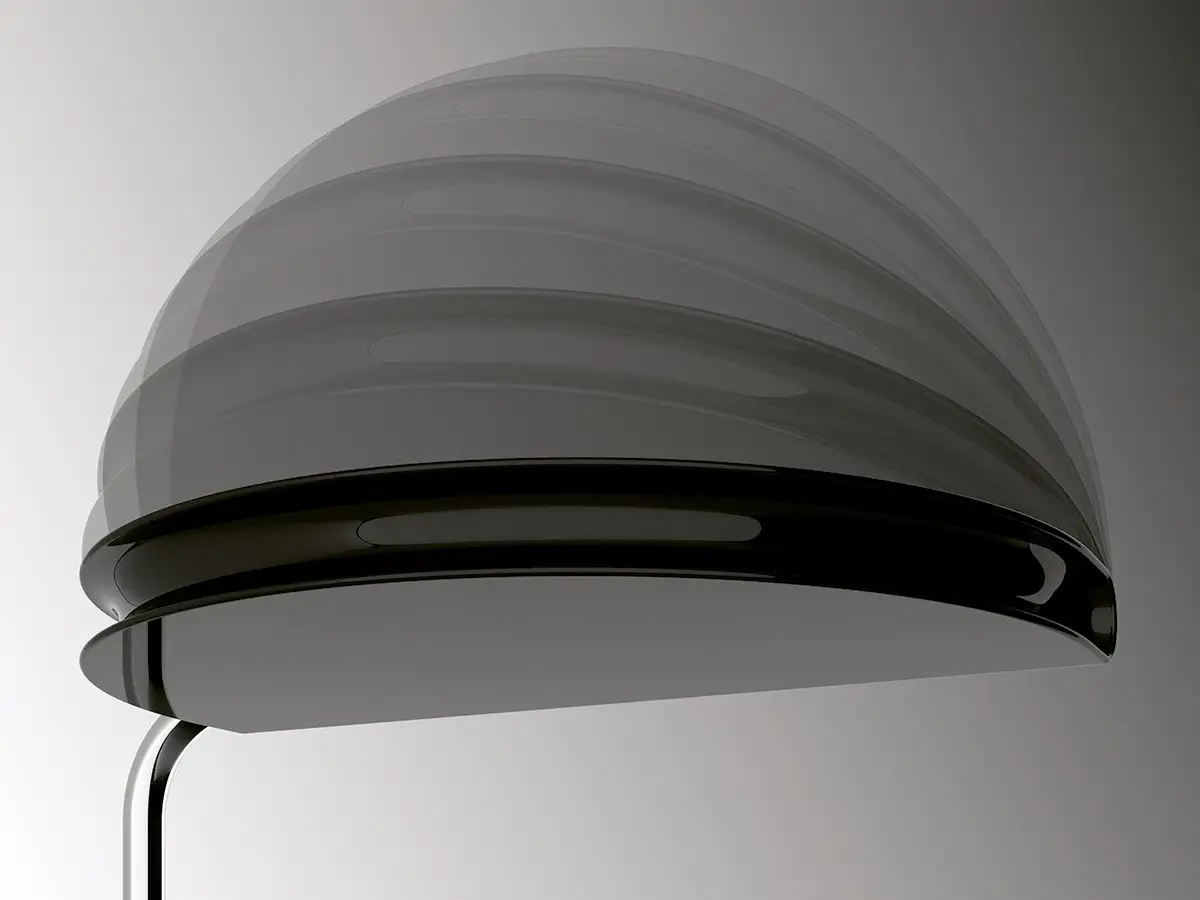
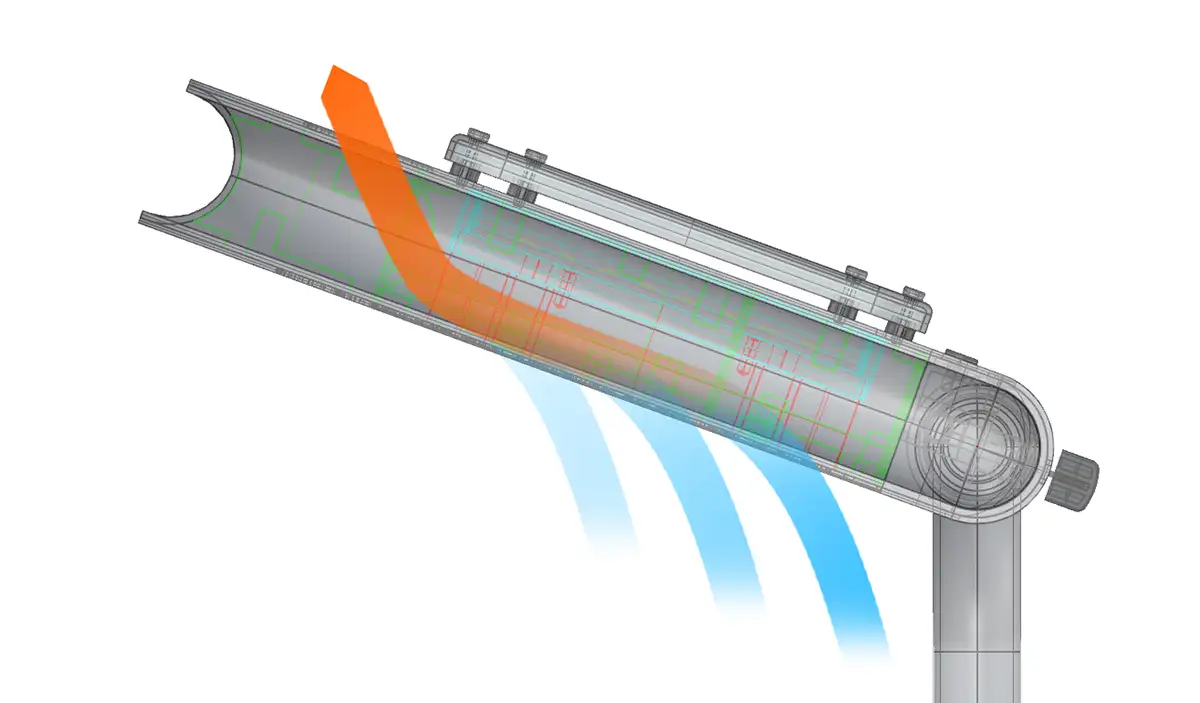
Heat is dissipated through the metal head, which becomes hot but not hot enough to cause burns. Its large outer surface is set well away from the light source, allowing the lamp to be adjusted safely by hand. Mezzaluna became a symbol of flexibility in positioning and use, gaining widespread market appreciation.
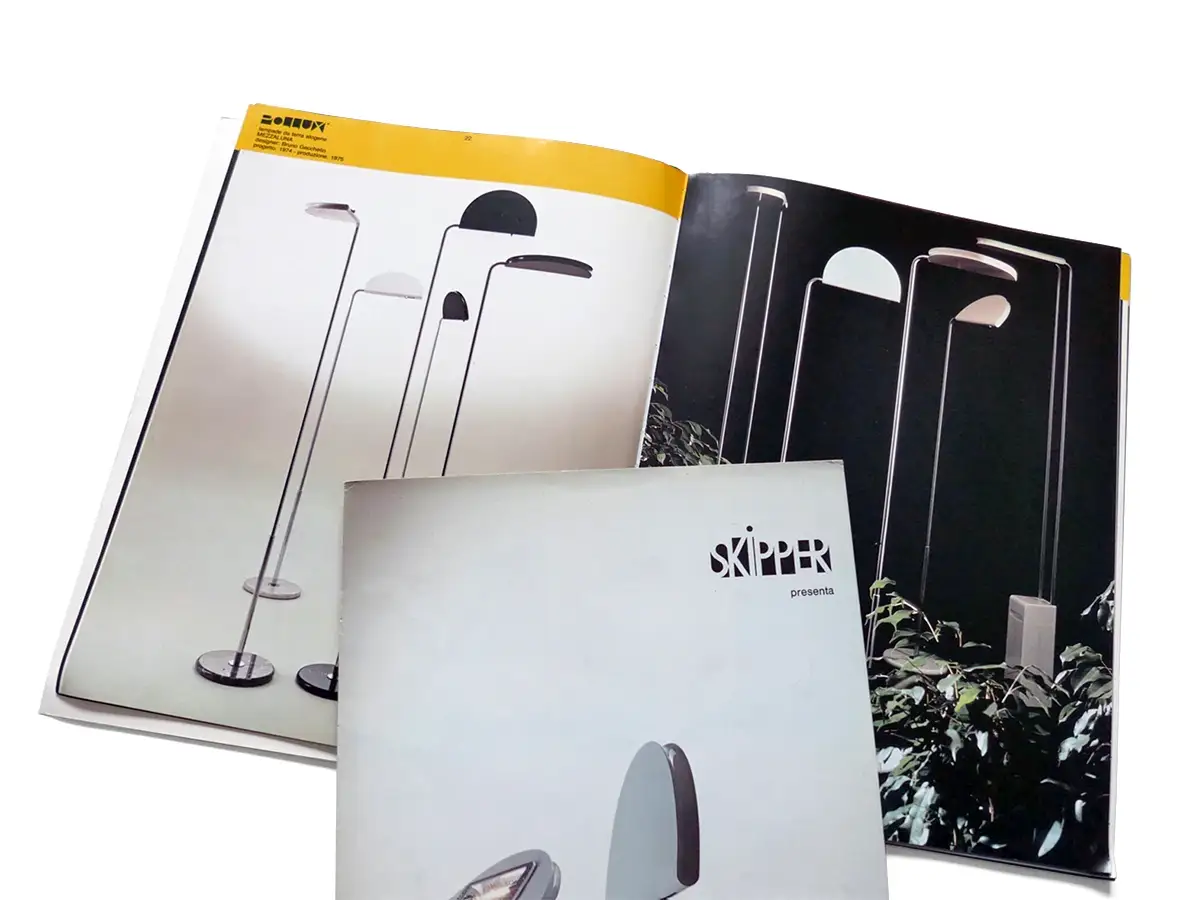
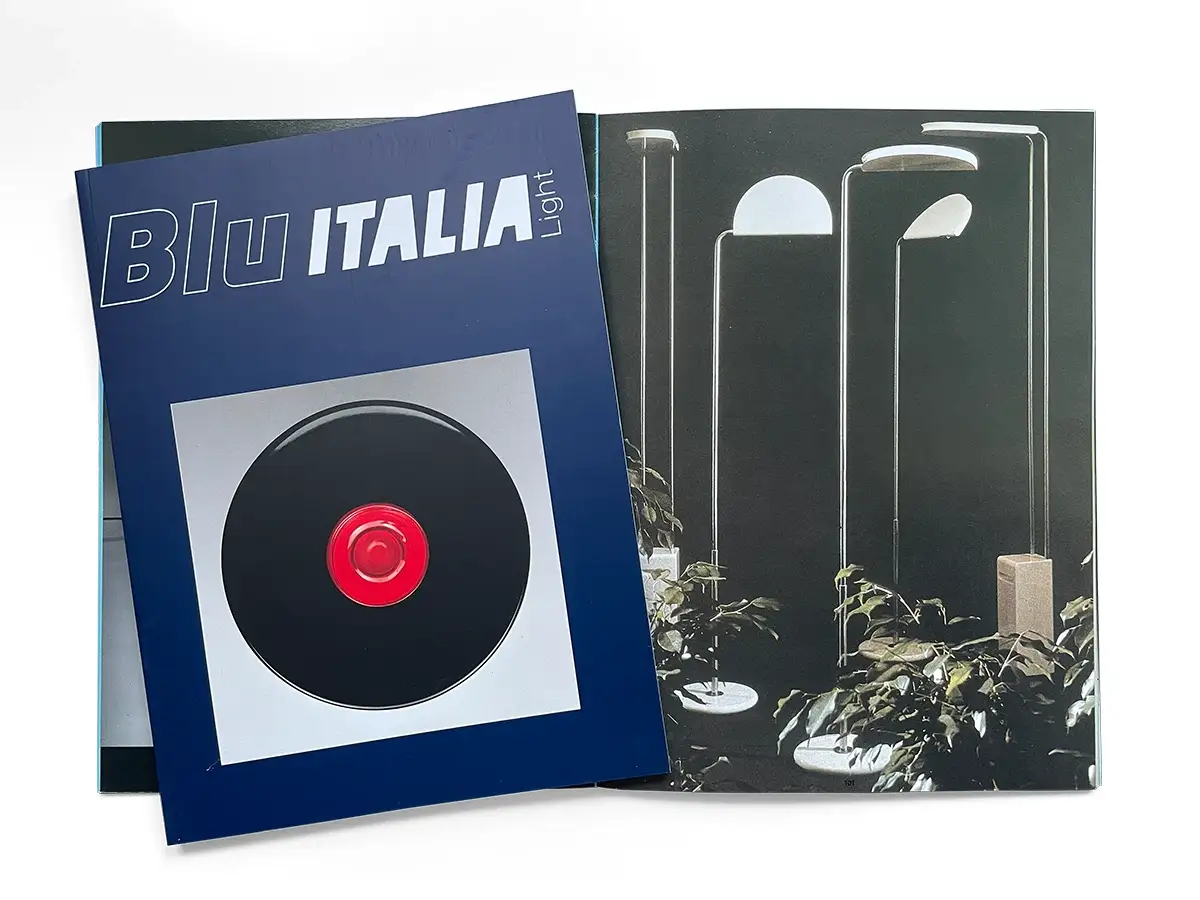
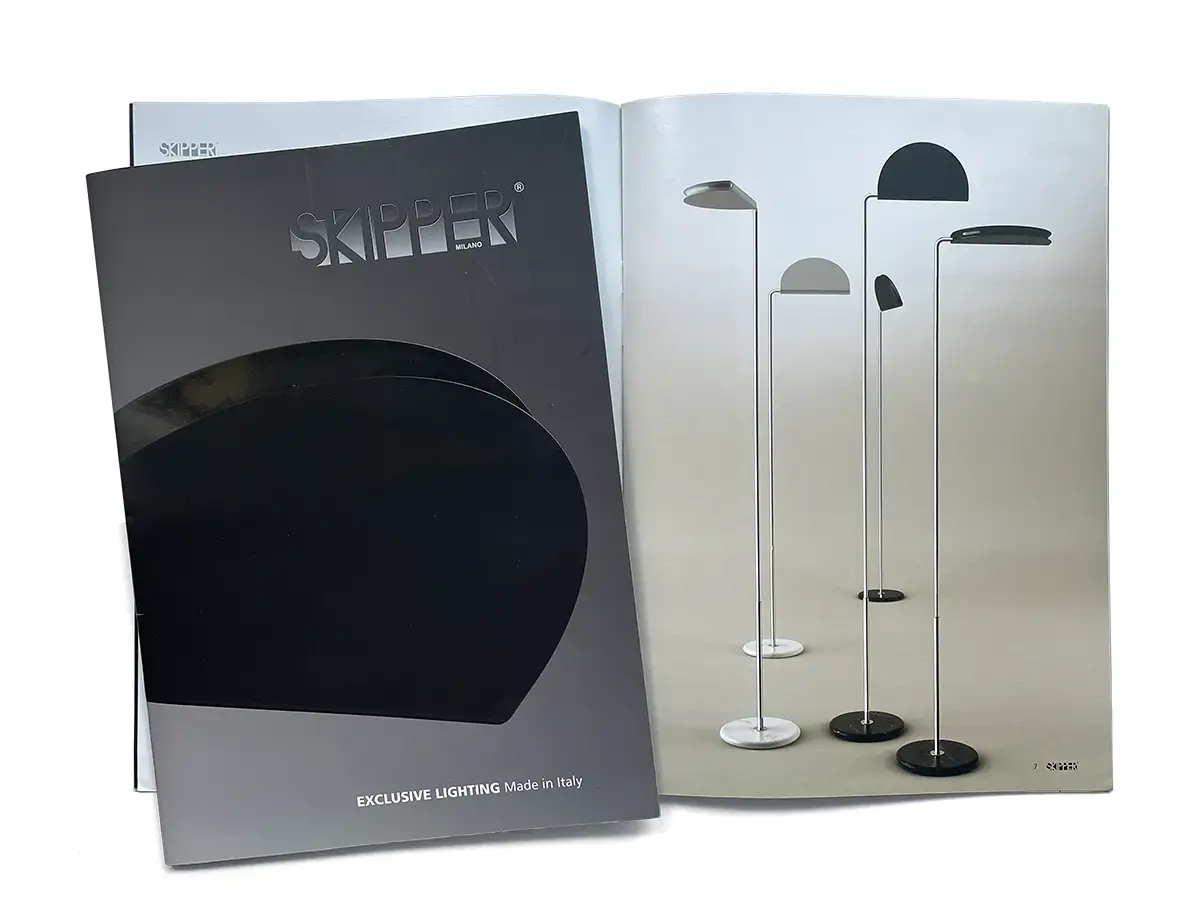
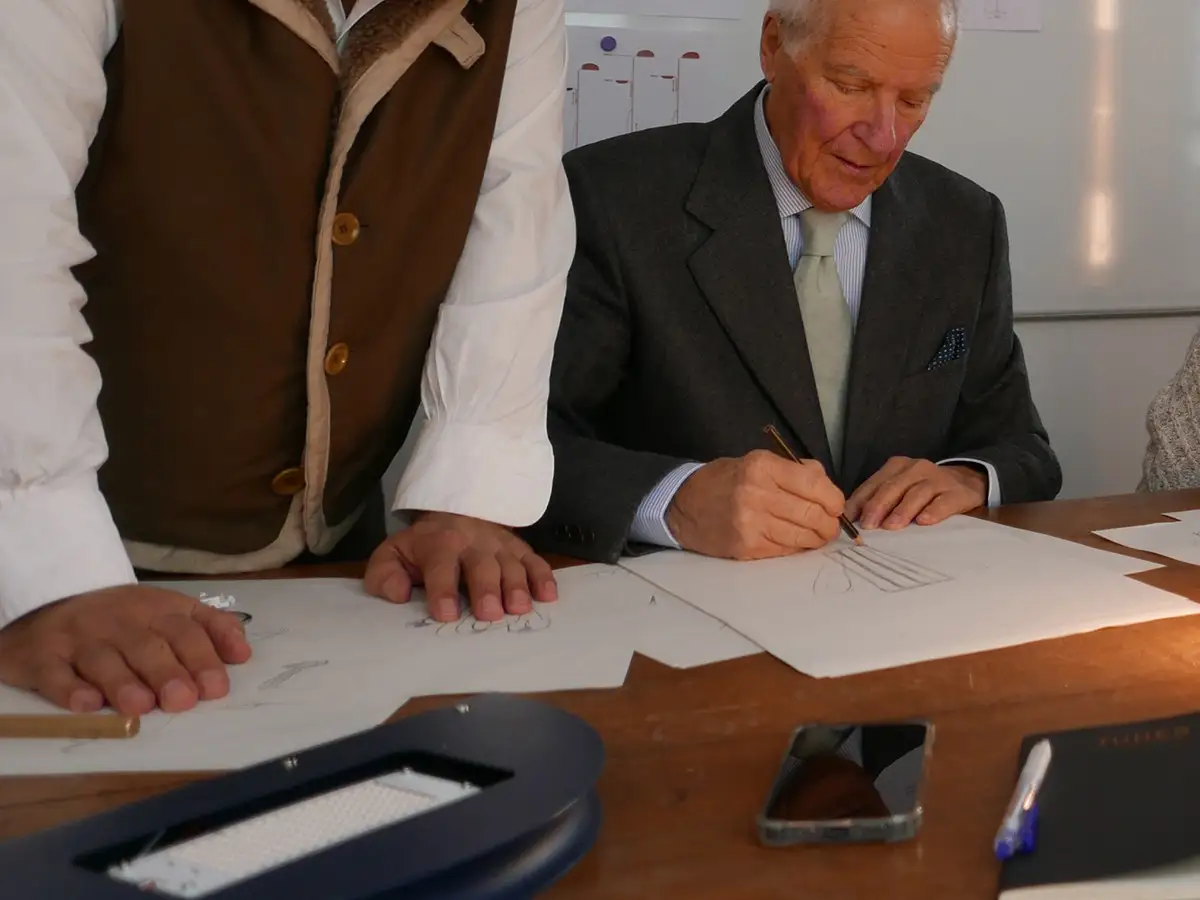
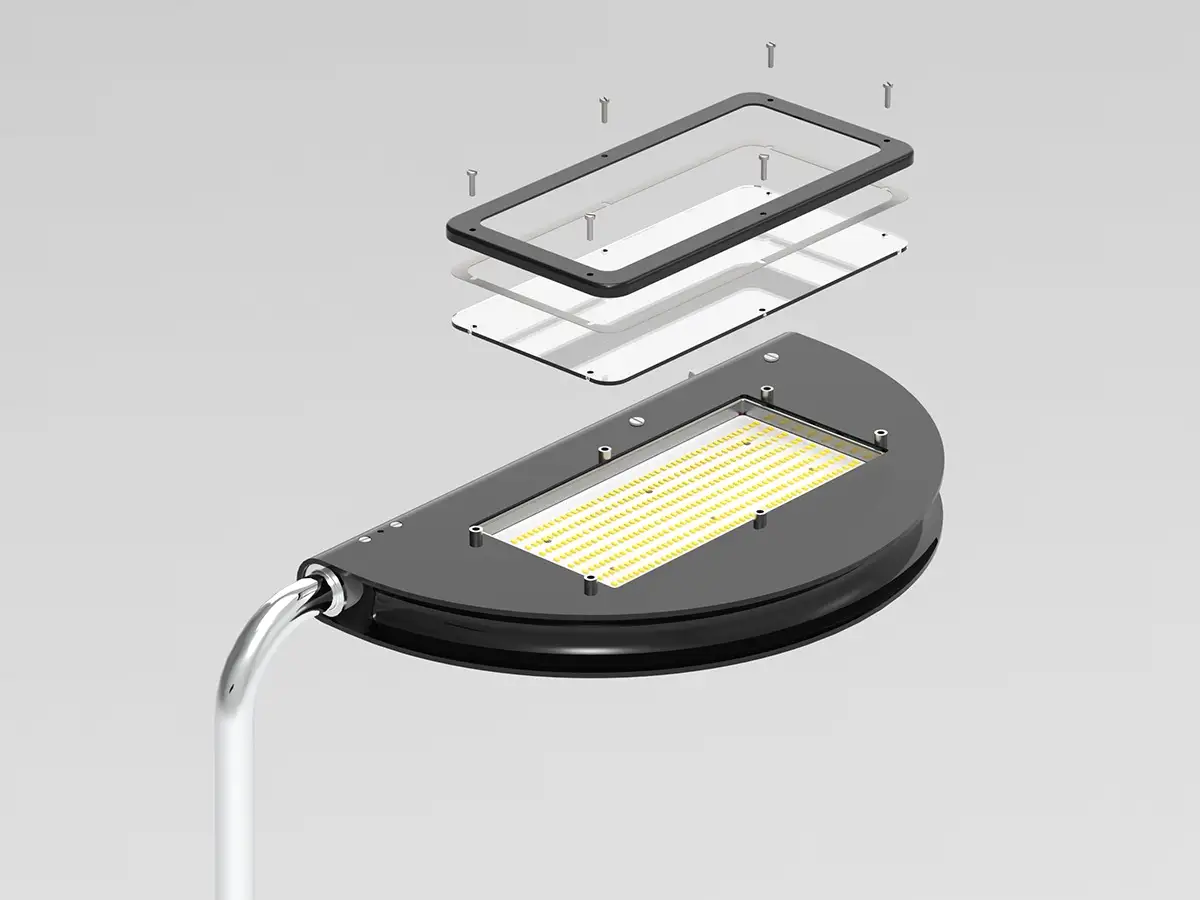
In 2024, DCW éditions acquired the brand and reissued Mezzaluna alone, with a deliberate commitment to the original design. The head is made from welded sheet metal, as it was originally, while the halogen light source has been replaced by a purpose-designed LED module with a dedicated heat sink, delivering equivalent lighting performance at a fraction of the energy consumption.
The two reissues, by Ivela and by DCW éditions, each kept what the other changed. The first kept the source and redid the construction; the second kept the original sheet-metal construction and replaced the source. In both cases, in its form, the lamp stayed the same.
What we learnt
The object’s identity lay neither in its technology nor in its manufacturing process: both could be replaced. It lay in its essential character and what it allowed the user to do — raise it, lower it, tilt it and control its light output. Those four functions have endured through four manufacturers, fifty years and a complete transformation in lighting technology. They are the only aspect of the design that has never changed.