
Technologies borrowed from other sectors
Wing
In the early 1970s, compact halogen bulbs came from automotive lighting. They had replaced conventional incandescent bulbs in headlamps because they delivered much more light within the same space. Tiny, powerful and extremely hot.
- Company
- Oluce
- Product
- Wing, halogen table lamp
- Year
- 1973
- Design
- Bruno Gecchelin
- Status
- Discontinued
The project
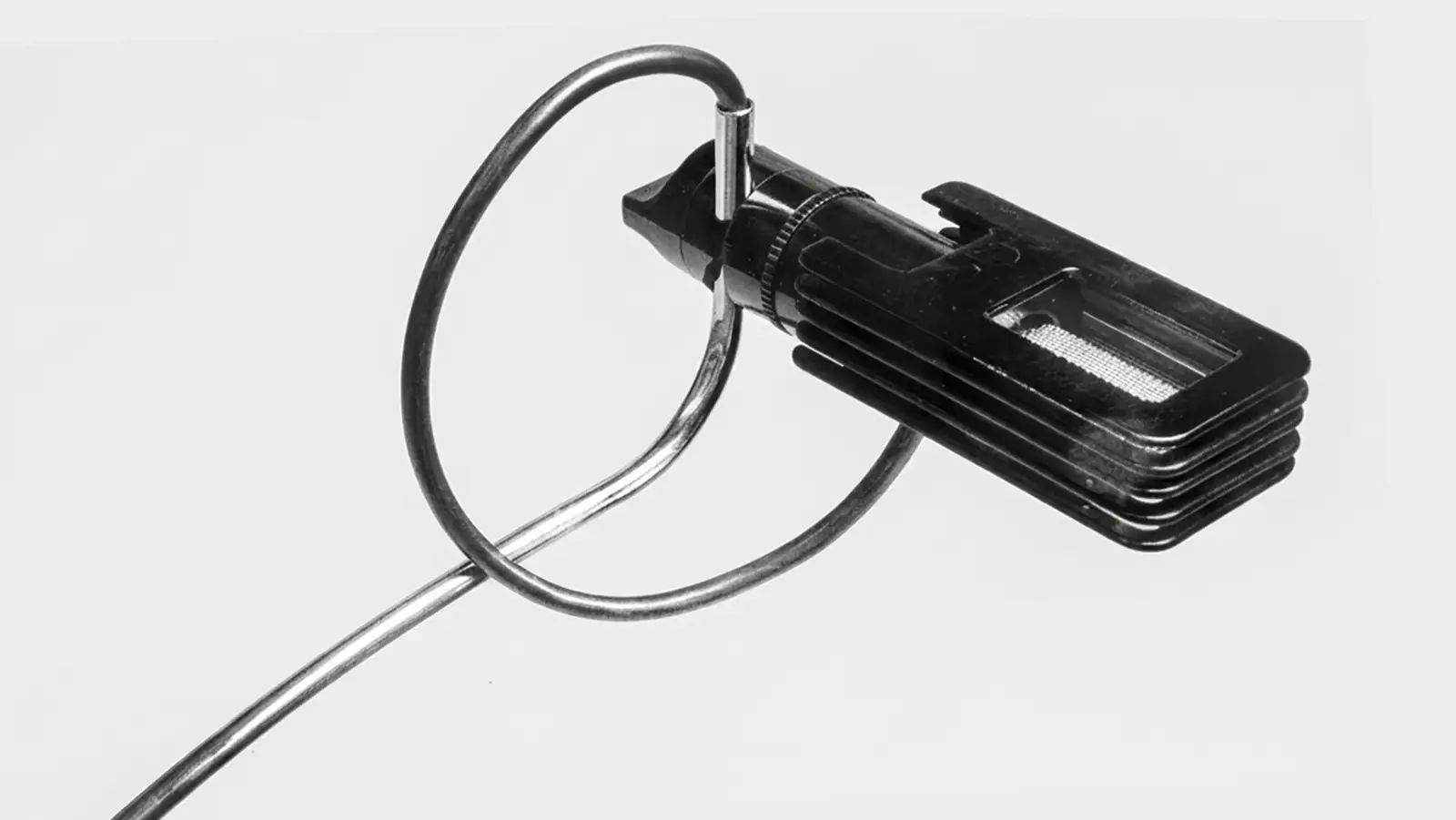
The 12-volt, 50-watt halogen bulb gave light of exceptional quality, and bringing it to a desk was an idea with a future. Looked at closely, though, it posed a serious problem: such a hot source, mounted at the end of a work lamp, was a risk of burns every time you reached over to move it.
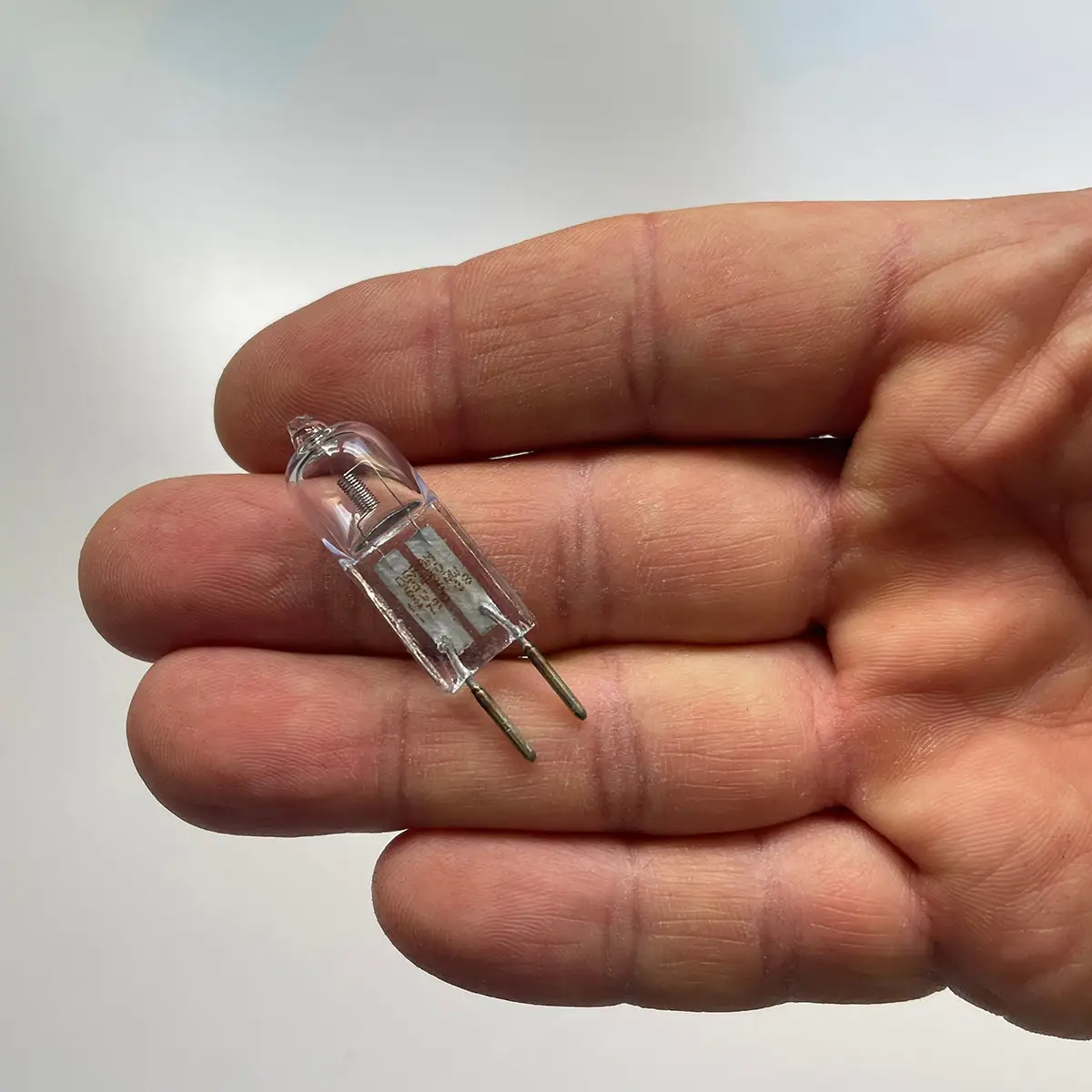
One component, repeated, solves the whole problem.
The obvious answer was to enclose the bulb in a housing. But a housing both protects and traps heat: without a way to escape, the heat builds up around the light source. The lamp also had to remain adjustable by hand, like the Anglepoise favoured by architects, with an extending arm that left the desktop clear.
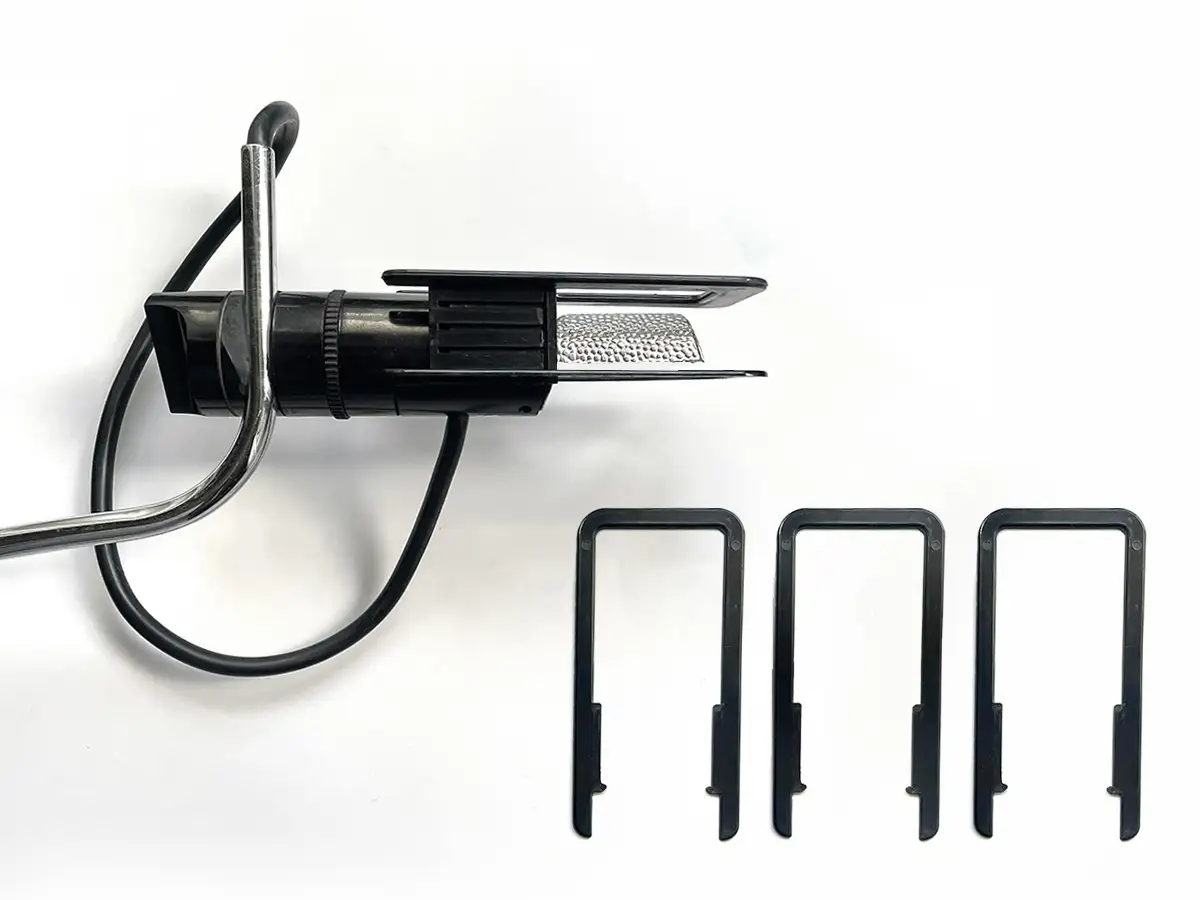
The obvious solution was a closed housing, but that would have trapped heat rather than dissipating it. Wing takes the opposite approach: its head is open and lightweight, rather than compact and enclosed.
The head consists of a series of identical fins. They act as spacers, preventing contact with the reflector or bulb. Their open arrangement allows heat to escape rather than accumulate. All are made from the same mould, repeated as many times as required.
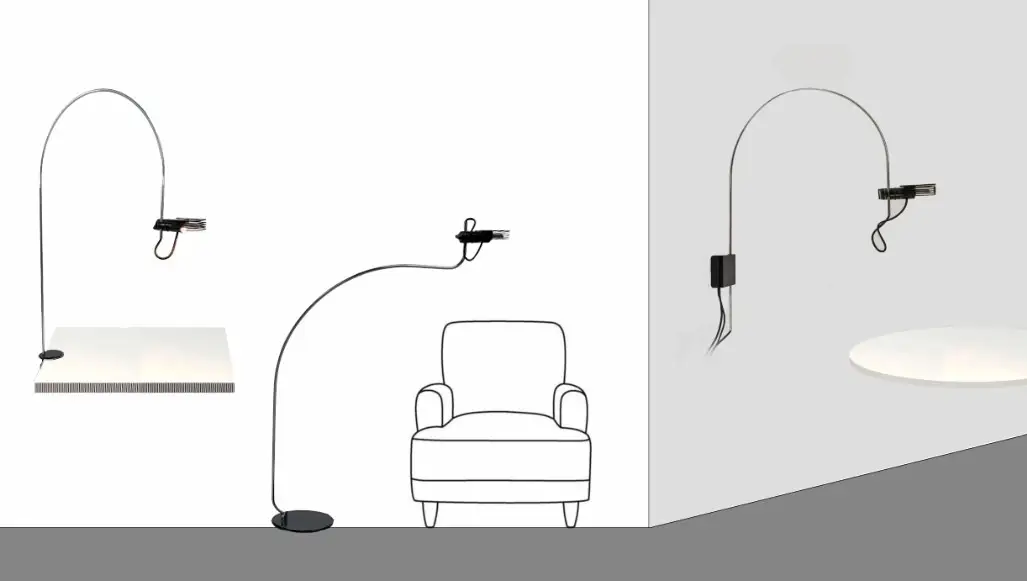
Wing stayed in the catalogue for many years, developed into table versions other than the desk one.
The fins can be removed without tools, held in place by the material’s own resilience. Once removed, they reveal themselves to be identical. The design logic becomes tangible: the rhythm is not decorative, but the visible result of a construction decision. Manufacturing economy and formal character are not competing aims here — they are one and the same.
A dimmer is built into the clamp connection. In 1973 this was not standard equipment, and with such a powerful source it lets you adapt the light to the task at hand.
What we learnt
Technology borrowed from another sector is never ready to use unchanged: it brings the constraints of its original application with it. The task is not simply to adopt it, but to design the component that makes it usable in a setting for which it was never intended.