
A constraint that was never written into the brief
LaTina
In the early 2000s Fratelli Guzzini asked the studio for a series of food preparation products. The brief was precise, and twenty years after Chef Line the company seemed to be looking for the same functional spirit, with different technologies and constraints. Among those products was a citrus squeezer.
- Company
- Fratelli Guzzini
- Product
- LaTina, citrus squeezer
- Year
- 2003
- Design
- Lorenzo Gecchelin
- Status
- Available
- Recognition
- ADI Compasso d’Oro 2004
The project
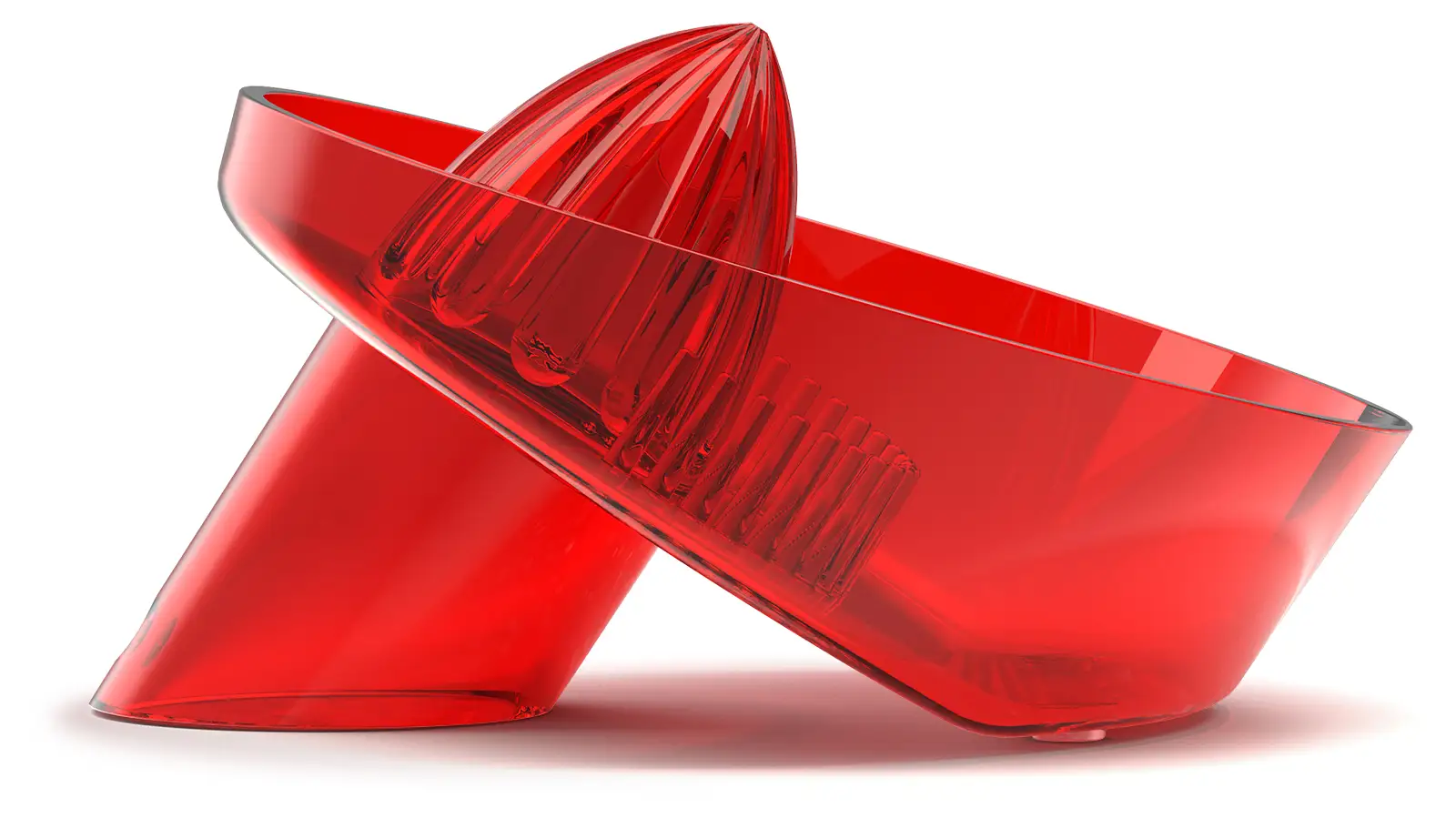
Apart from the more complex and expensive electric models, manual citrus juicers on the market consisted of two parts. On top were the reaming cone and the strainer, which separated the juice from pips and pulp; underneath was the container that collected it. Chef Line worked in the same way. Two parts meant two moulds.
For a company that injection-moulds plastic and plans for large volumes, cost always matters, even when it is not the main constraint. In the negotiation nobody had said so, but the idea of an object that came out of a single mould, in a single shot, was in the air. The studio read it that way and made it the priority of the project.
The constraint did not restrict the design. It gave it direction.
This often happens. When there are no limits on budget, technologies or materials, design can lack a clear intention and creativity has no starting point. A single mould ruled out many approaches and clarified the direction to pursue.
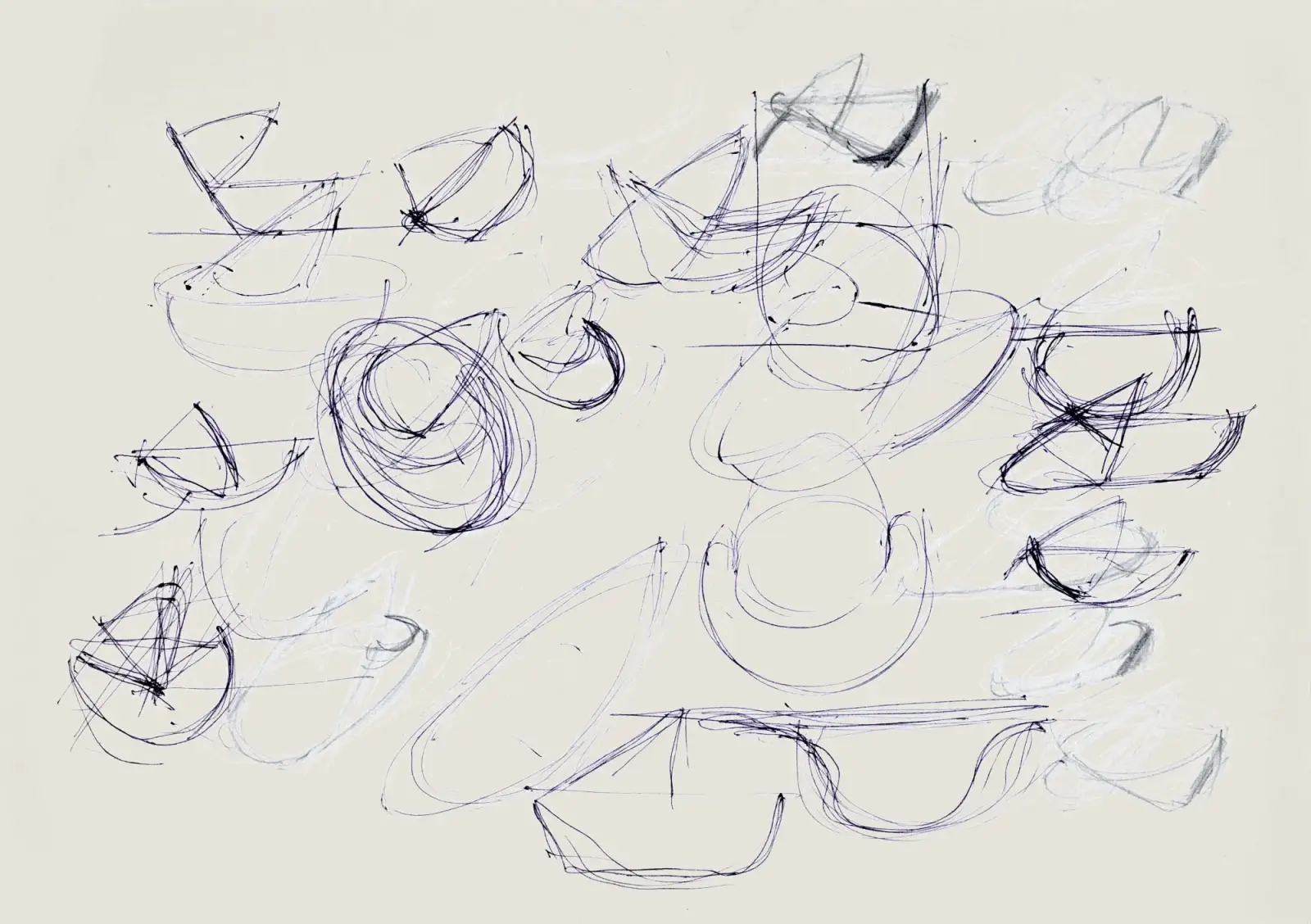
The solution did not come straight away. It came from sketches in different views and conditions, and from preliminary models built to understand ergonomics and ease of use. Every attempt was judged twice, on paper and on the model: for what it said about the form and for what it said about use.
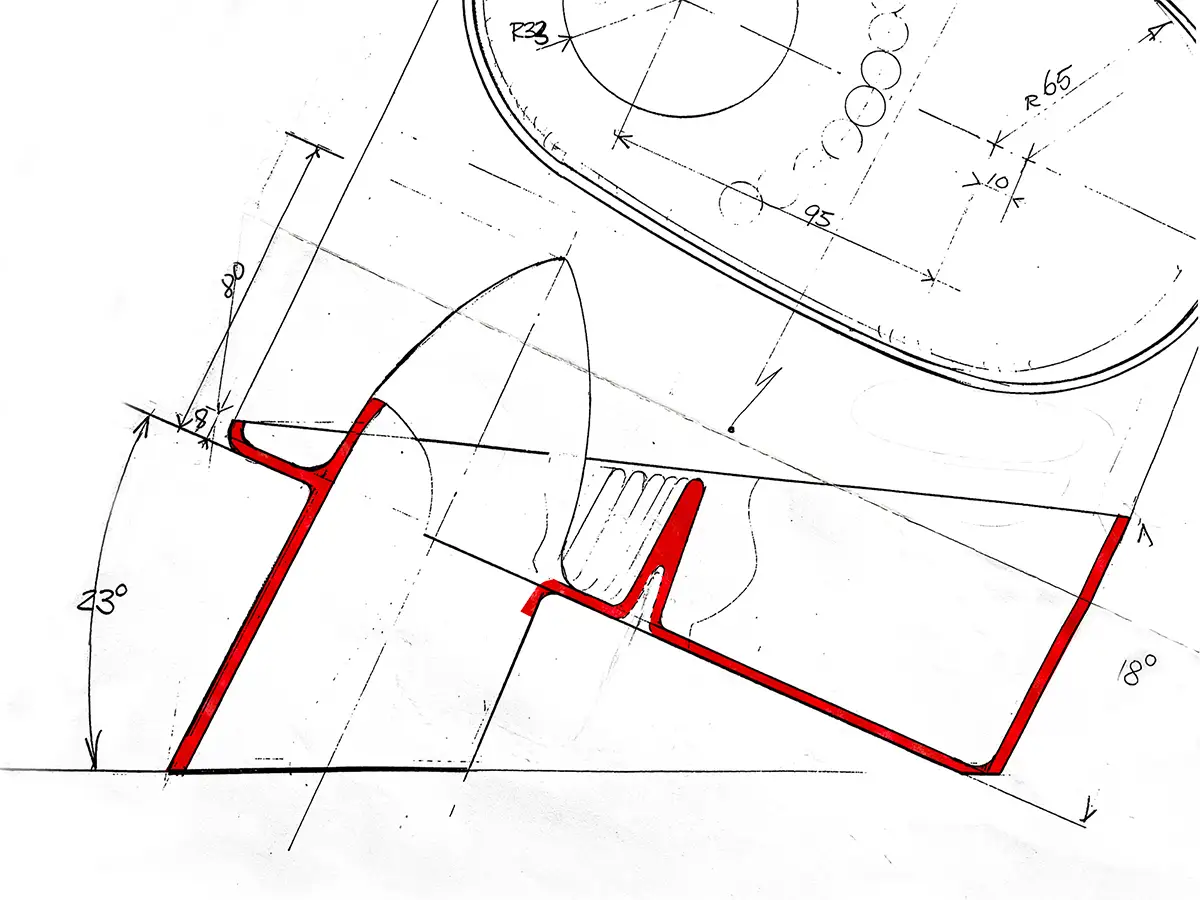
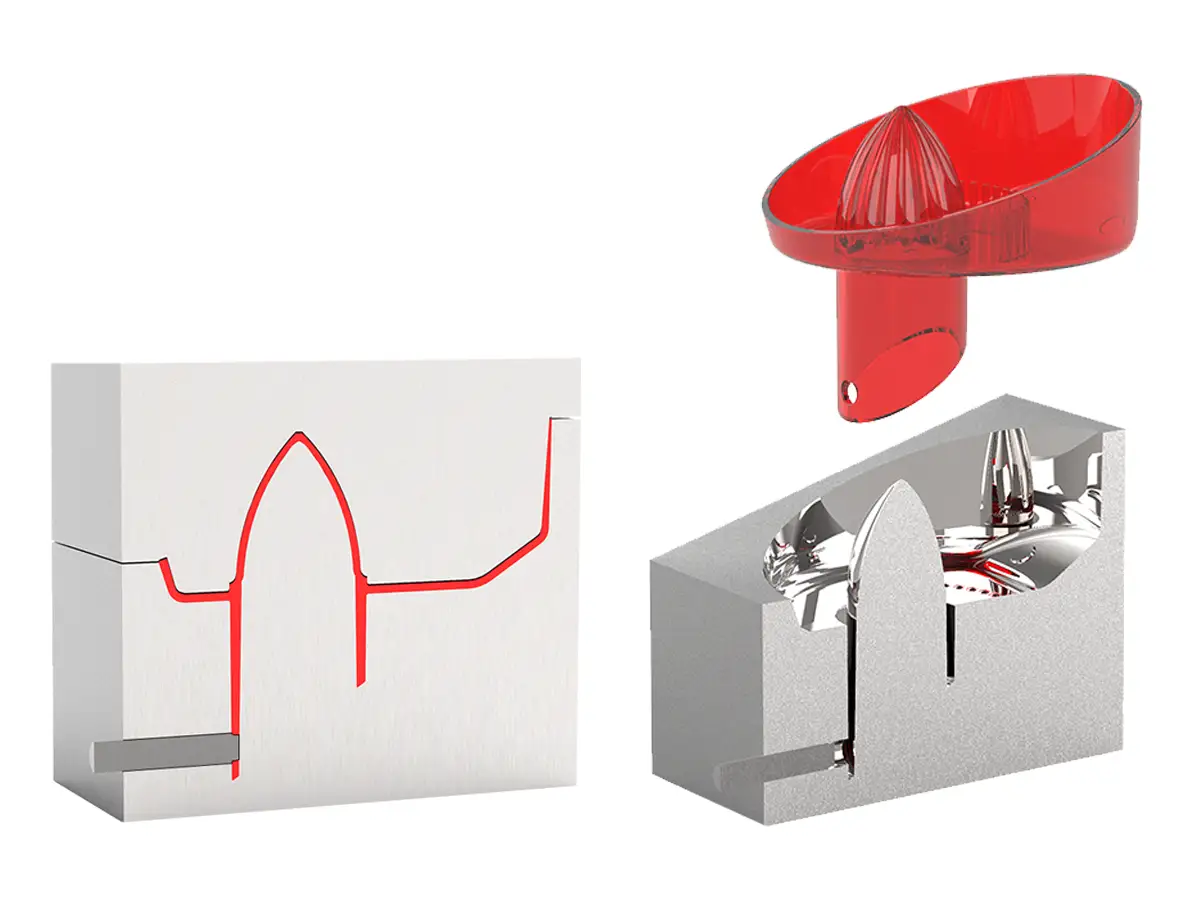
The section drawing shows the final solution. The object is inclined at 23 degrees. The hollow reaming cone extends downwards to form the foot. The juice-collecting bowl wraps around it and slopes towards one end. A row of small teeth between the cone and the bowl retains pips and pulp. There is no spout: at the pouring point, the bowl’s rim is thinned just enough to release the liquid cleanly and prevent drips.
A single wall squeezes, filters and collects. All the surfaces are oriented so that the two halves of the mould open without undercuts.
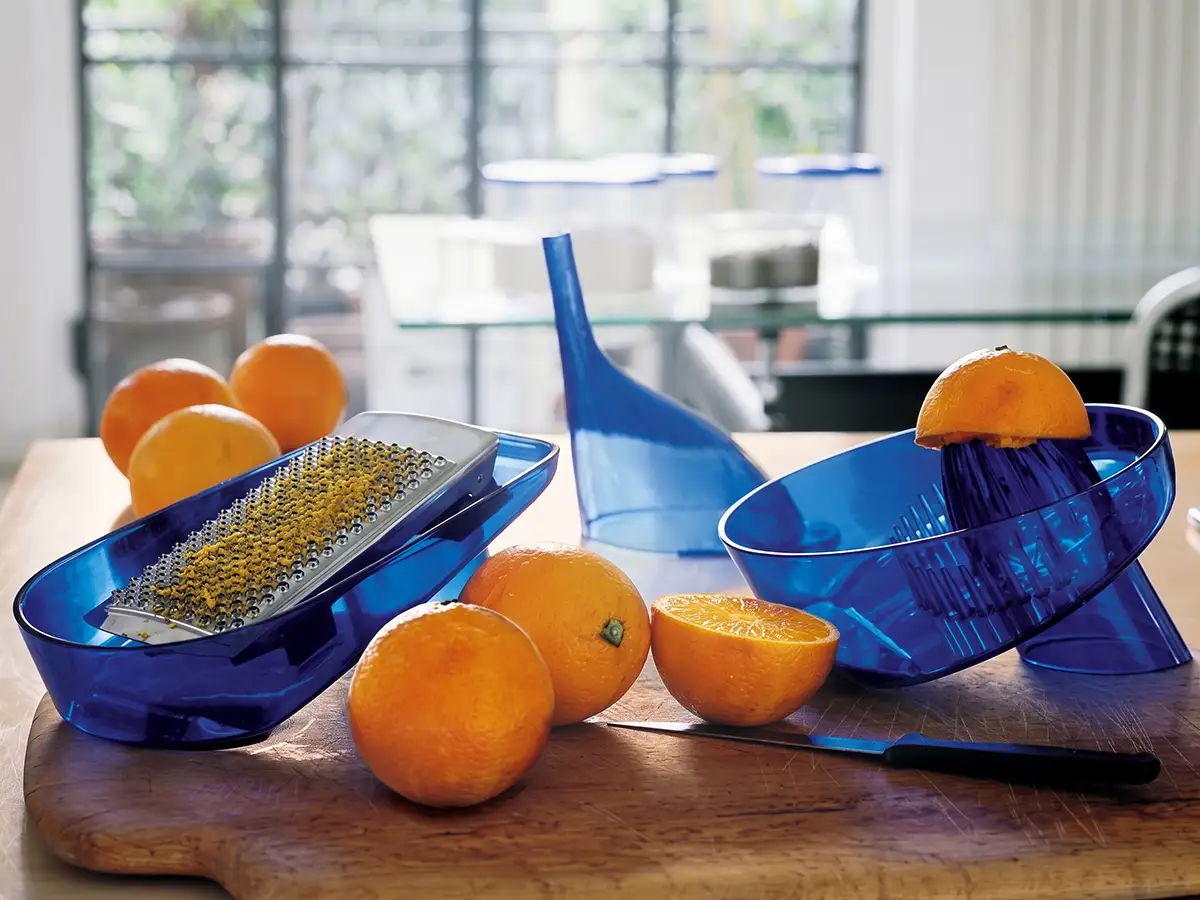
Testing went step by step. First non-working models, useful for judging proportions and size. Then prototypes that simulated the actual squeezing of an orange or a lemon: one hand presses down, the other holds the squeezer still and pushes back.
The prototypes made the product’s physicality tangible and changed its form. At first the squeezer was elongated, like the grater of the same series. Then the circle was chosen as the guiding element. The circle echoes the rotating movement of the squeezing hand and the edge of the half fruit resting on the cone. A regular figure also helps moulding, but that was not the reason: it was simply nicer to look at and more comfortable to use.
Once the section drawing had confirmed that a one-piece design was feasible, the project passed to the company’s engineering department. Starting from an initial approximate model, Guzzini’s engineers refined the wall thicknesses, draft angles and gate locations, drawing on their daily experience of injection moulding. This is an essential step: a studio’s technical expertise must always be discussed and integrated with that of the manufacturer.
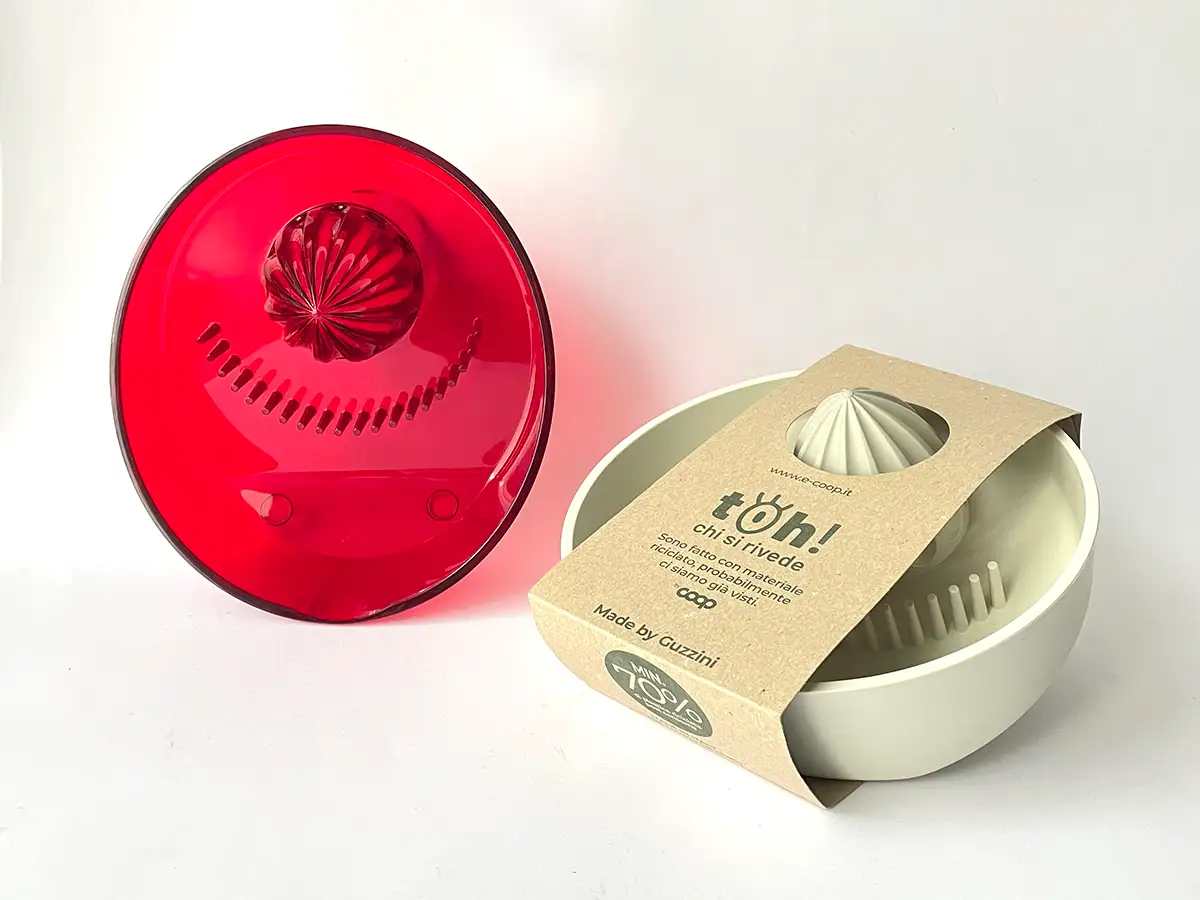
Over the years, the company tested different materials to suit the required performance. For the premium version, it selected polycarbonate for its superior toughness and its ability to combine colour with transparency. More recently, LaTina was reissued in a material containing at least 70% post-consumer recycled plastic. The choice reflects today’s environmental awareness, but came with an aesthetic compromise: transparent colours gave way to a subtle sand-toned finish.
The form and mouldability that made LaTina possible in 2003 allowed it to be reissued twenty years later in a new material.
ADI Compasso d’Oro 2004
«A new idea of captivating simplicity: practical, inexpensive and appropriate in its use of materials and manufacturing processes, with a dynamic form that adds to its appeal, a perfect example of excellent design.»
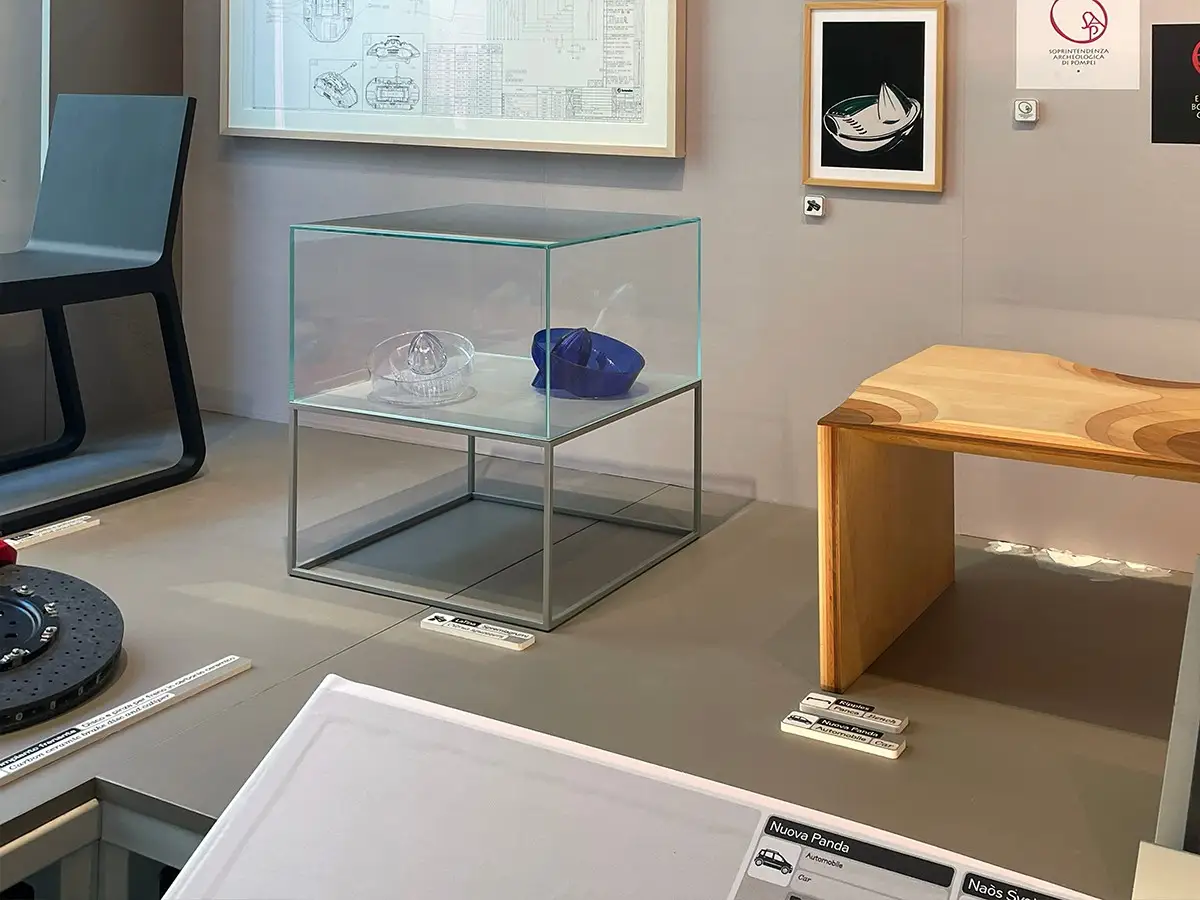
LaTina is part of the collection of the ADI Design Museum – Compasso d’Oro in Milan, where the transparent and the blue versions are on display.
What we learnt
LaTina’s most useful constraint was not written in the brief. The studio recognised it in the negotiation and put it at the centre of the project: from a single mould, an object that squeezes, filters and collects.