
A handle to be judged by gripping it
Chef Line
In a 1980 kitchen, the tools for preparing food were not a coordinated set. Different materials, different shapes, no relationship between one piece and the next. Preparing food was a technical activity, and the tools were put away in the drawer.
- Company
- Fratelli Guzzini
- Product
- Chef Line, collection of moulded plastic kitchen accessories
- Year
- 1981-1984
- Design
- Bruno Gecchelin
- Status
- Selected items still in production
The project
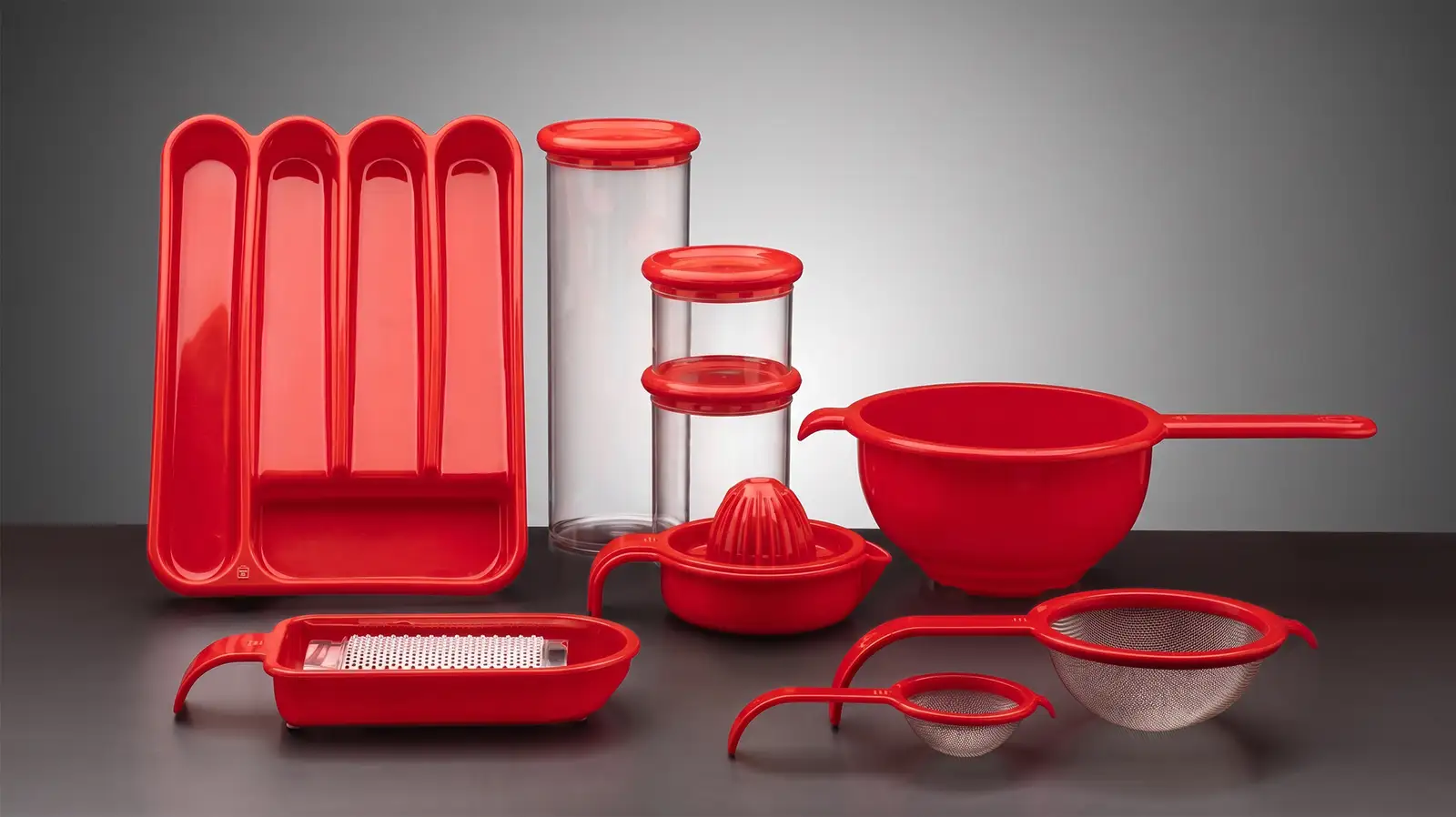
A glass or metal citrus juicer, a sheet-metal grater, a whitish plastic colander bought from a market stall, and ceramic storage jars.
Chef Line began with the intention of designing around the movements that make products effective to use. This led to a complete and highly successful collection of kitchen accessories.
Coordinating those utensils would have been easy the short way: same colour, same brand, and the set exists. But it would have remained a collection of awkward tools, all the same colour, yet with little in common.
The project began with two specific usability problems. A conventional sheet-metal grater has no way to collect the cheese unless it is placed on a plate, and it is difficult to hold steady because its handle is not designed for a hand pressing downwards. A glass or metal citrus juicer is difficult to grip precisely where force is needed. Small details, considerable inconvenience.
From there came the hook-shaped handle, curving downwards: a form for gripping, for pushing steadily against the work surface and, at the same time, for declaring the kinship between the pieces.
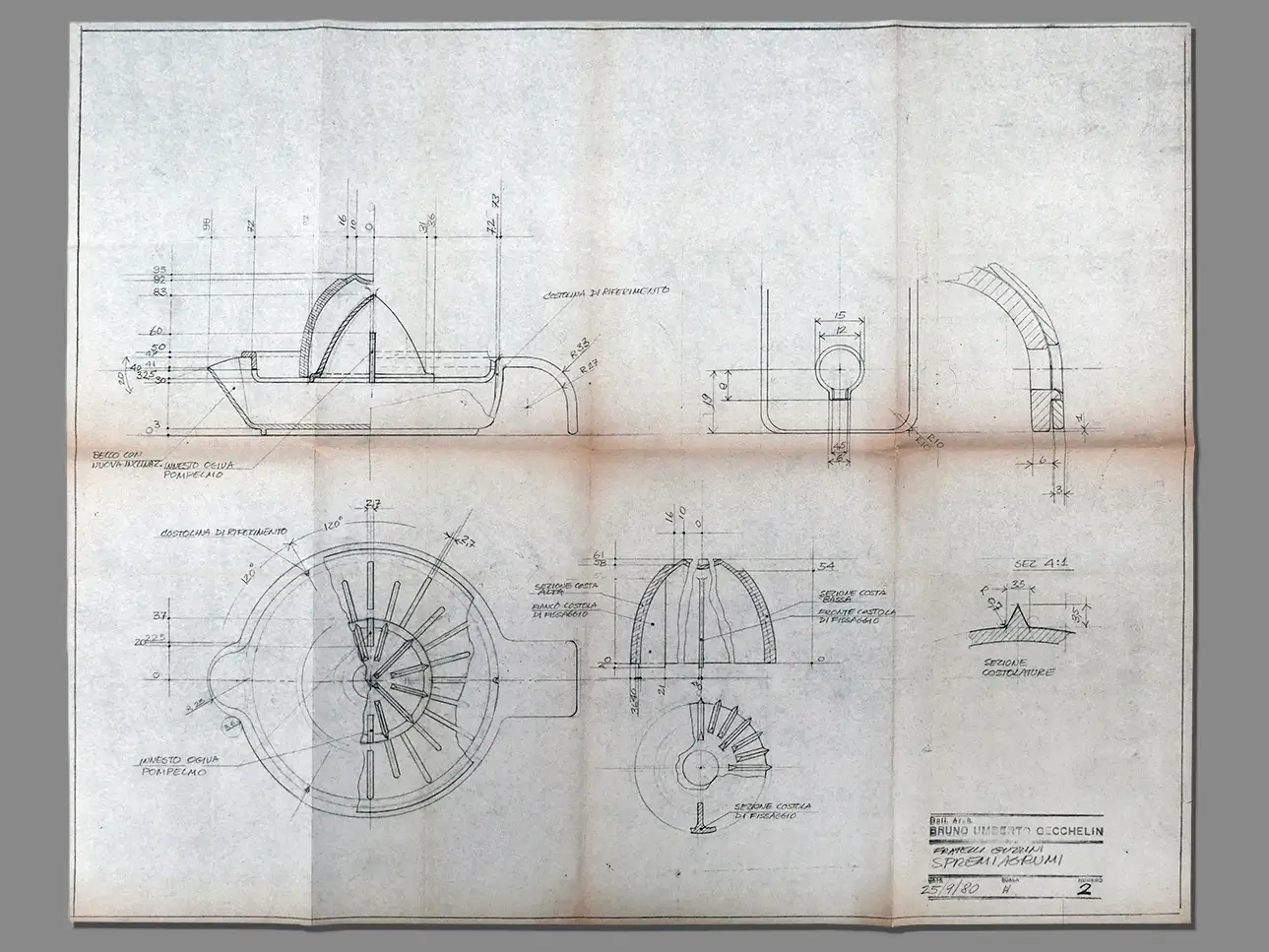
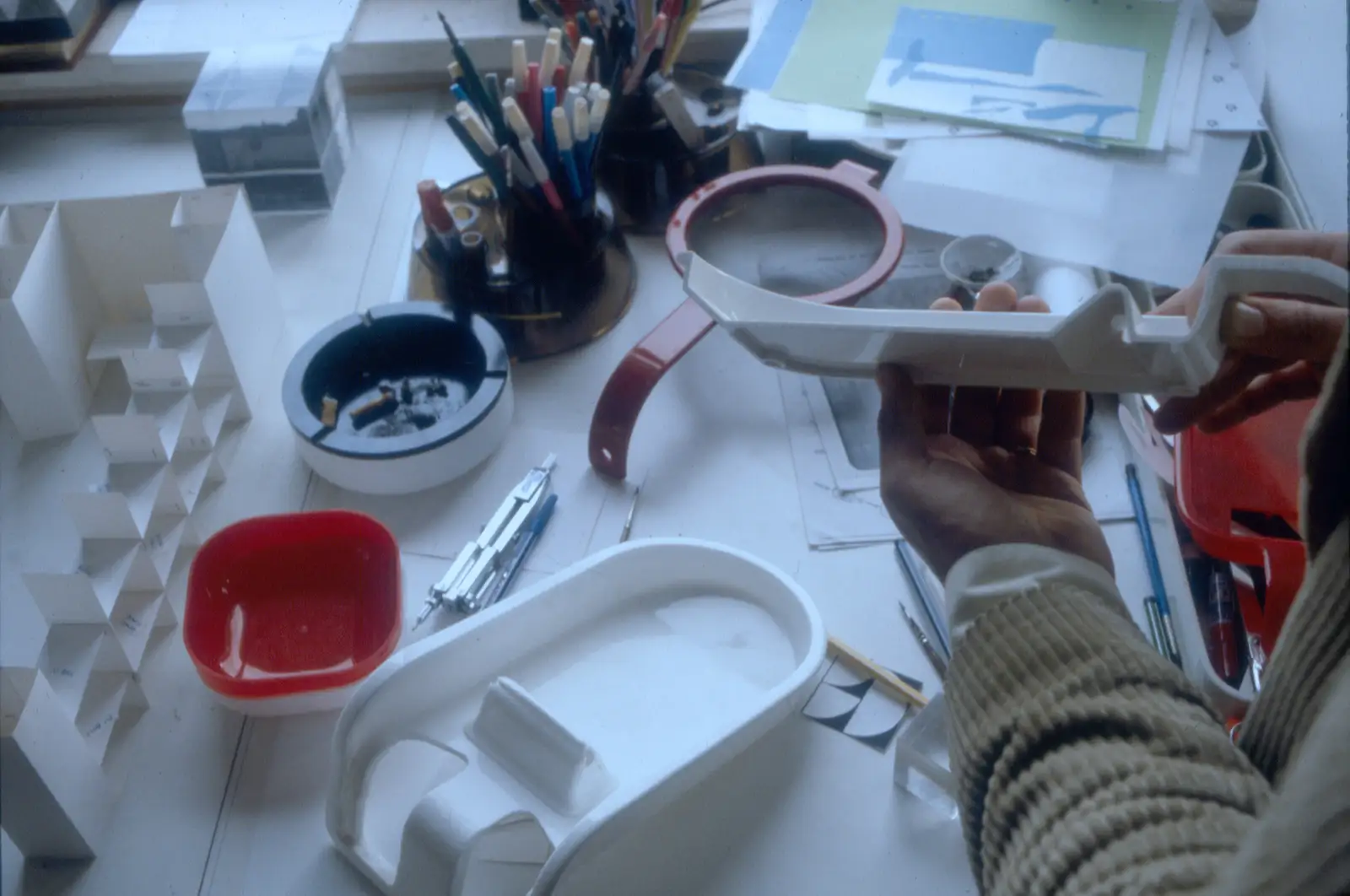
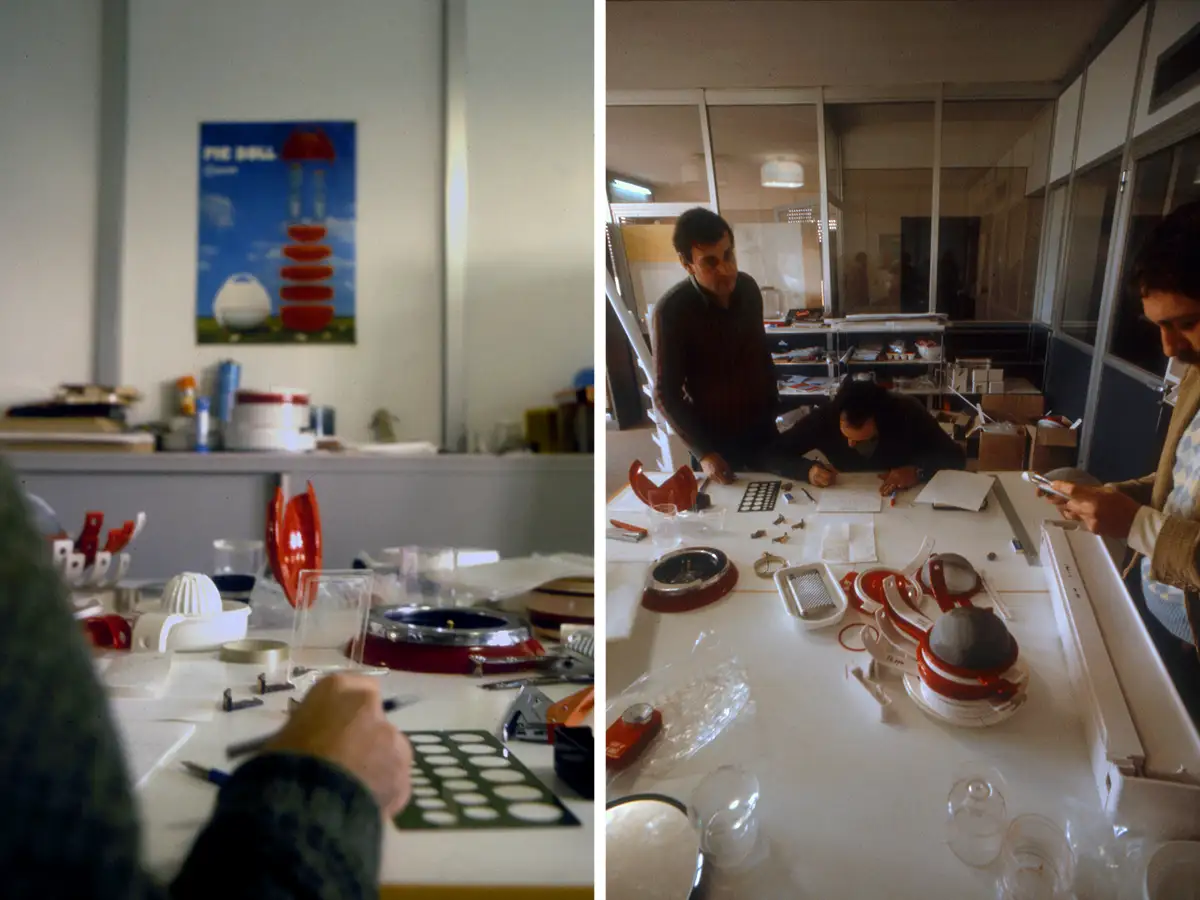
But a hand movement cannot be tested on paper. A technical drawing gives dimensions, not the feel of a curved handle under pressure. The handle was therefore refined using foam models throughout the design process: first to test its ergonomics, then to present it to the decision-makers. That was when the design won their support and gained the momentum to develop into an entire collection.
That distinctive feature can still be seen on the strainers, grater, citrus juicer and kitchen roll holder. The family identity was not devised on paper and then applied to the products. It emerged from solving the most challenging item and was tested through models and prototypes before being extended across the range.
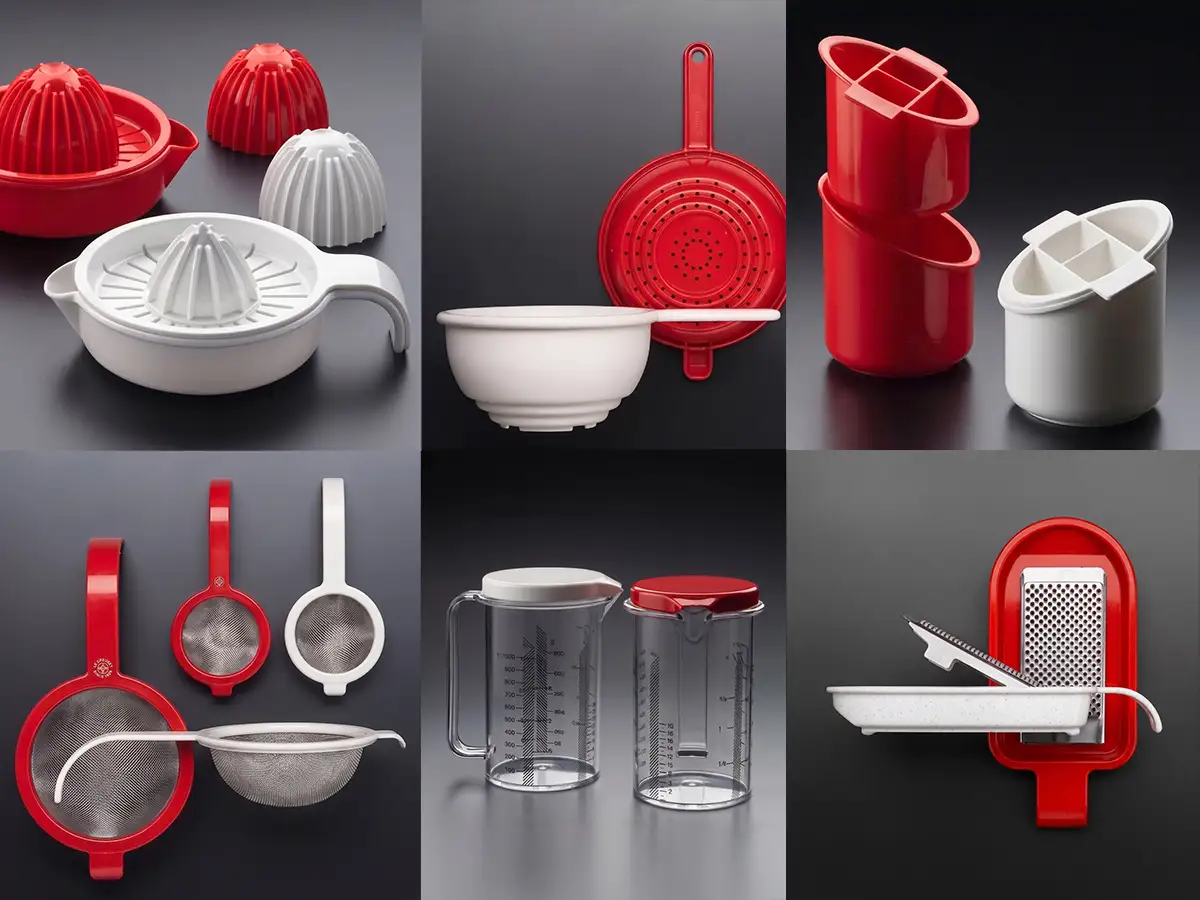
Everything else was stripped away: no styling for its own sake, no decoration inherited from traditional objects. Injection moulding allowed smooth, glossy surfaces that were easy to clean. Generous wall thicknesses enhanced the sense of material quality: the plastic was expressed rather than disguised, with specially designed rims emphasising its presence. In a category where plastic usually signalled economy, those thicknesses conveyed the opposite. The material’s durability also helped the surfaces retain their gloss through use, unlike other plastics.
The set was not born complete. It grew from 1981 to 1984, one piece at a time, and buyers could do the same: start with one object and complete the set as they became convinced.
The tools for preparing food stopped living in drawers and came out into the open, for the pleasure of using them and seeing them in the kitchen.
What we learnt
Some things cannot be decided by looking at a drawing. A handle is one of them: it must be assessed in the hand. As long as it remains on paper, neither designer nor manufacturer can truly know whether it works. In Chef Line, the foam models served simply to present and demonstrate the function and appearance of a design that no one yet knew would become an entire product range.