
Manufacturing processes that open up new possibilities
FCX
A unit whose length varies with its output, made from cut and folded sheet metal. Dedicated forming tools were not viable: the cost was prohibitive, and each size would have required a different set.
- Company
- Aermec
- Product
- FCX, fan coil unit
- Year
- 1989
- Design
- Bruno Gecchelin
- Status
- Still in the catalogue
The project
From that dimensional constraint it was easy to reach the usual conclusion: a geometric volume. Bruno Gecchelin’s hypothesis was that the outer casing need not be just a technical cover, but could set up a dialogue with the wall and suggest an extension of the surface on which the product was installed.
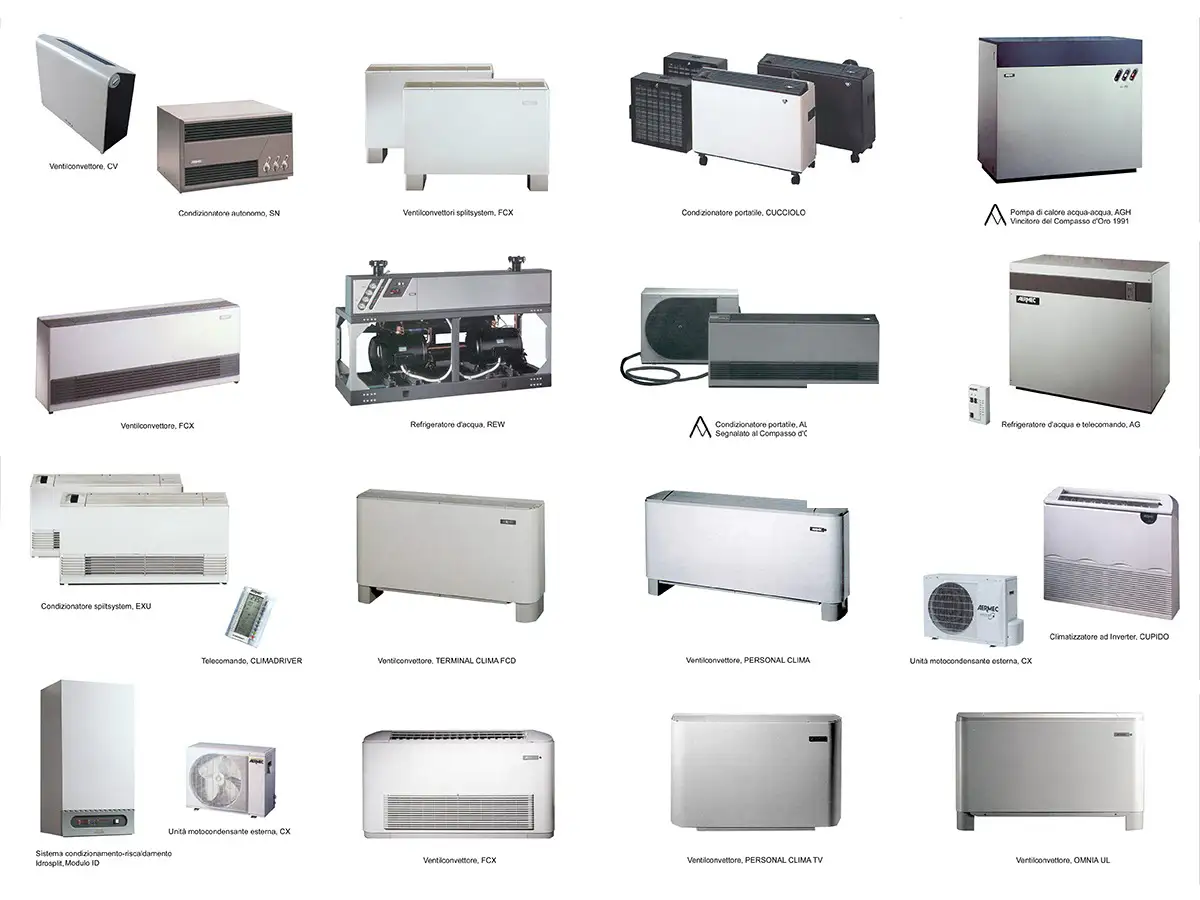
Cutting and folding at ninety degrees were established manufacturing processes on which the entire product category relied. The result was rigid geometric forms with little distinctive character, largely confined to commercial and institutional settings. On the previous model, the FW, the only designed feature was the top grille: a functional detail consisting of parallel lines.
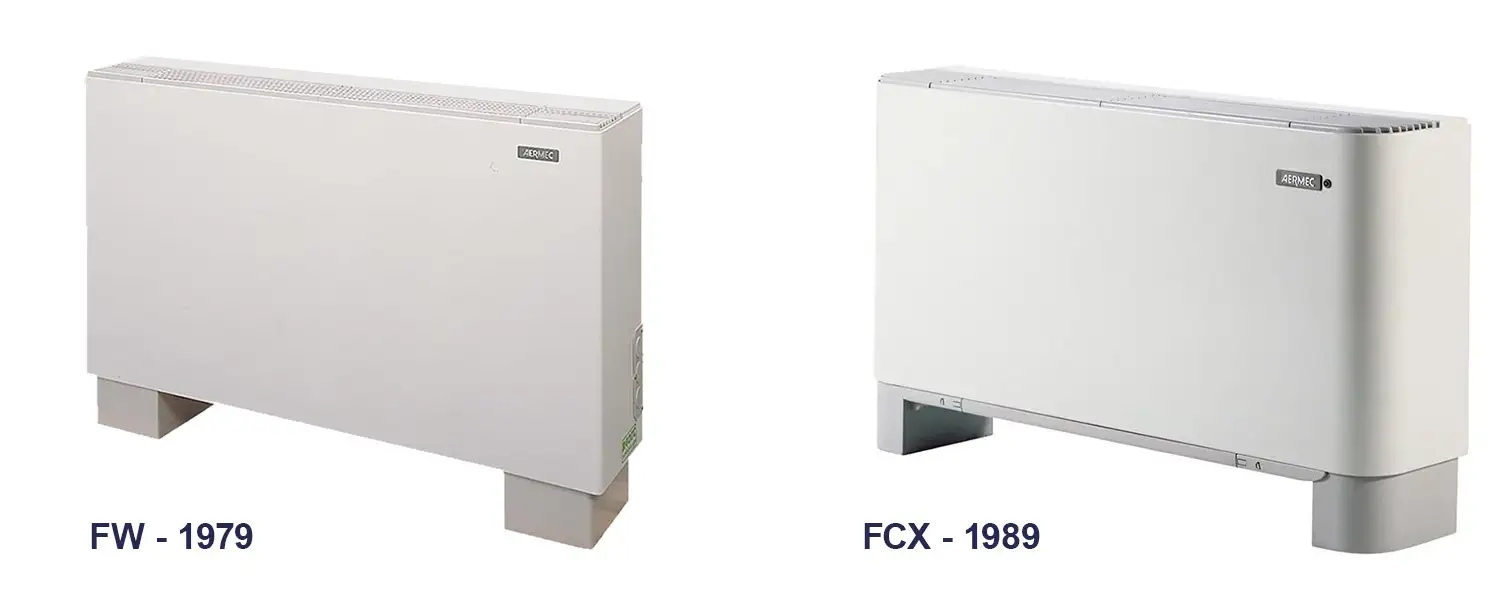
The problem was not the quality of those casings: in the office they worked. It was that all competitors did the same thing and that, in a home, an object with similar forms was perceived as too technical and formally out of place. The casing had to be rethought, to make it suitable for domestic installation and to give it an edge over the competition.
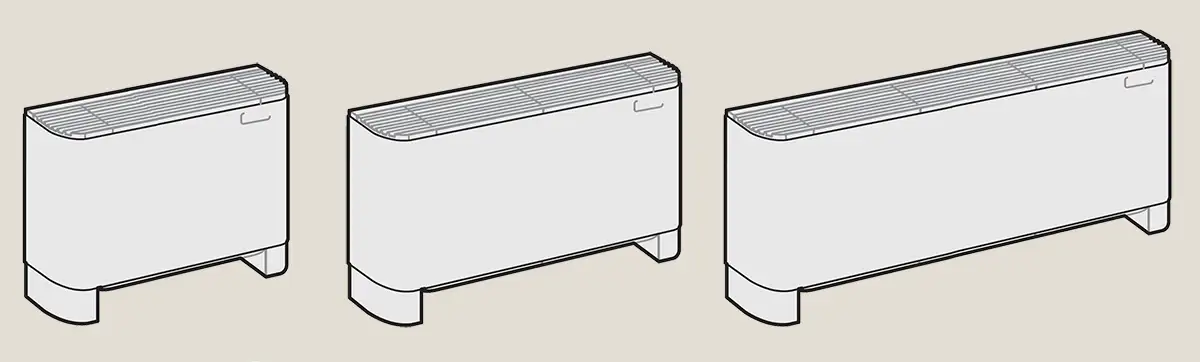
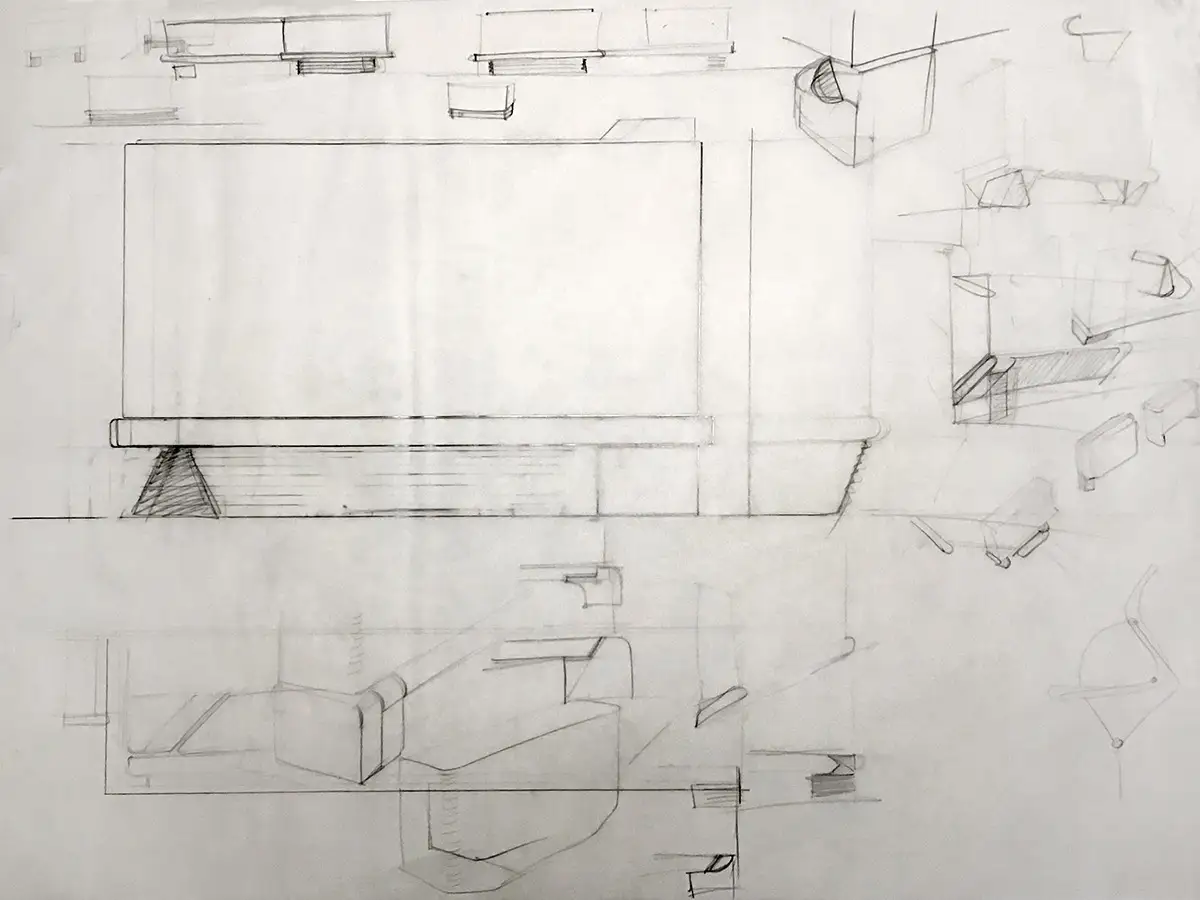
The solution came from shifting attention to manufacturing processes. The question was not how to draw a less technical-looking unit, but which workshop process might suggest a better design — what extra ingredient could improve the outcome.
The answer was roll bending: progressively forming sheet metal between opposing rollers to create smooth, uniform curves. It was neither new nor expensive, but an existing process that had never been used on this type of product. Crucially, it could accommodate different component lengths, just like conventional folding, while respecting the original dimensional constraint.
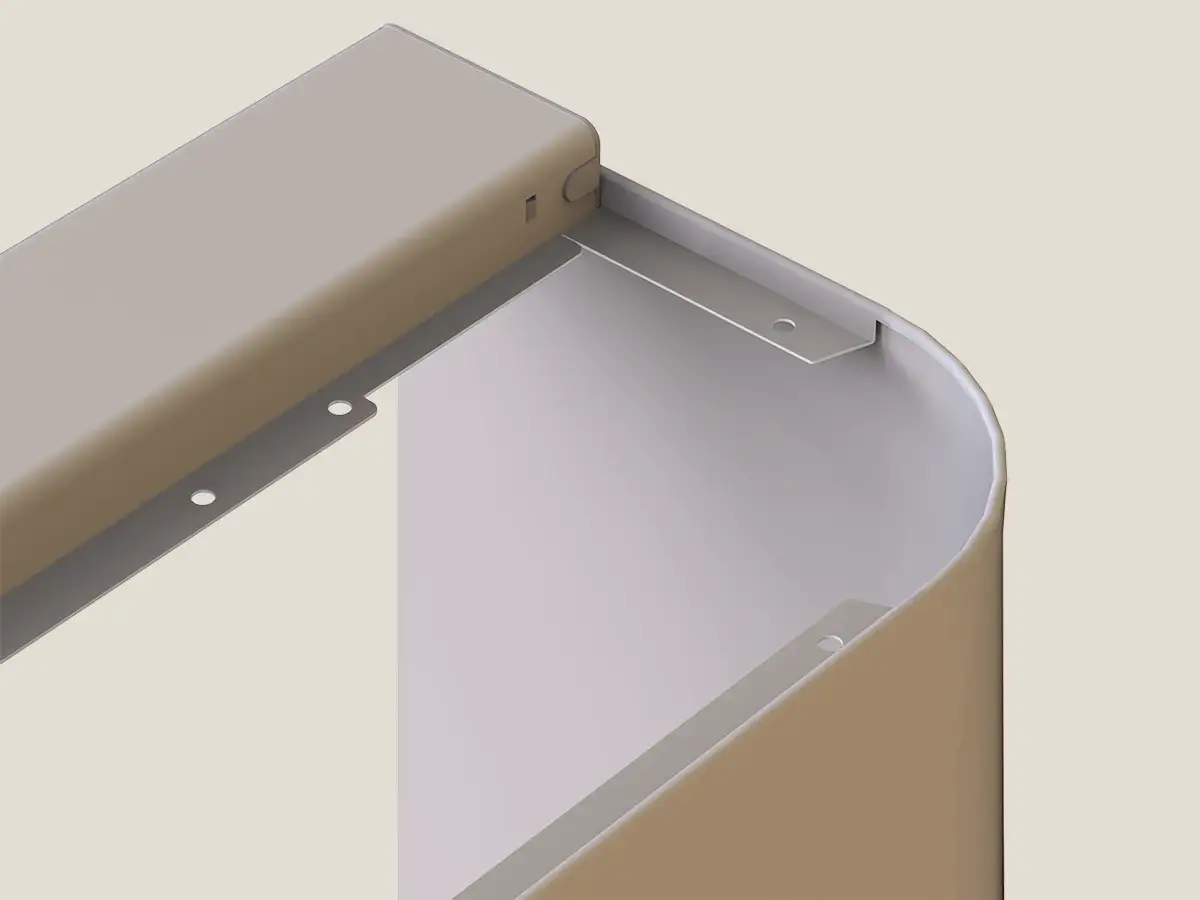
What was called into question was the use of the repertoire of production processes. The engineers' construction know-how, a precious resource for every industrial designer, had created a bottleneck that Gecchelin was able to identify and remove.
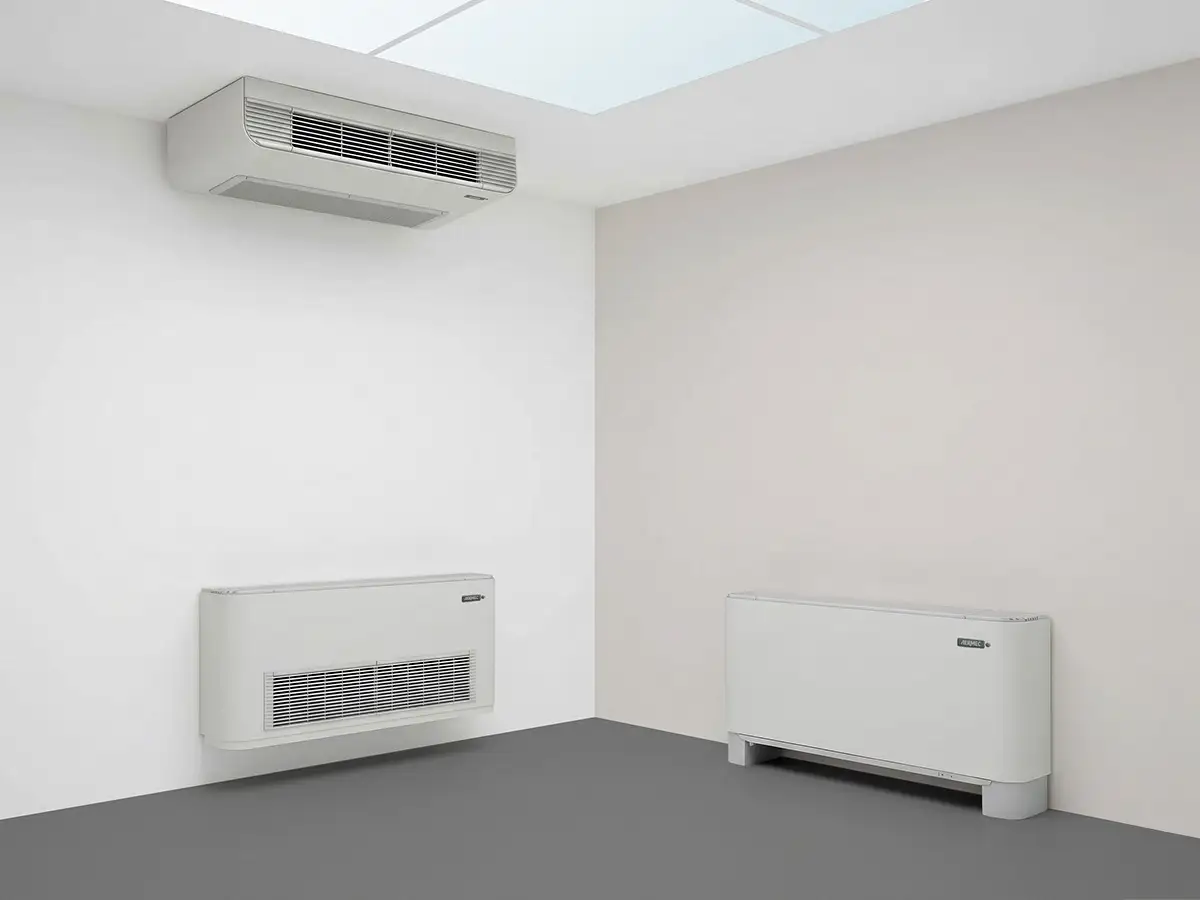
In the FCX, sharp corners give way to broad, continuous curves. The product is no longer a box, yet remains a technical unit, made with the same production equipment and at the same manufacturing cost.
The product was immediately recognised as a new formal proposition. Architects saw it as a ‘functional extension of the wall’ and readily specified it for homes, hotels and schools — settings from which this product category had effectively been excluded. It has been in production since 1989 and remains in the range.
Form, function and series production did more than coexist: they reinforced one another.
What we learnt
A supply chain that has always worked the same way is not a limit, if someone is able to explore its technical repertoire more deeply. In this case, change did not come from a new technology, but from a process already present in the workshop and never applied to that product.