
A constraint that could not be changed
AGH 171 New
The space occupied by the components had been fixed before the design work began. The compressor, heat exchanger, fan and electronic circuits were already positioned, resulting in a bulky rectangular enclosure that no one could make smaller.
- Company
- Aermec
- Product
- AGH 171 New, heat pump
- Year
- 1990
- Design
- Bruno Gecchelin
- Status
- Discontinued
- Recognition
- ADI Compasso d’Oro 1991
The project
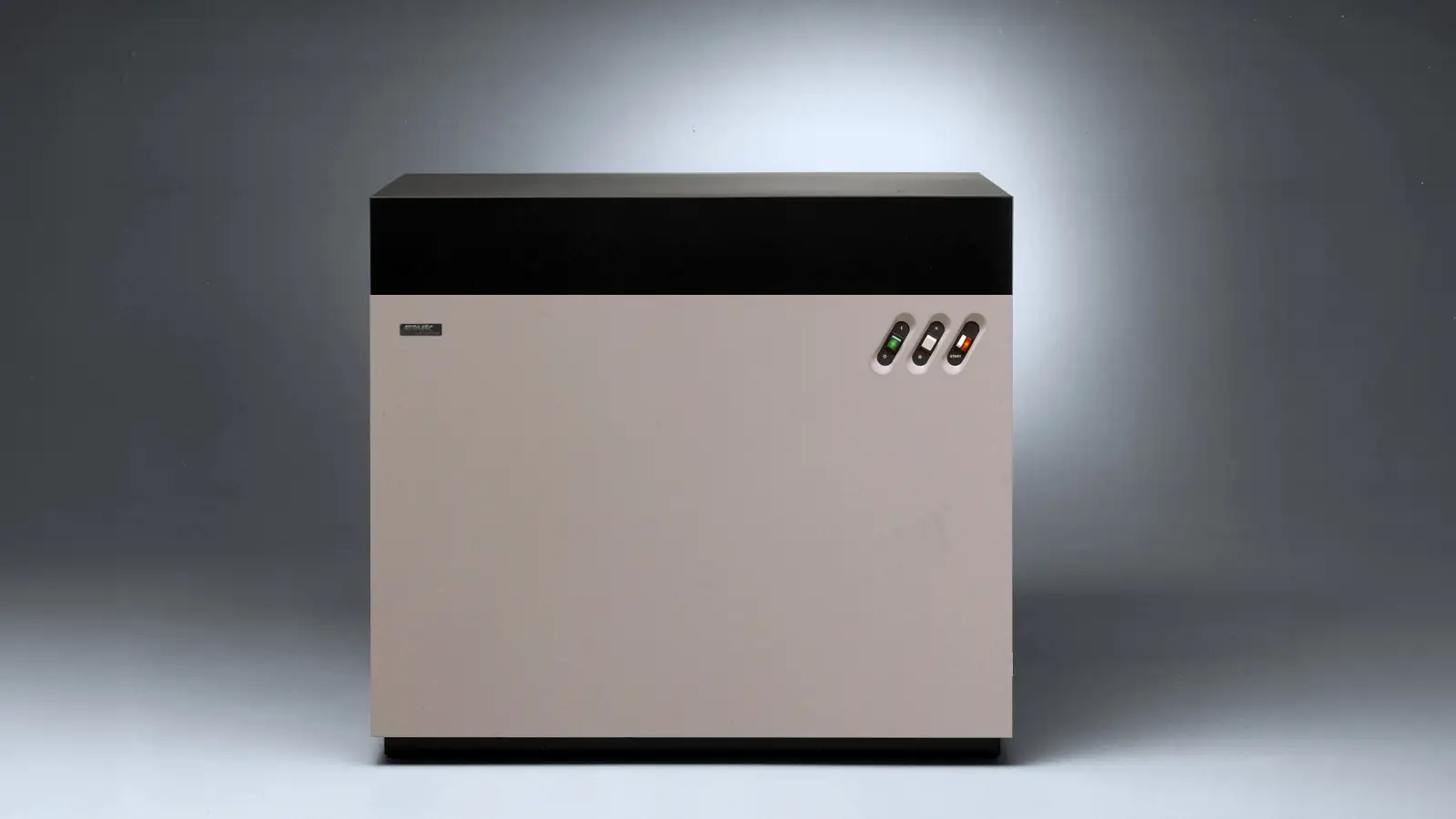
So Aermec’s brief was not about size, nor about shape. It was about the fact that this object, once installed in a home system, is seen. A packaged heat pump usually goes in a plant room, but it is still visible to the user and to the service engineers.
In 1990, competing products were monolithic: closed, undifferentiated forms with no distinctive character. These were products shaped by engineering alone, designed by people who knew exactly how to make them work but paid far less attention to how they looked. Aermec did what its competitors were not doing: it sought outside design expertise to work with its own engineering department.
The constraints were tight: the sheet-metal casing had to stay within an acceptable cost, it had to be easy for the service engineer to remove, and the interface had to be clear both to a technician and to the end user.
The new form grew out of maintenance needs. Not all parts of the casing are the same: some always stay closed, others must come off for inspections. It is a functional difference that could not be seen in the original product, and it was made visible with two shades of colour.
Gecchelin’s proposal divides the enclosure into three horizontal bands: a dark top, a broad, light-coloured central body and a slim base, as dark as the top, that grounds the product both physically and visually. A rectangular volume that could not be reduced becomes more than a single block: it gains balanced proportions and makes its functions legible.
The next step was to give the product a personality — a face. At the top right, an integral control panel projects from the surface. Three buttons — on/off, heating/cooling and start/reset — are set at an angle of sixty degrees. They are the only part of the object that directly addresses the person looking at it, and they are enough. The interface is restrained because there are only three functions, and the product makes them clear rather than concealing them behind a panel.
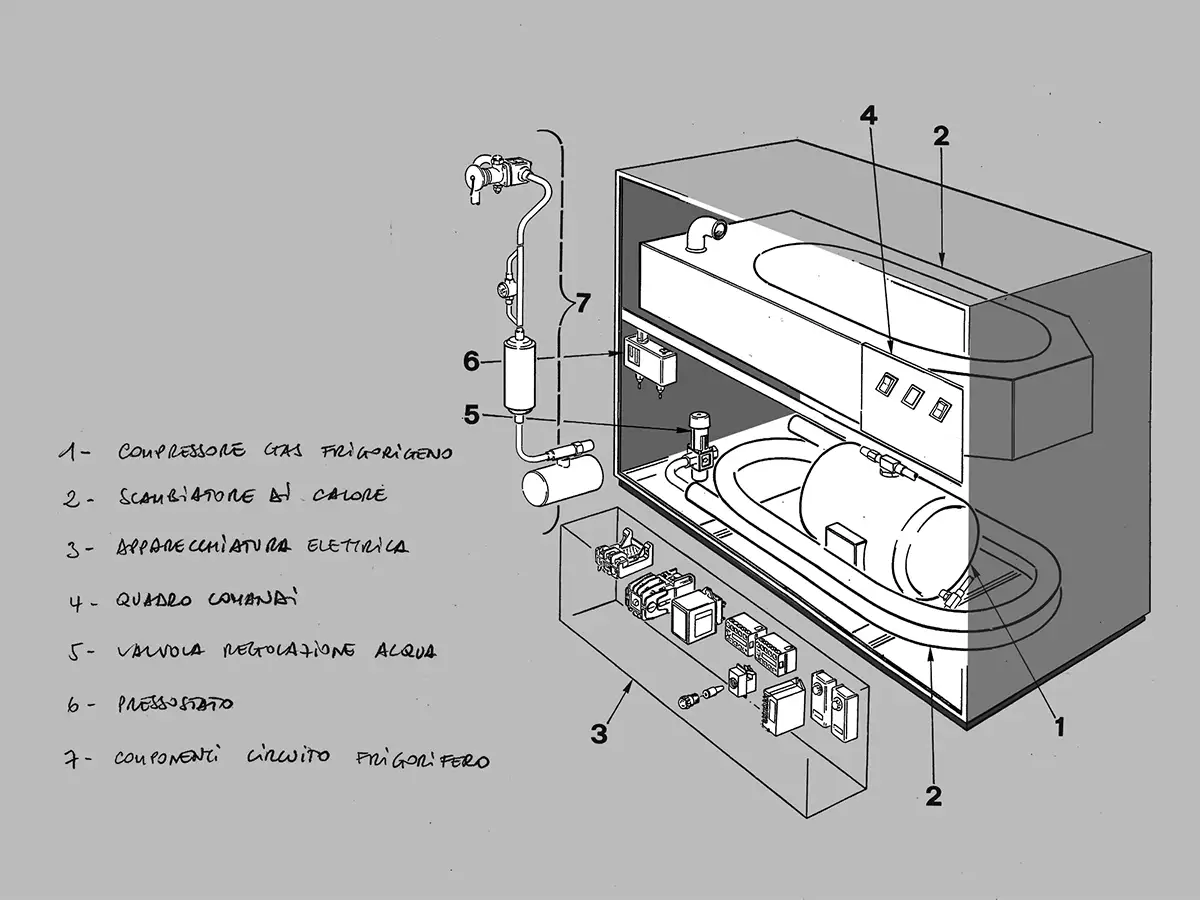
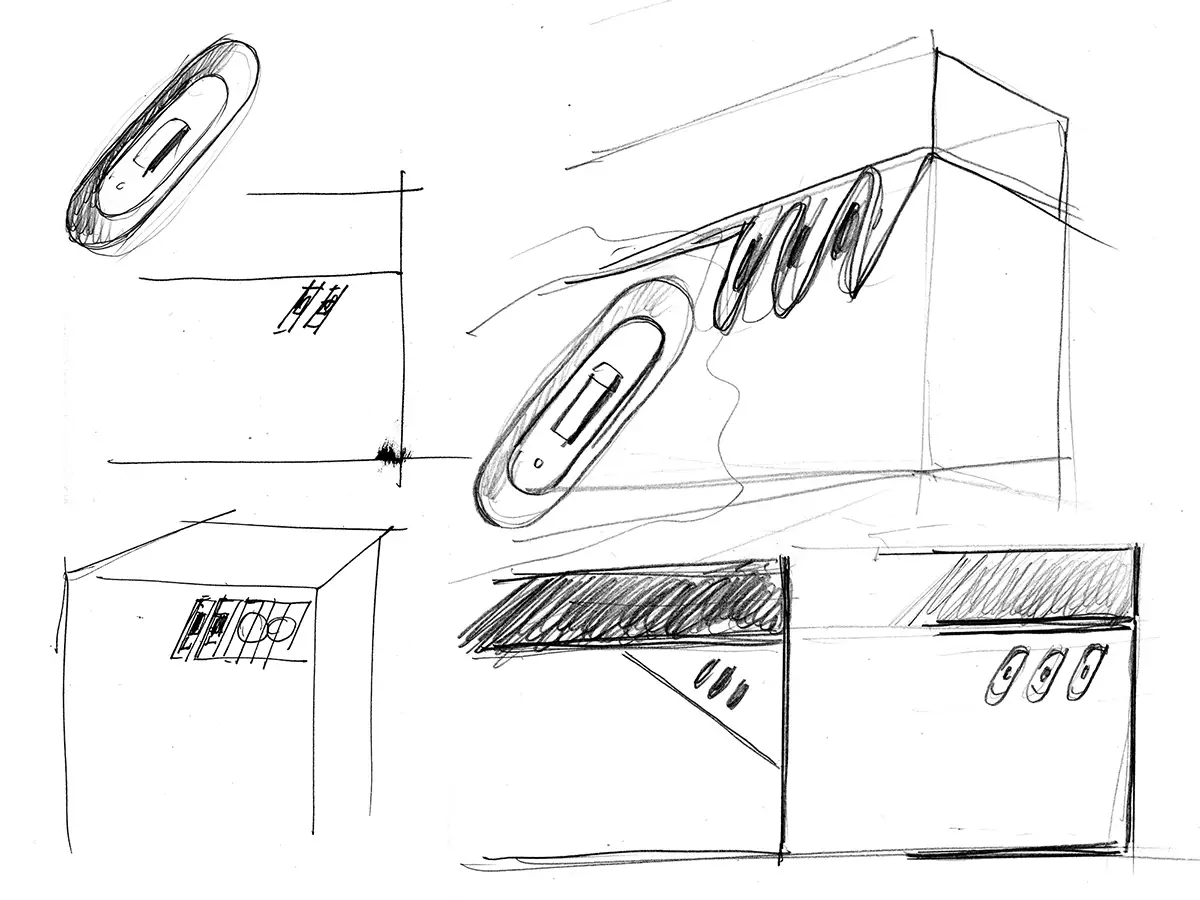
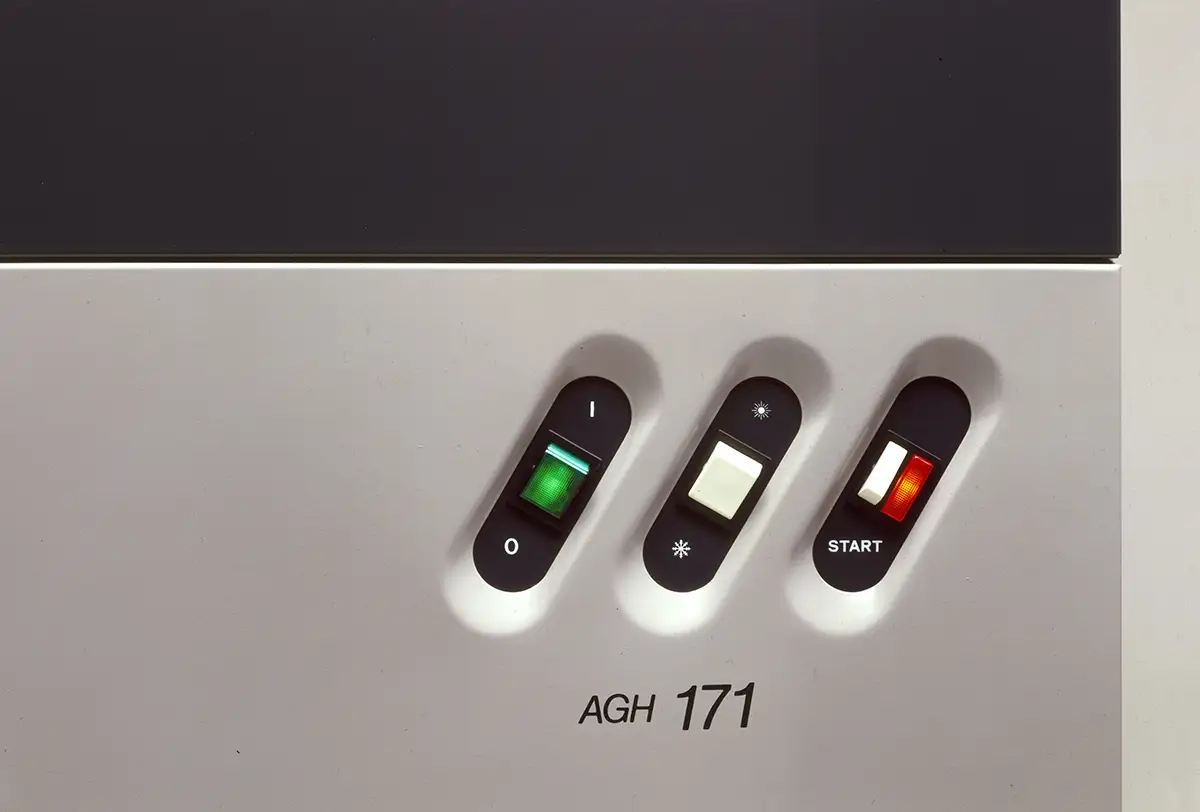
This detail is what makes the design work in manufacturing terms. The buttons sit within a gently contoured recess in the sheet metal, formed by drawing and cutting in a single operation. It is not an additional component, an applied surround or an extra cost: it is the casing sheet itself, worked in one operation. The rest of the enclosure is made by cutting and bending, with the slightly softened edges characteristic of sheet-metal fabrication.
AGH came in one size only, and this made possible what a range would not have allowed: proportions, divisions and colour relationships studied for those dimensions and no others. The result is an object resolved as a whole, both technically and aesthetically: an example of good design recognised by the ADI Compasso d’Oro jury.
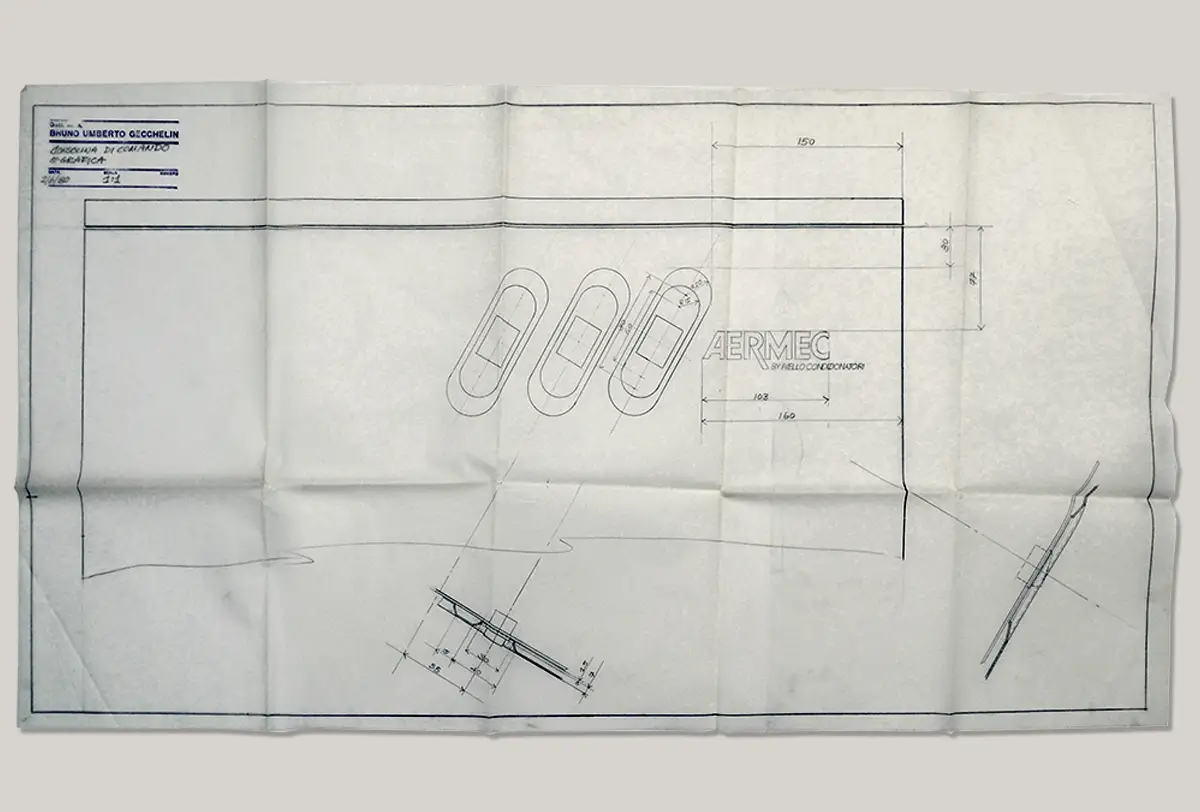
ADI Compasso d’Oro 1991
«For the rigour of its design in a technologically advanced product.»
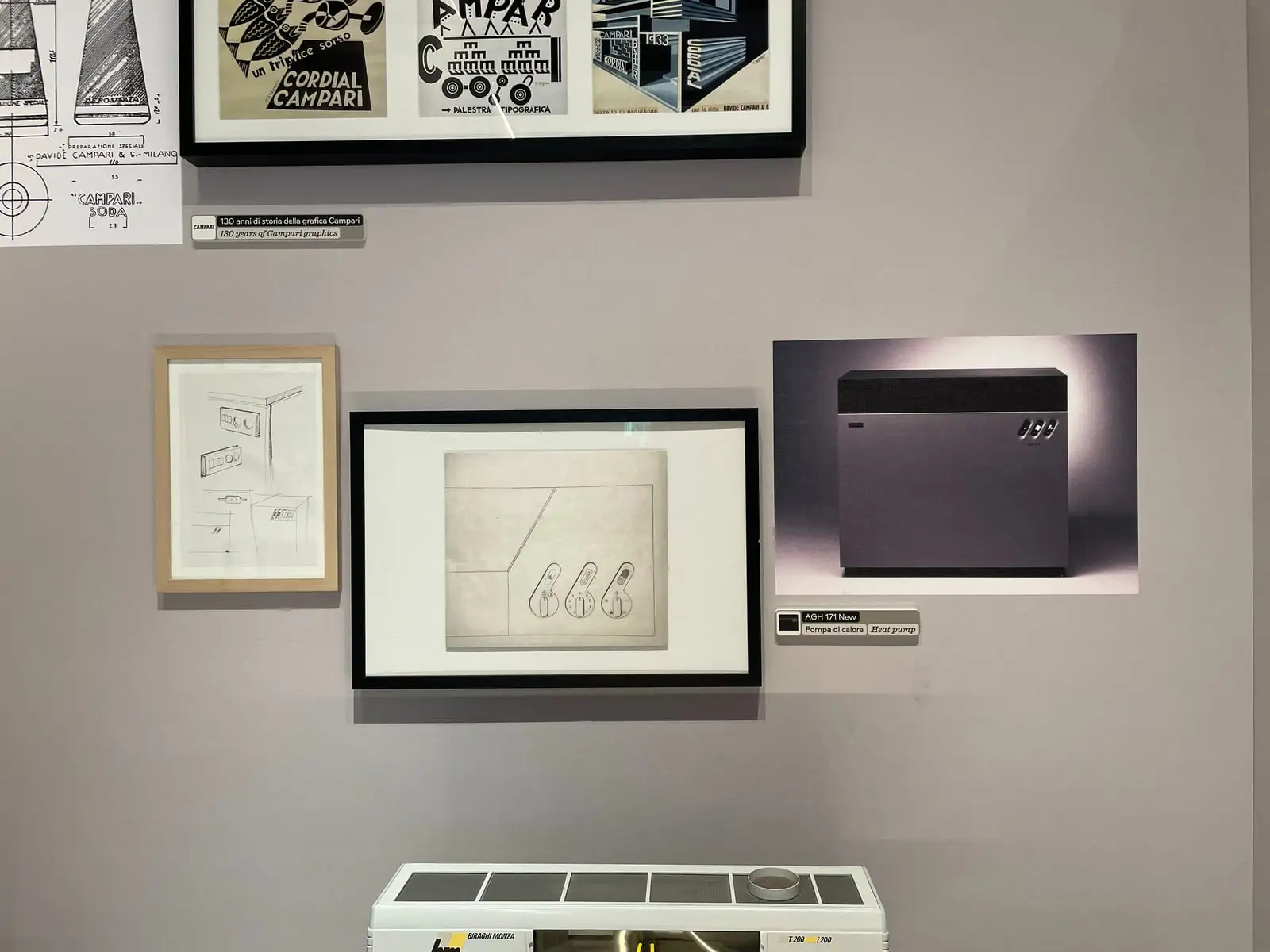
The product stayed in the catalogue for several years. AGH 171 New is part of the collection of the ADI Design Museum – Compasso d’Oro in Milan, where it is shown with a photographic print and the design drawings of the controls.
What we learnt
A volume that cannot be reduced is not a limit to the project: it is its material. What changes is not the dimensions, but how those dimensions are read.