1976 — 2026

Other companies

Six collaborations spanning very different sectors, from automotive and bathroom products to industrial refrigeration and furniture.

Lighting

Italamp

Italamp is a Veneto-based company specialising in handcrafted glass. This expertise provided the starting point for a portable, battery-powered lamp designed to reveal the material’s natural beauty, with an LED light source and integrated controls.
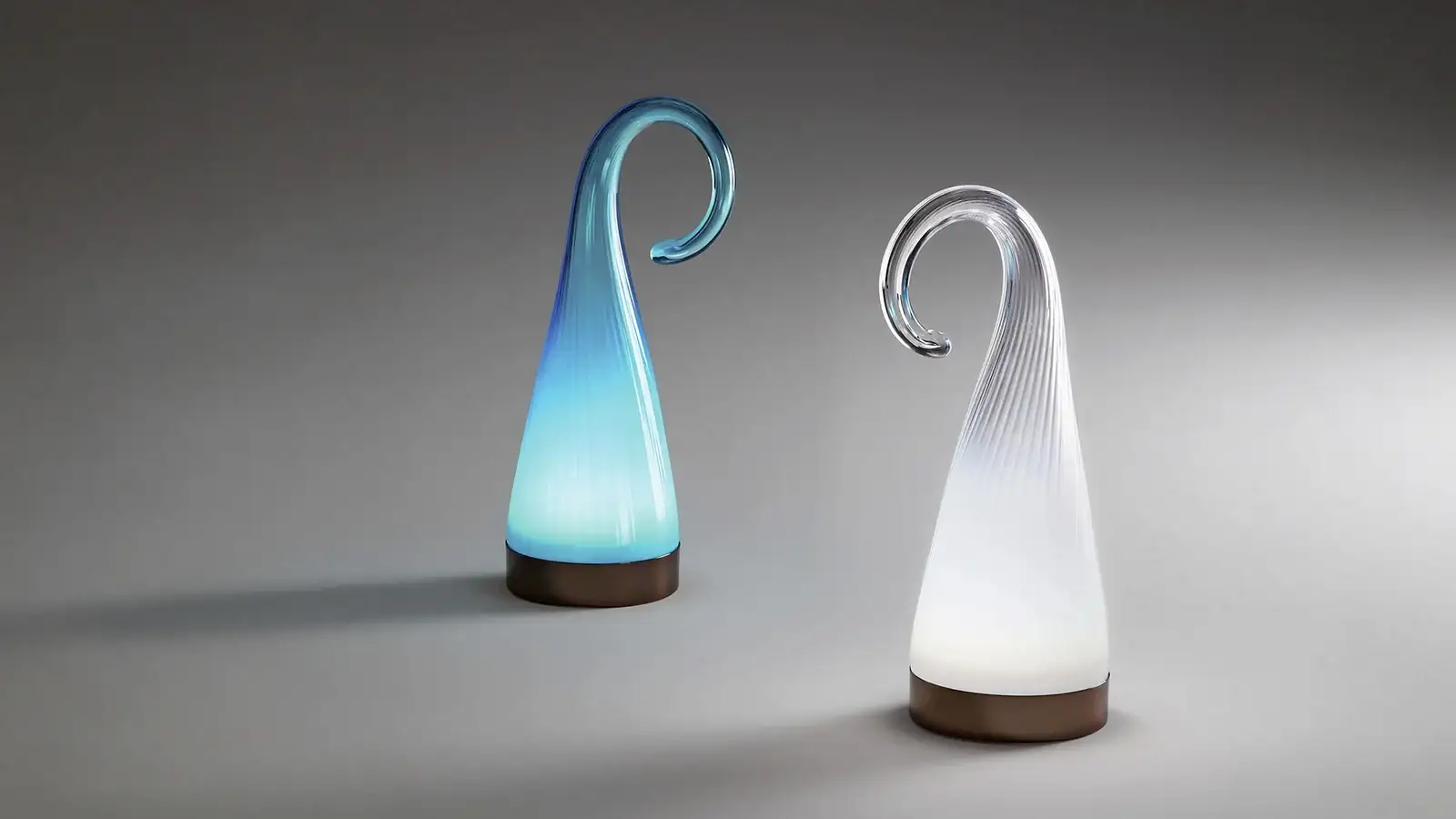
Two portable Ligea lamps in blown glass, one light blue and one white, with a curl at the top, Italamp
Ligea, 2022.

Project story: Ligea

Industrial refrigeration

Kelvin Italy

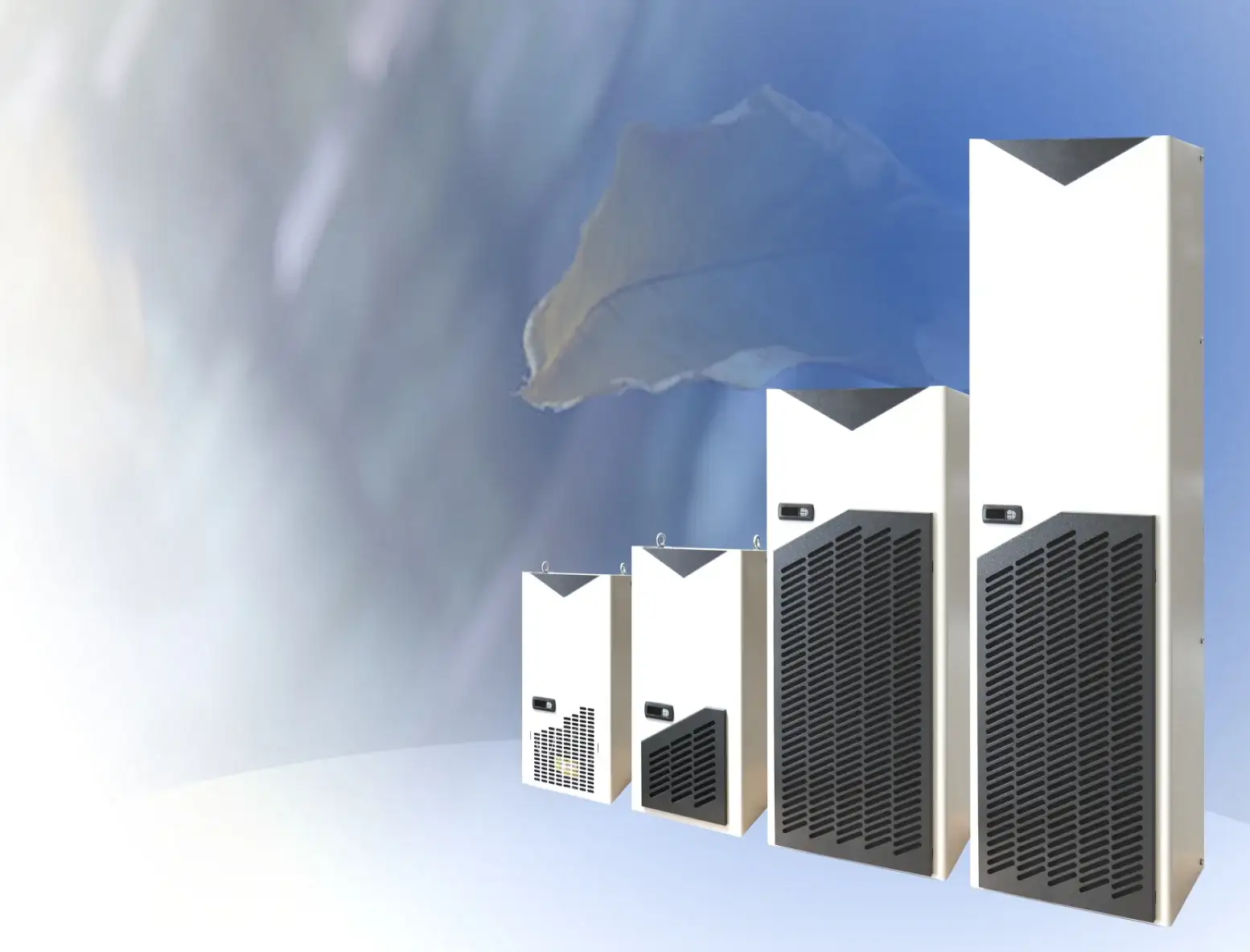
Kelvin Italy makes air-conditioning and refrigeration systems for industry. Its machines work on shop floors and in workshops, where a purely technical appearance is the norm.

Four JET industrial air conditioners of different heights, white with dark grilles, Kelvin Italy
The JET chiller family, 2007.
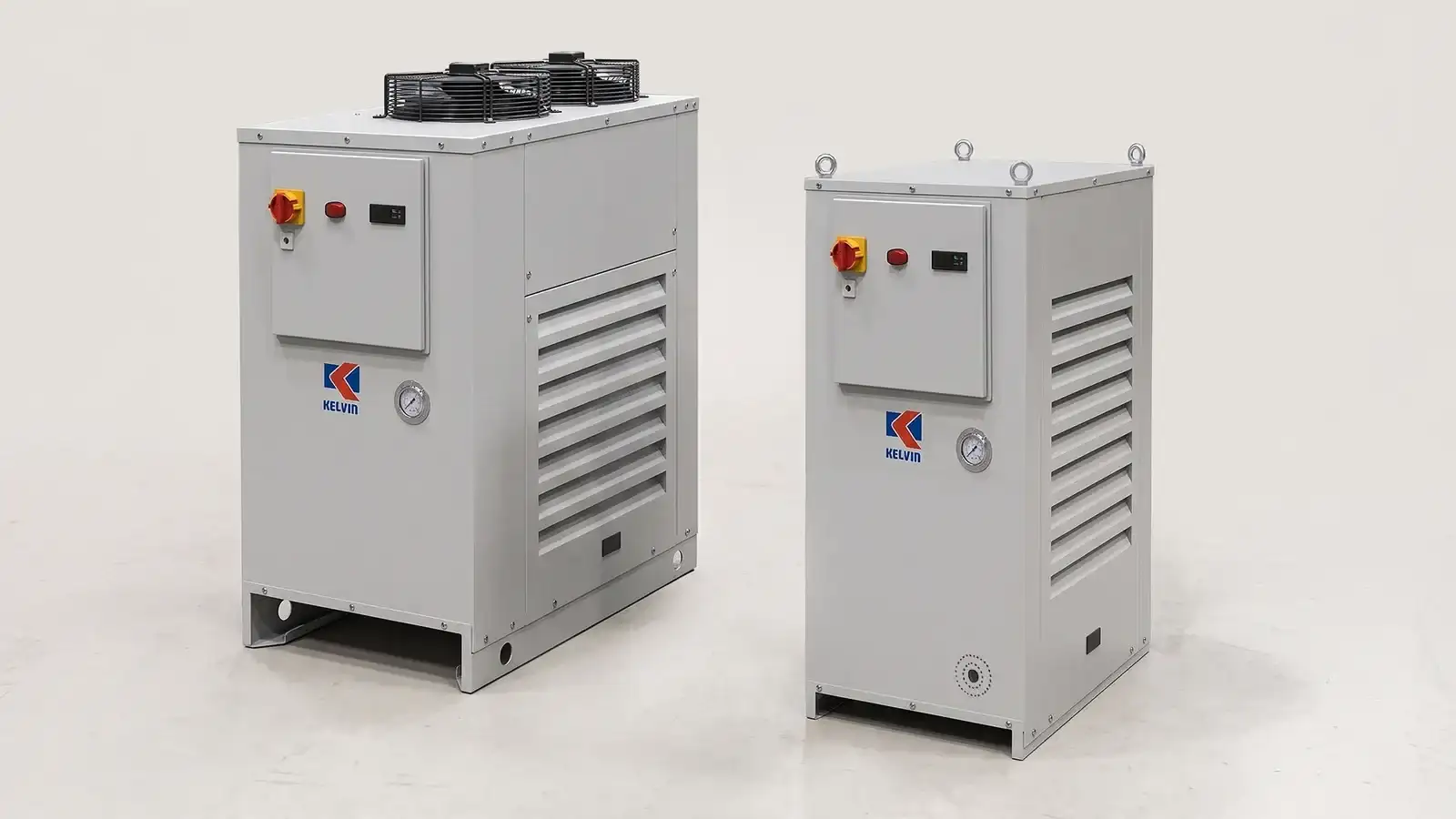
Two grey KRA/KRO chillers with control panel and side grilles, Kelvin Italy
KRA/KRO chillers, 2008. Studio Gecchelin archive.

The company wanted to go further and entrusted the studio with a design study, to give its products an aesthetic and functional quality that was not expected in that sector. The result was the JET and KRA/KRO chiller families.

Project story: Chiller KRA/KRO

Automotive

Magneti Marelli

For Magneti Marelli, the Italian maker of automotive components and systems, the studio worked on dashboards.

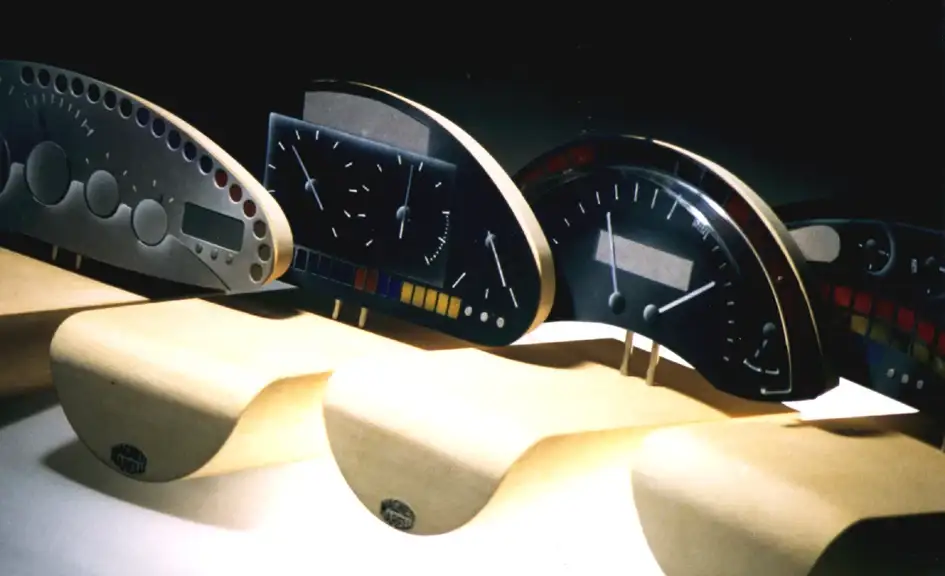
Four car dashboard models with different instruments, lined up on stands, Magneti Marelli
Dashboards: the study models, 1998. Studio Gecchelin archive.
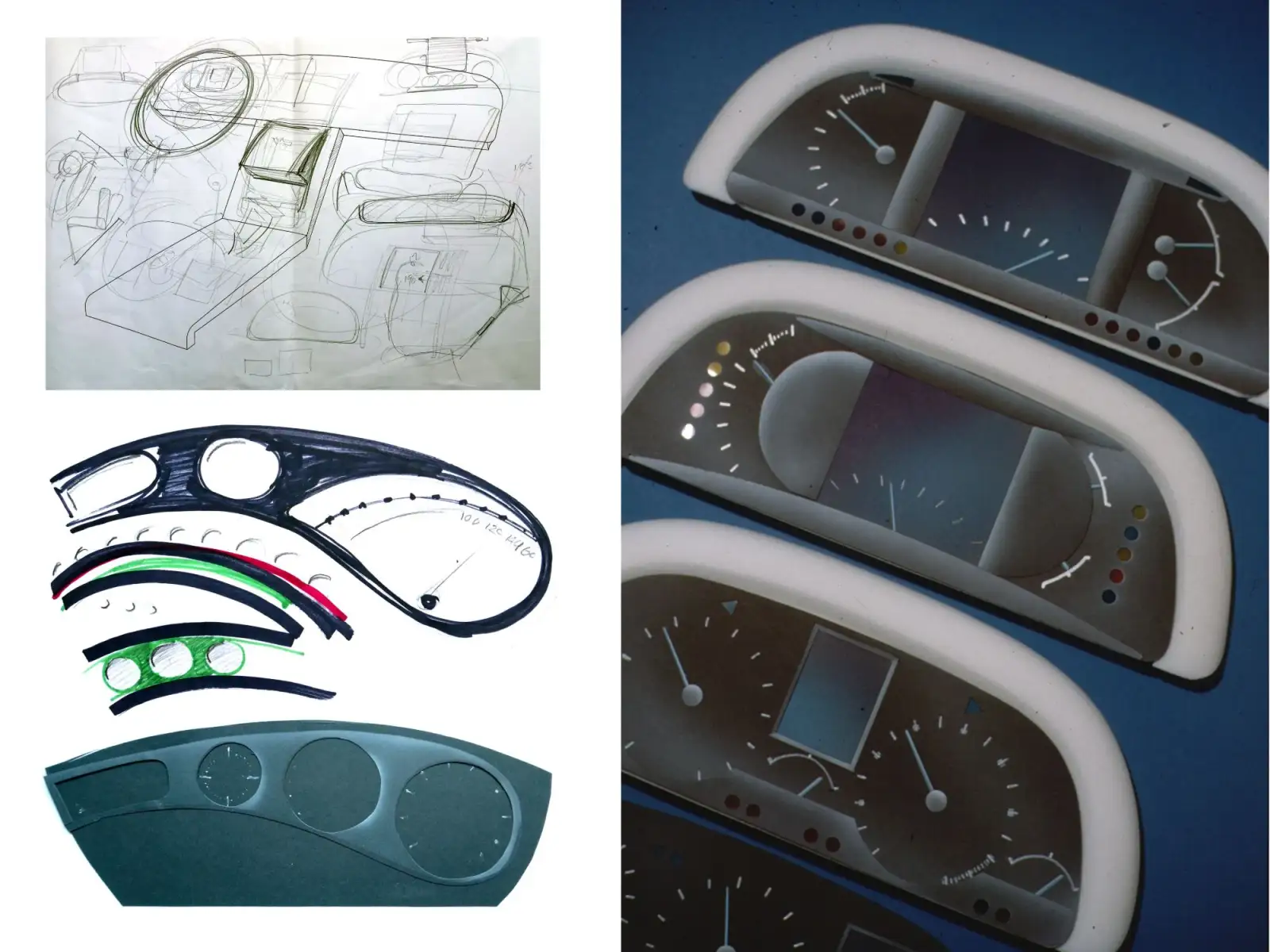
Board with pencil sketches of a dashboard, marker sketches of instrument clusters and three cluster proposals with different instrument layouts, Magneti Marelli
Dashboards: sketches, studies and three instrument-cluster proposals. Studio Gecchelin archive.

The starting point was clarity of information for the driver: a visual hierarchy guiding the eye and establishing what should be seen first. The studio explored visual ergonomics — how quickly and confidently information could be read while minimising distraction from the road.

This analysis led to several proposals, each with a different way of organising and presenting the information on the instrument cluster.

Lighting and modular bathroom systems

Matsushita Electric Works

In the late 1980s, the Japanese company Matsushita Electric Works, later part of Panasonic, approached Studio Gecchelin to develop innovative products with a European sensibility.

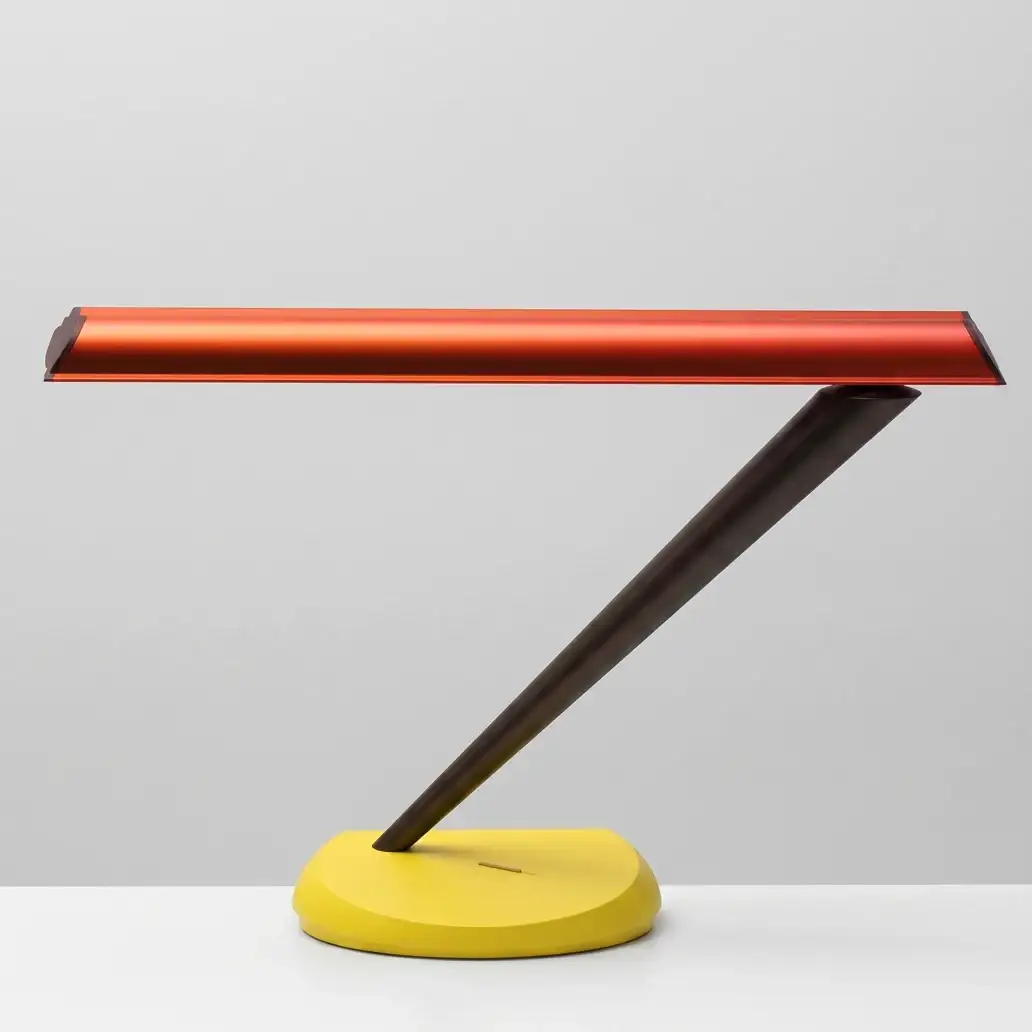
Pinocchio desk lamp with dark tilted arm, red linear reflector and yellow base, Matsushita Electric Works
Pinocchio, 1992.
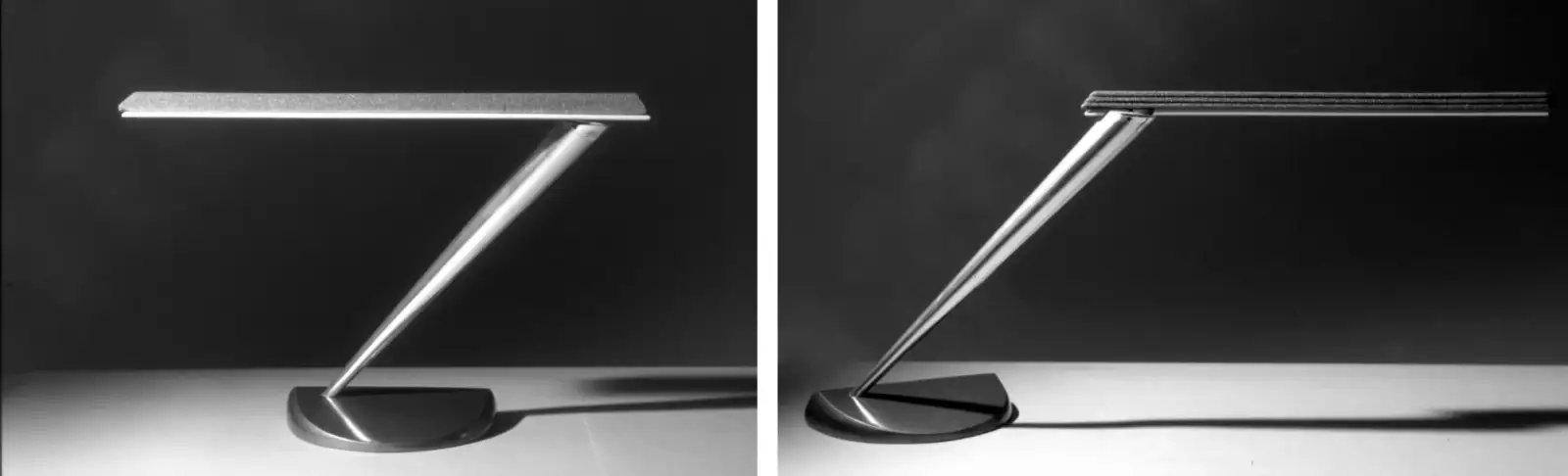
Two black-and-white photos of the Pinocchio desk lamp, with its luminous arm turned in two opposite directions, Matsushita Electric Works
Pinocchio: two positions. Studio Gecchelin archive.
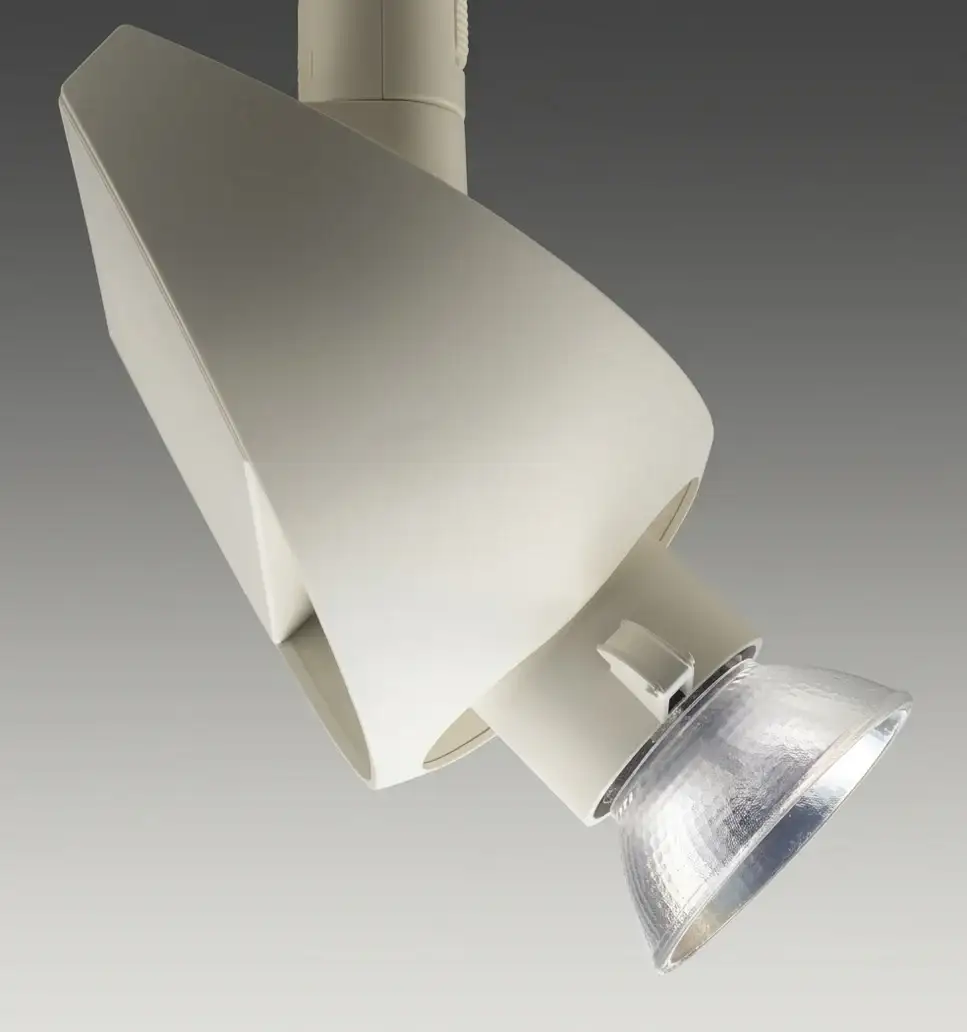
White Lunalu spotlight with exposed halogen lamp, Matsushita Electric Works
Lunalu, 1991. Mention at the “Die Gute Form” award.

The collaboration produced some lighting products, a spotlight and a desk lamp, and a very different project: a traditional Japanese bathroom, based on the modular logic of the tatami and on local building methods.

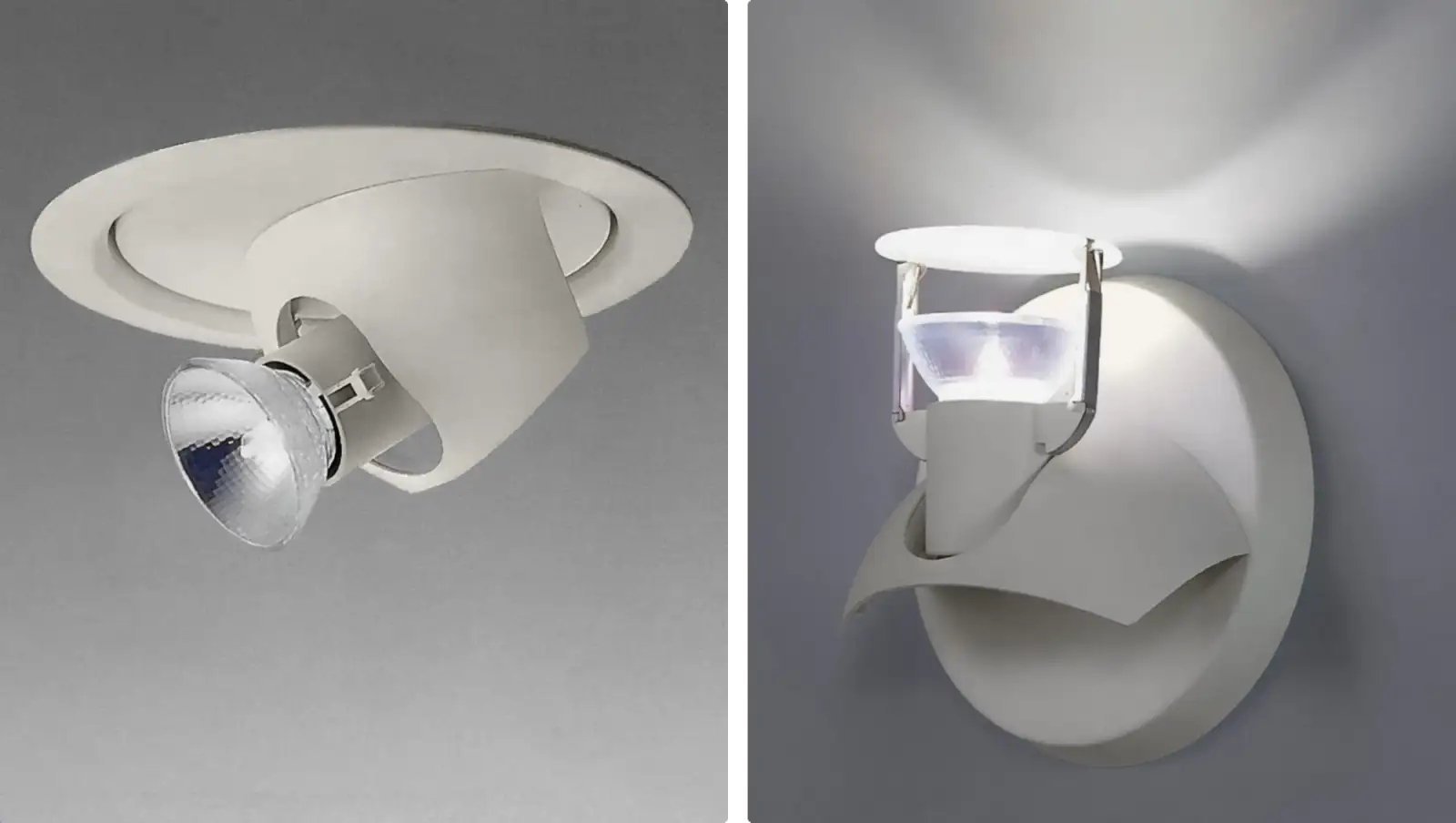
Lunalu spotlight in two versions: adjustable recessed ceiling version and wall version on a round plate, Matsushita Electric Works
Lunalu: recessed version and wall version.
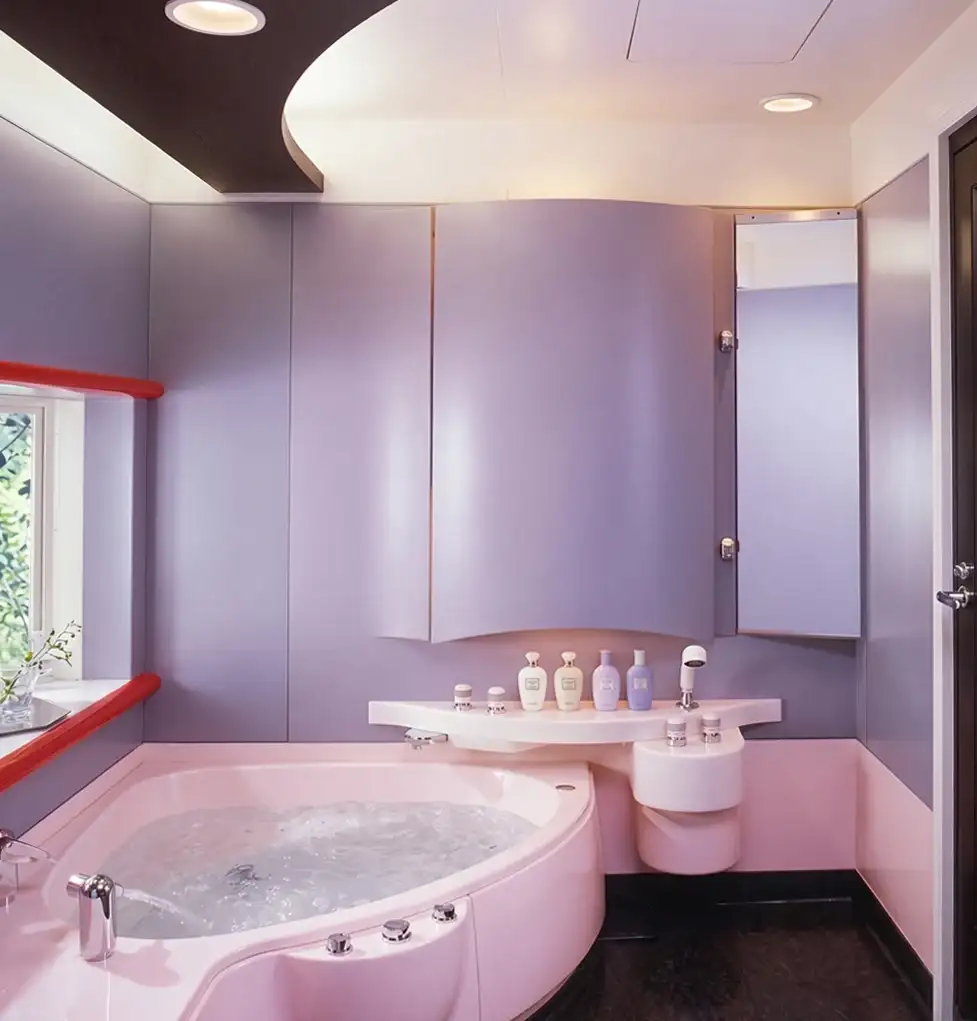
Adria bathroom with pink corner bath, lilac walls and curved cabinet, Matsushita Electric Works
Adria, 1993.
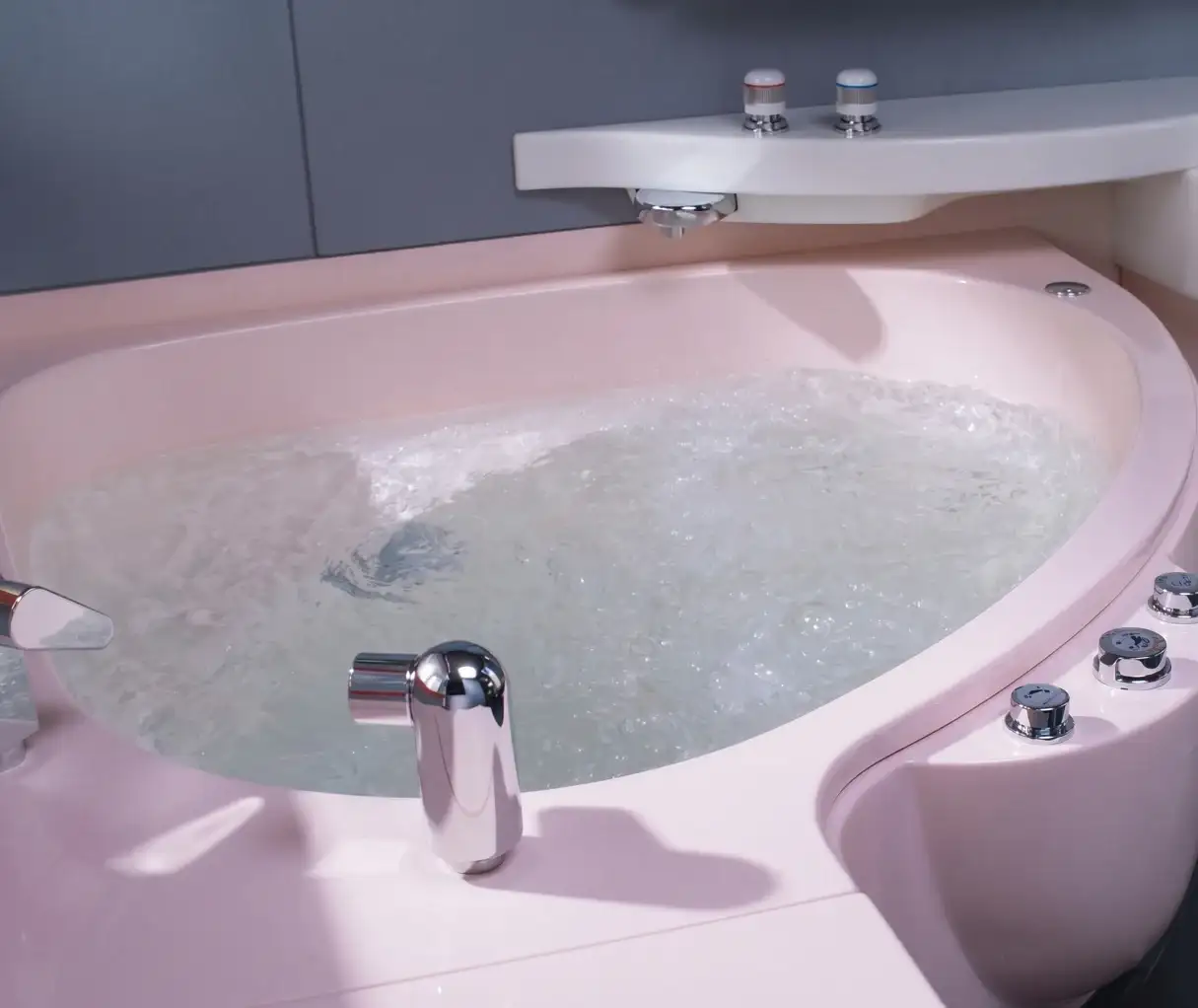
Detail of the pink bath of the Adria bathroom with chrome taps, Matsushita Electric Works
Adria: the bath.

Lighting

Vesta

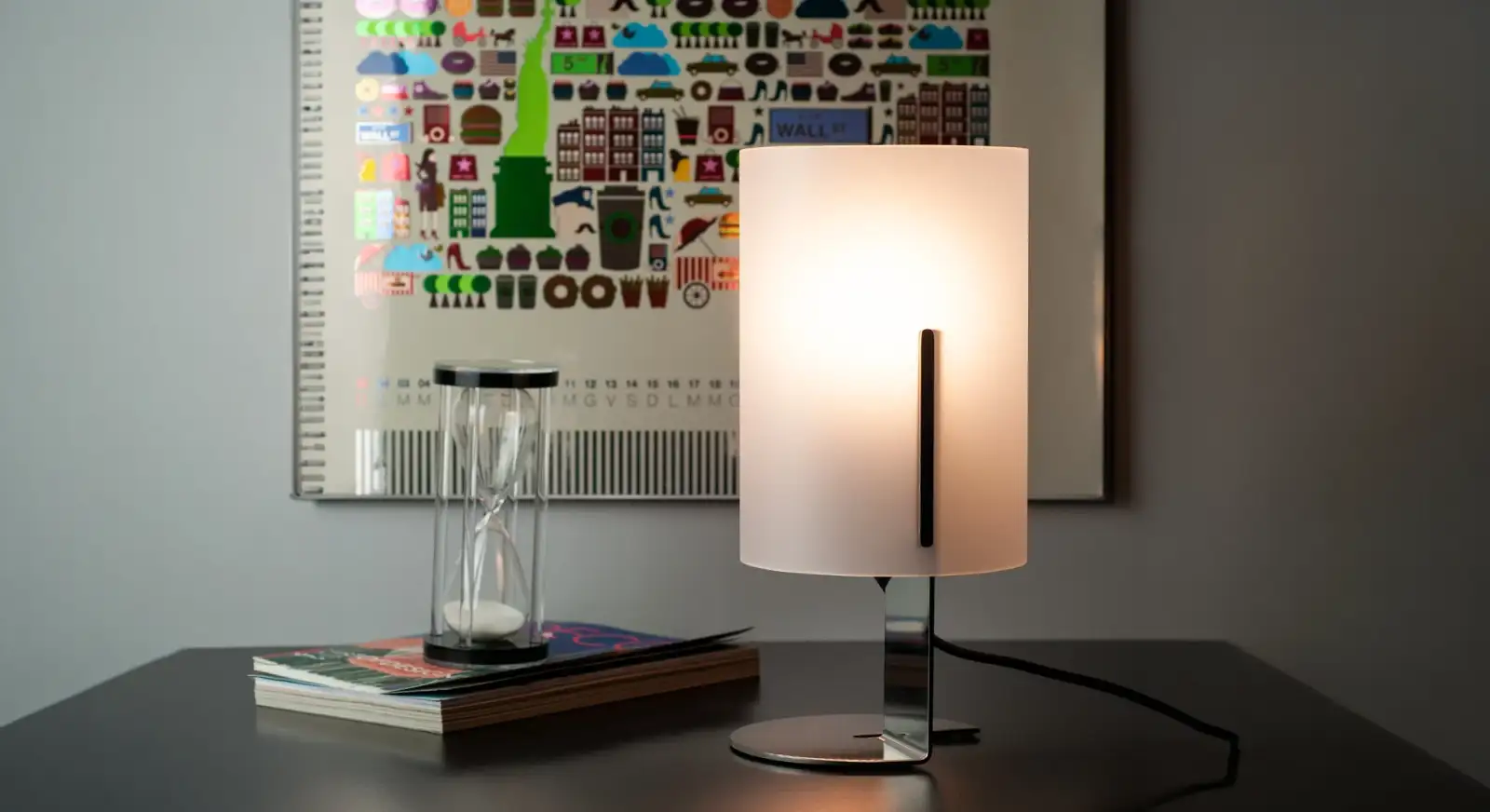
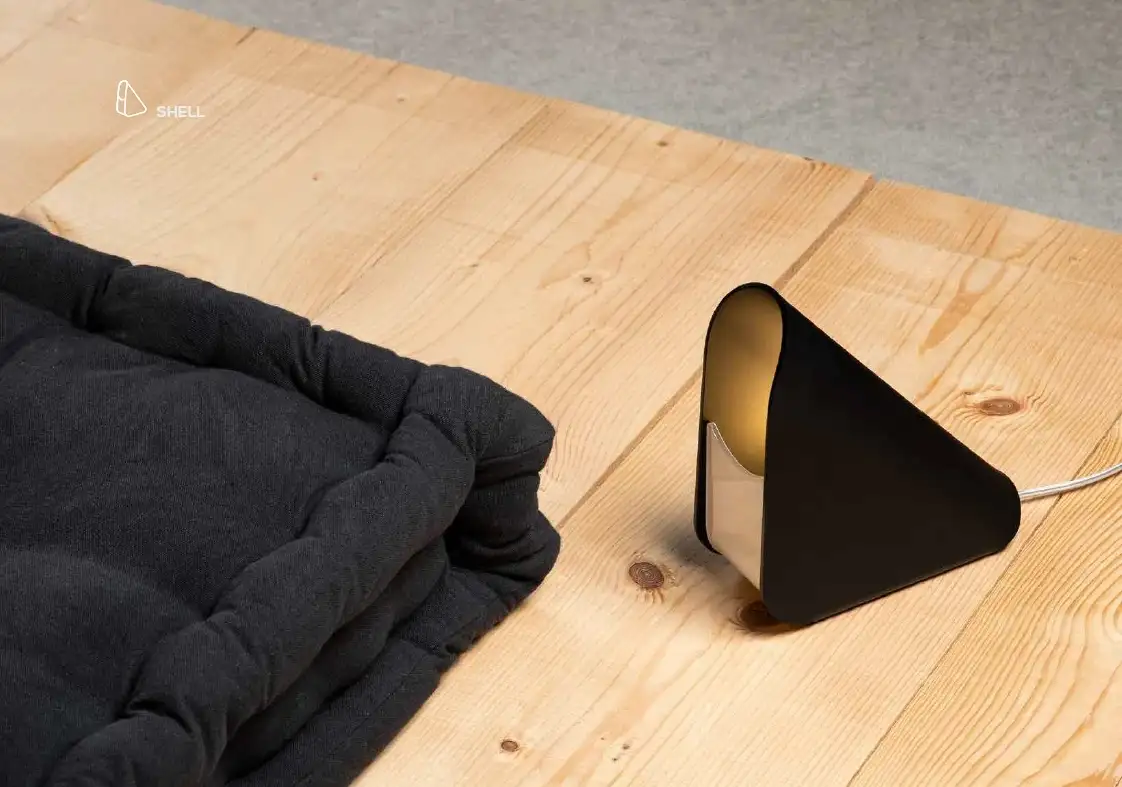
Few companies match its expertise in working with sheet plastic through thermoforming and hand hot-bending. The two lamps grew directly from this capability: their form follows the shape the sheet takes as it is bent.

Quarter table lamp lit on a dark cabinet, with curved white shade, Vesta
Quarter, 2019.
Black Shell lamp shaped like a folded cone, resting on a wooden floor, Vesta
Shell, 2020.

Furniture

Ycami

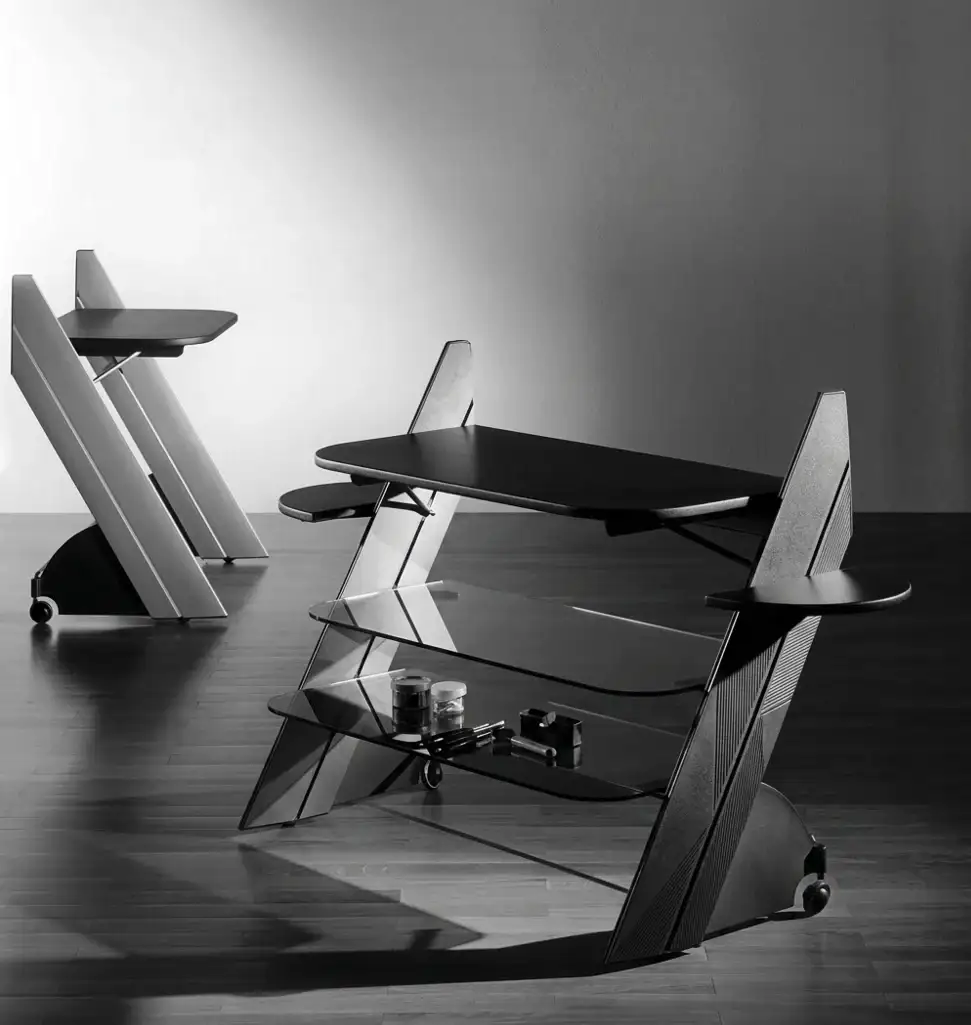
In 1992, Ycami, a Brianza-based company specialising in aluminium processing for the furniture industry, approached the studio to design a TV trolley. Cathode-ray tube televisions were bulky, and the trolley had to accommodate them.

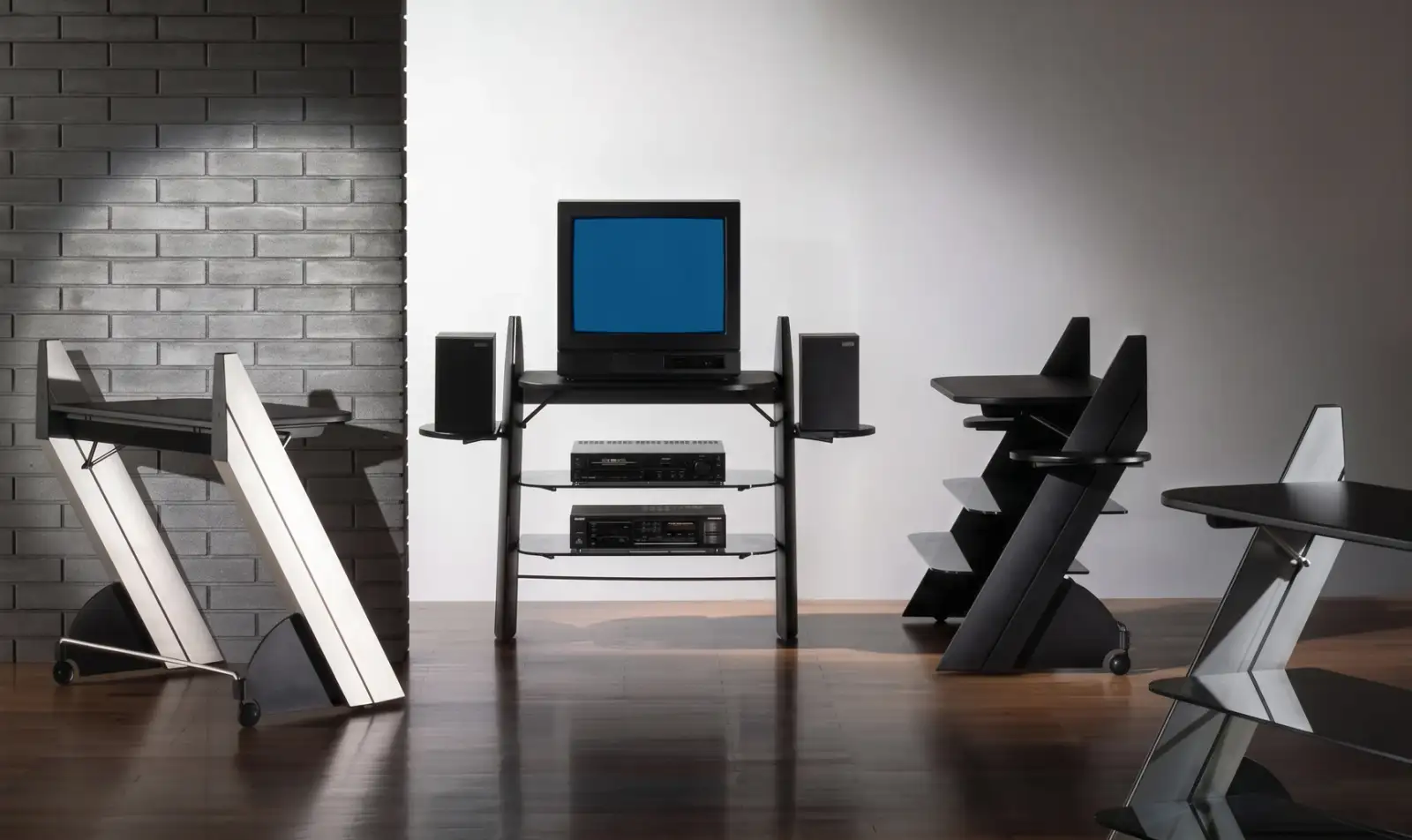
Screen aluminium trolleys in a living room, one with a television and stereo; black-and-white photo, Ycami
Screen TV trolley.
Three Screen trolleys with diagonally cut aluminium sides; black-and-white photo, Ycami
Screen: the diagonally cut sides.

The solution uses an aluminium profile cut diagonally, giving the trolley a dynamic appearance suited to an object designed to move on castors.

Unless otherwise stated, images are sourced from the companies’ catalogues and published solely to document the studio’s design work. All rights remain with their respective holders, as set out in the Legal notices.