
The prototype worked, but that was not enough
Ligea
The company wanted a cordless lamp, by now a very common type, but made in hand-blown glass: a material still almost unexplored in this segment. The first prototype worked, but that was not enough to carry the project forward.
- Company
- Italamp
- Product
- Ligea, cordless blown-glass lamp
- Year
- 2022
- Design
- Lorenzo Gecchelin
- Status
- Discontinued
The project
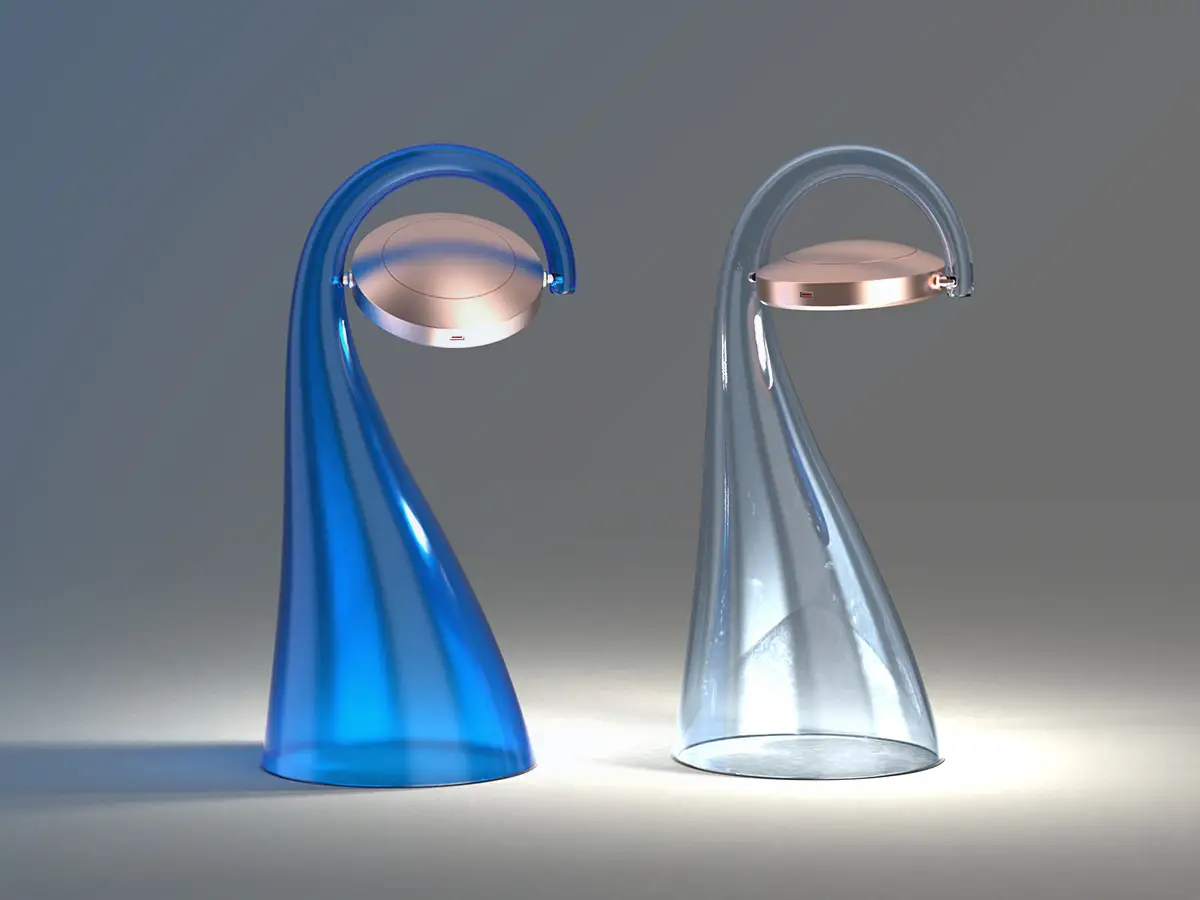
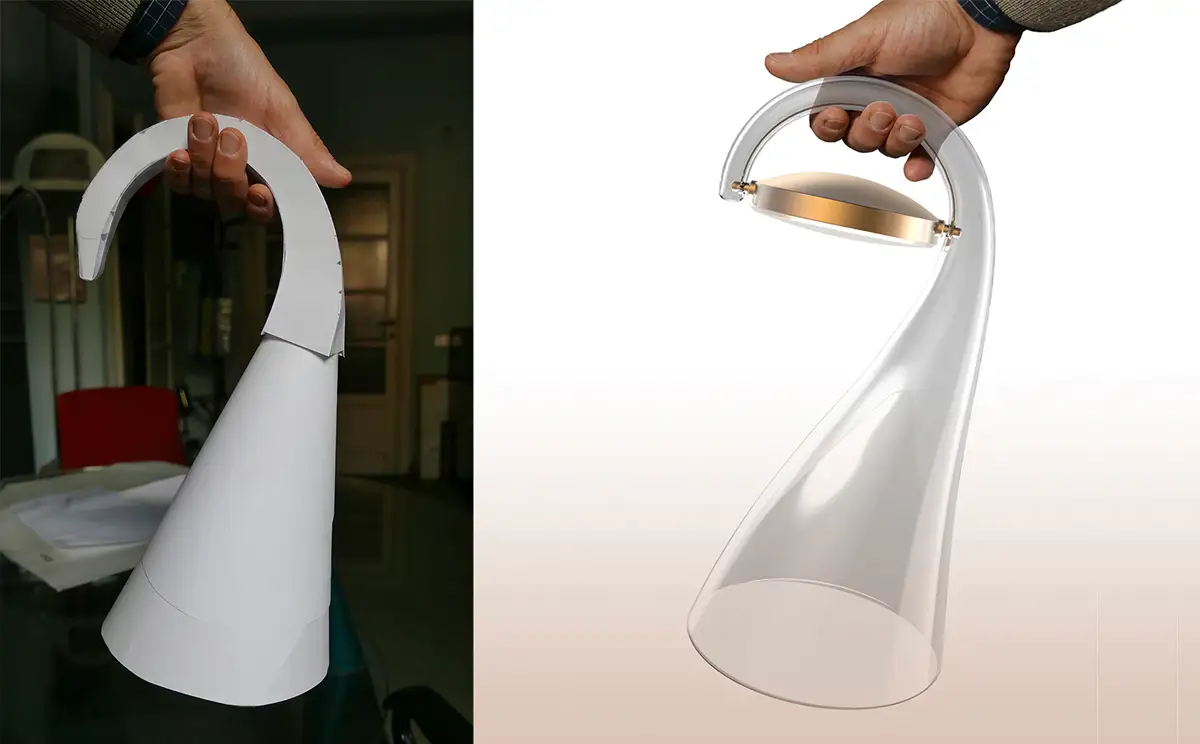
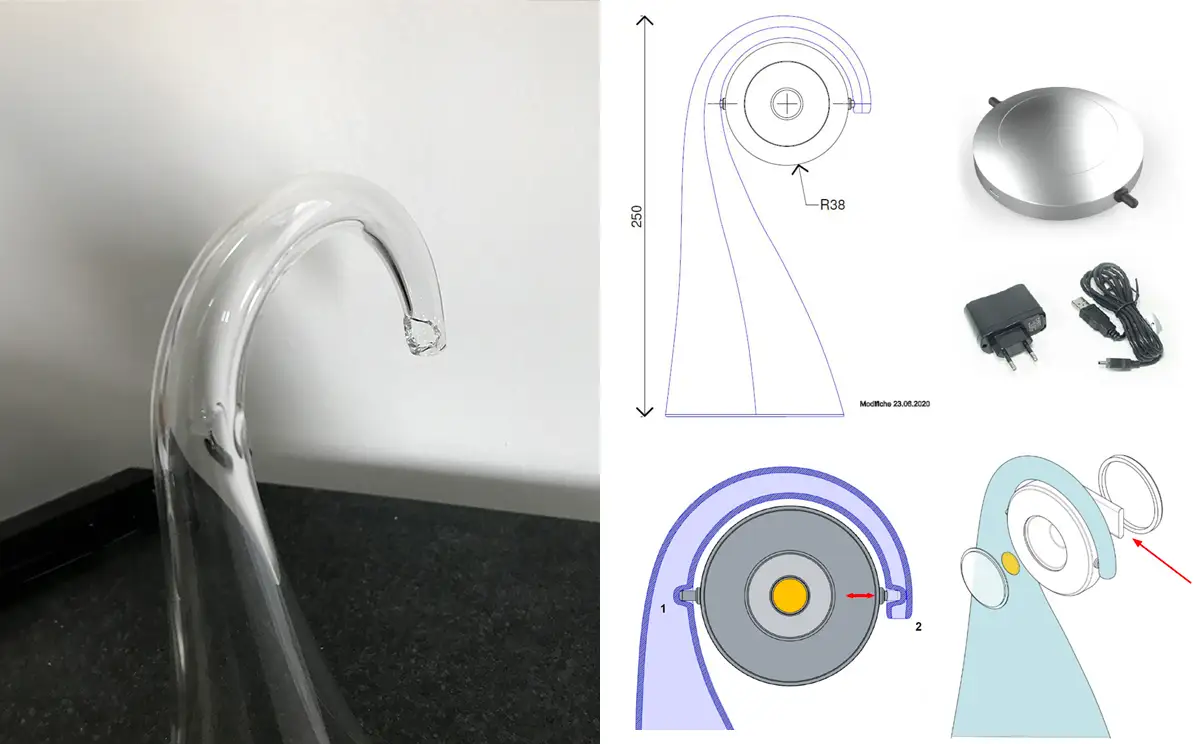
The first proposals followed the layout everyone used: a base body, the light unit at the top and the light directed down onto the surface it stands on. The glass acted as a support, the curved upper part as a handle, while the circular metal element held the LED module and the batteries.
The design was certainly different: no one else was using blown glass in this way. But being different does not necessarily mean being better. Functionally, the material offered no advantage. It was a premium material used simply to perform the role of a stem.
We only realised this when the lamp was switched on. Architect Danilo De Rossi, the company’s art director, oversaw the production of fully wired blown-glass prototypes with all components in place. This allowed us to see the actual lighting effect, which a rendering can only simulate. The prototype worked as intended, with adequate light output and a comfortable grip. But the glass remained dark. When switched on, the lamp justified neither the choice of material nor the craftsmanship involved.
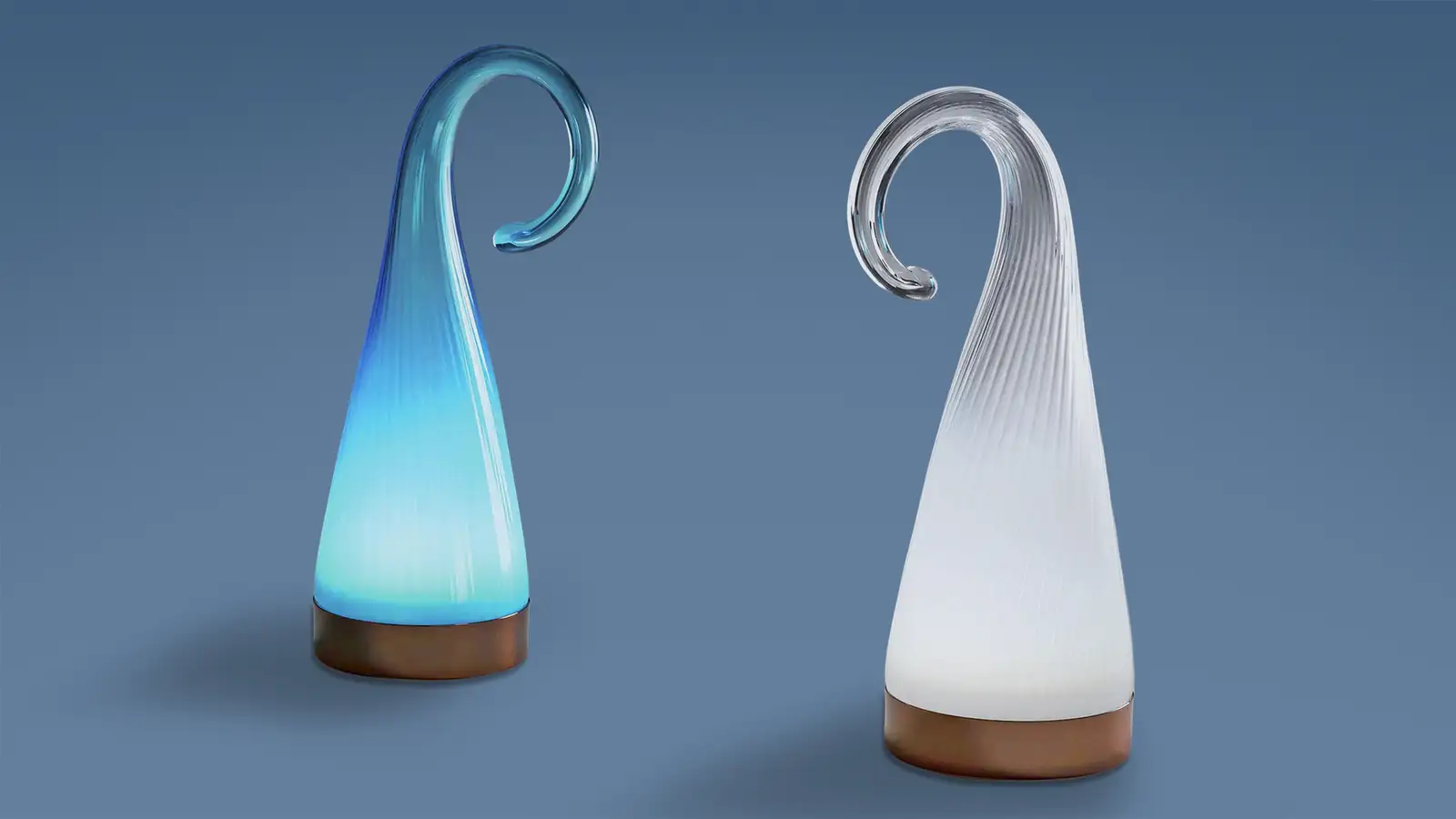
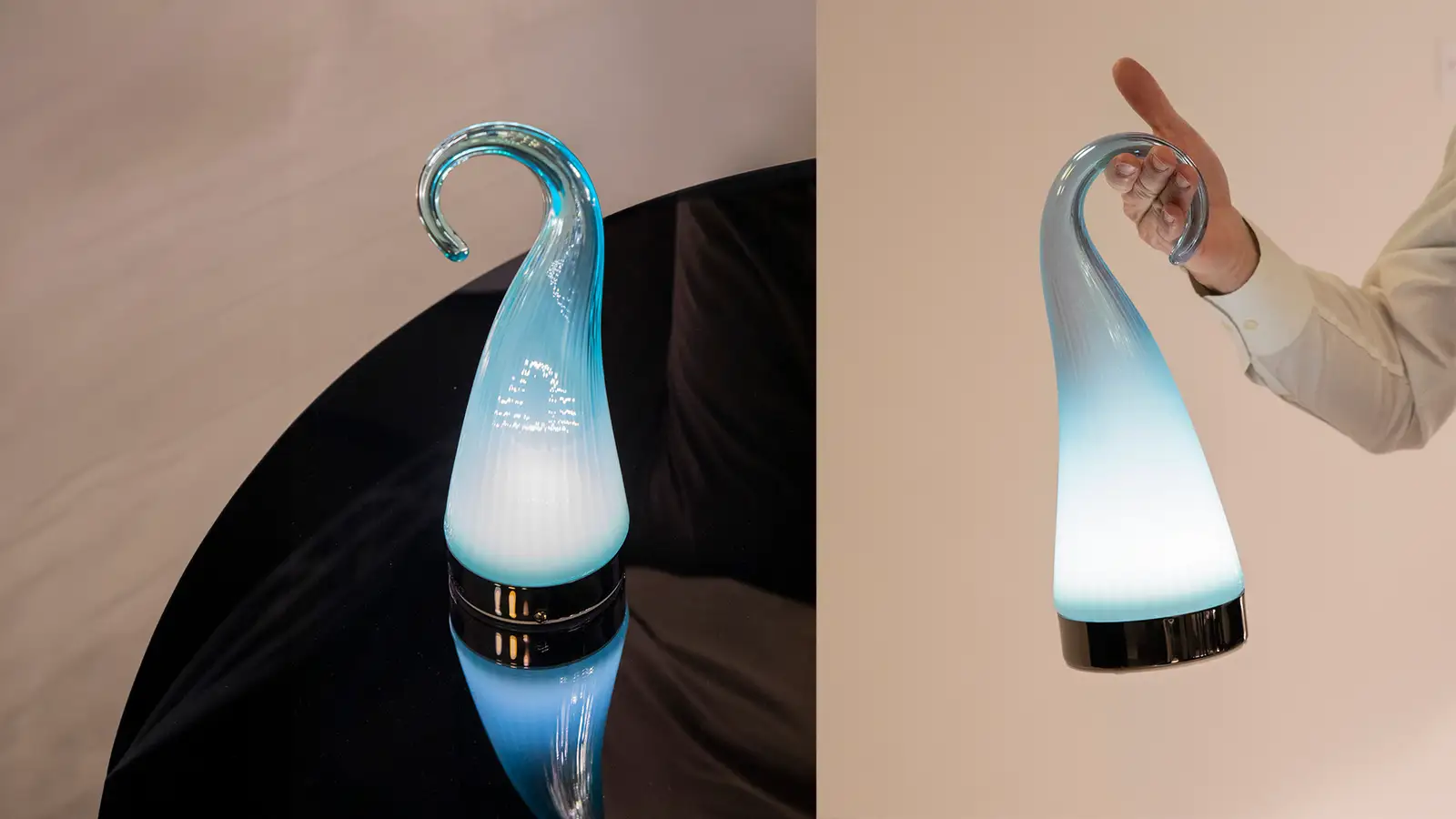
From there came the reversal: LED and battery were placed at the base of the volume, with the light pointing upwards. The result: the whole glass lamp lights up from within. The upper part loses any lighting role and remains only what it already was: an umbrella-handle grip for moving the lamp wherever it is needed.
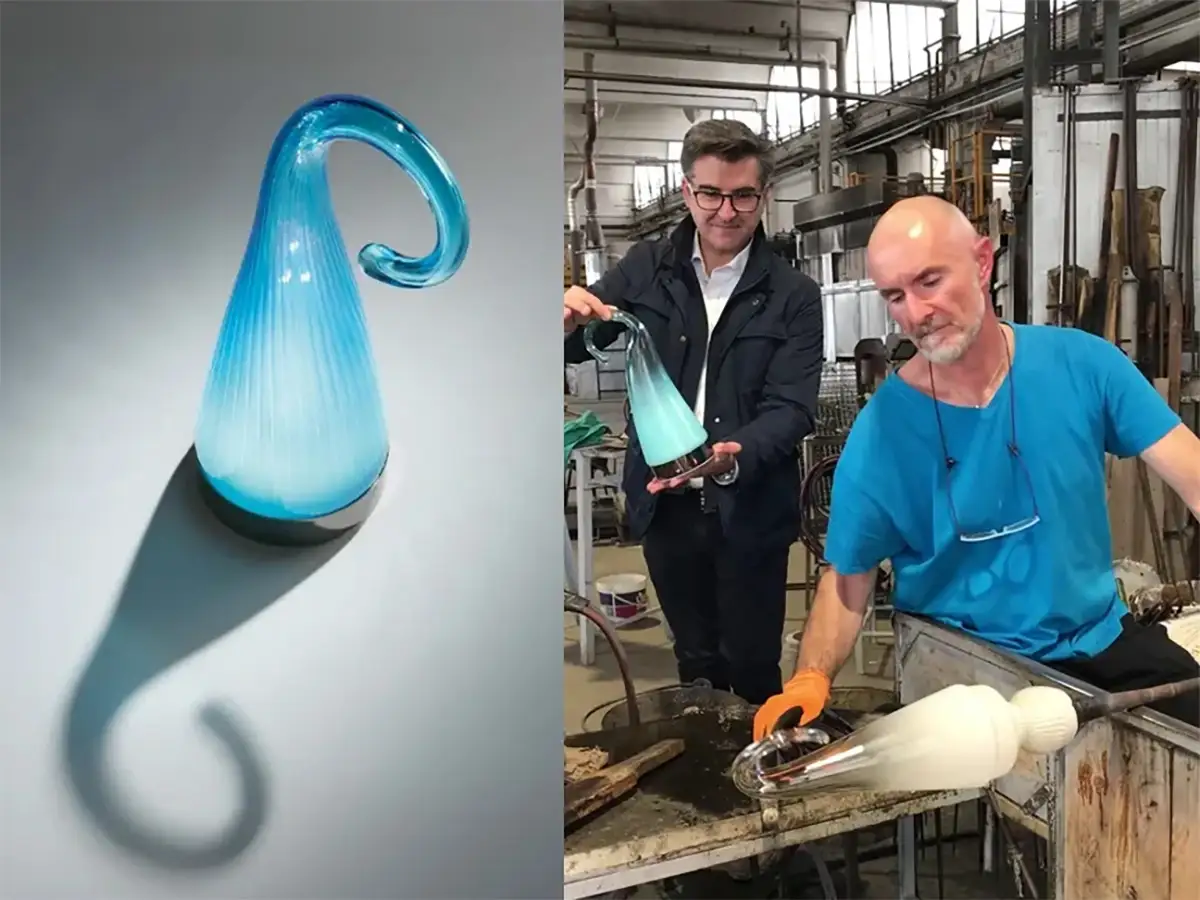
This is where the initial proposal led to something a straightforward development path would not have produced. Lit from within and below, the conical blown-glass body stops being a shell and becomes a light source. Variations in thickness, internal ribbing and the way the glass narrows towards the tip all become visible through the light. The value of craftsmanship emerges: a fixed mould produces similar pieces, but rarely identical ones, because molten glass can only be controlled up to a point. When the lamp is off, these differences are details that go unnoticed. When it lights up from within, they define the product.
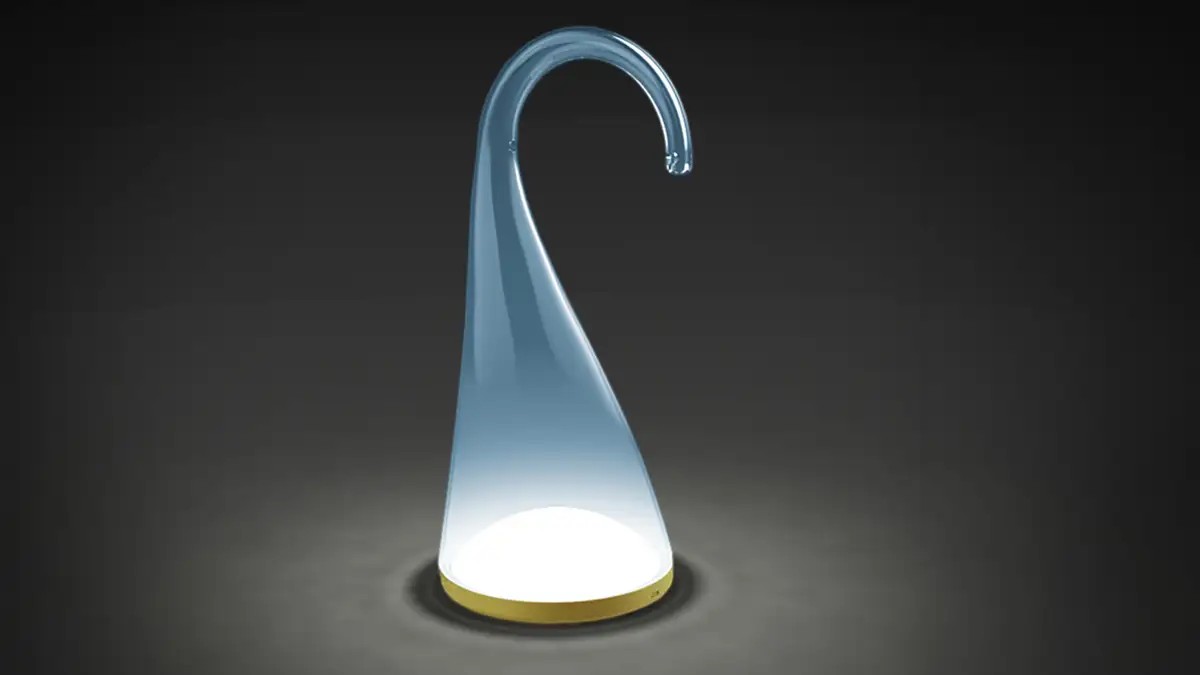
The diffuse light it produces is unlike that of any other portable lamp on the market, where countless similar, mass-produced products with lower performance all direct light downwards and compete on price.
Blown glass cannot be designed from a distance. The simulations served to compare in advance the intentions of the project with what the master glassblower can actually make, avoiding gaps between the vision and the piece. But the most important decision did not come from a rendering: it came from switching the lamp fully on.
What we learnt
Testing a working lamp prototype costs little. Engineering the wrong product costs a great deal. The first version of Ligea worked and could have gone into production without anyone objecting. But testing the actual lamp switched on, rather than relying on a simulation, showed that a better solution was possible. And that is what we developed.