
The calculated risk an entrepreneur must get right
Virgola
On 23 December, two designs lay on the desk of iGuzzini’s owner: one I had drawn by hand the night before, and another prepared by the engineering department, fully developed and ready for production. He chose my drawing.
- Company
- iGuzzini illuminazione
- Product
- Virgola, die-cast aluminium spotlight
- Year
- 1981
- Design
- Bruno Gecchelin
- Status
- Discontinued
The project
The other design was for a product in the same family, developed by an in-house technical designer down to the final production drawings. It was ready to manufacture. Proceeding with it would have been the obvious choice, and no one could have blamed him: the cost and risk of changing course by choosing my proposal were high and visible; those of staying on the same course would have remained unseen.
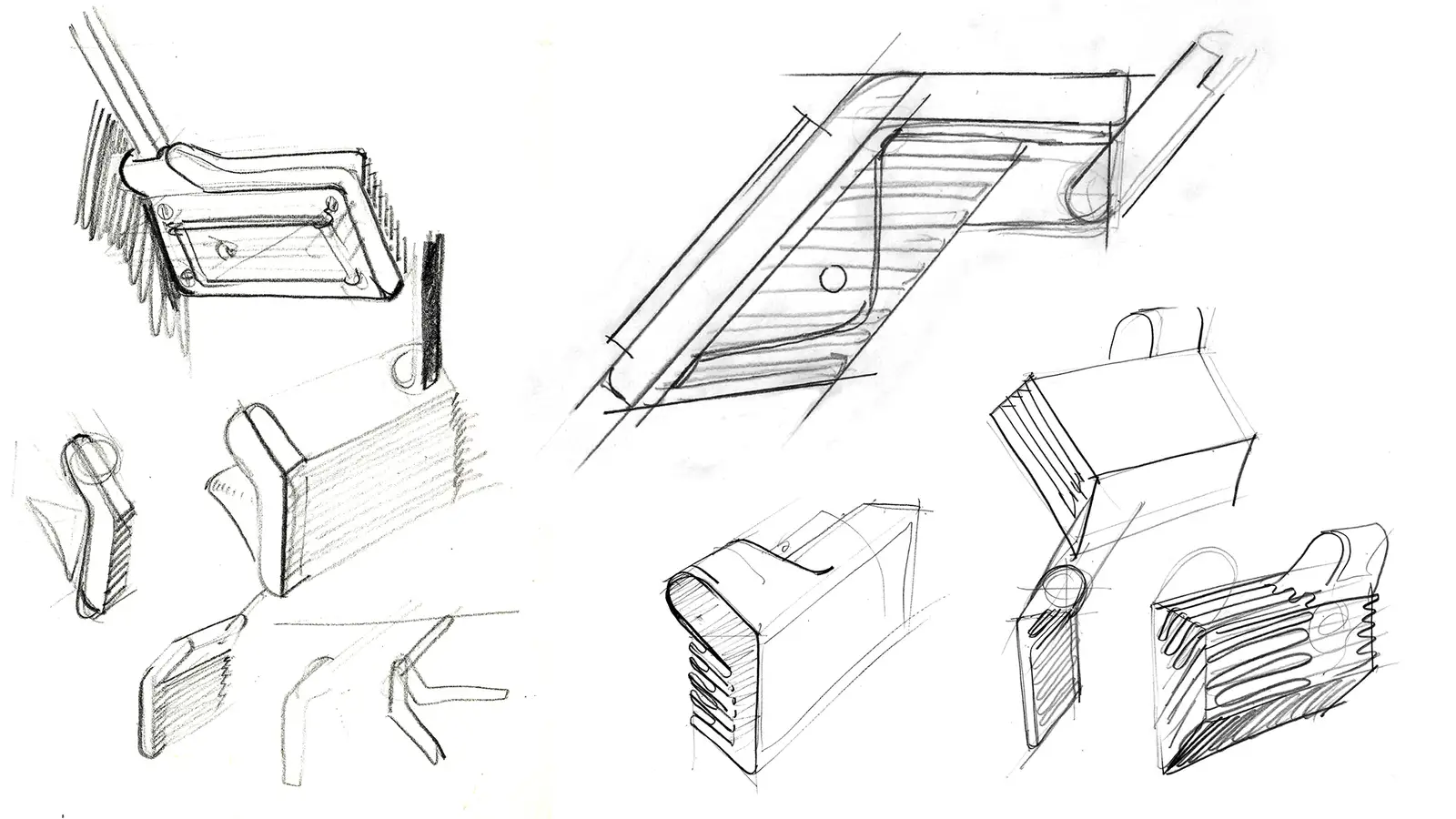
The technical constraint was demanding. A 300-watt linear halogen bulb — long, narrow, exceptionally bright and extremely hot — required a highly reflective aluminium reflector to direct the beam and a die-cast body capable of dissipating the heat. The standard response, both on the market and in the completed design, was to enclose the bulb and reflector as compactly and neatly as possible. This failed on two counts: an enclosed body dissipated heat poorly, and its form said nothing about a product that was introducing an approach to lighting that would last twenty years.
The owner’s entrepreneurial instinct told him that, although a project ready for production already existed, the product was not yet mature enough and it was worth exploring a different path.
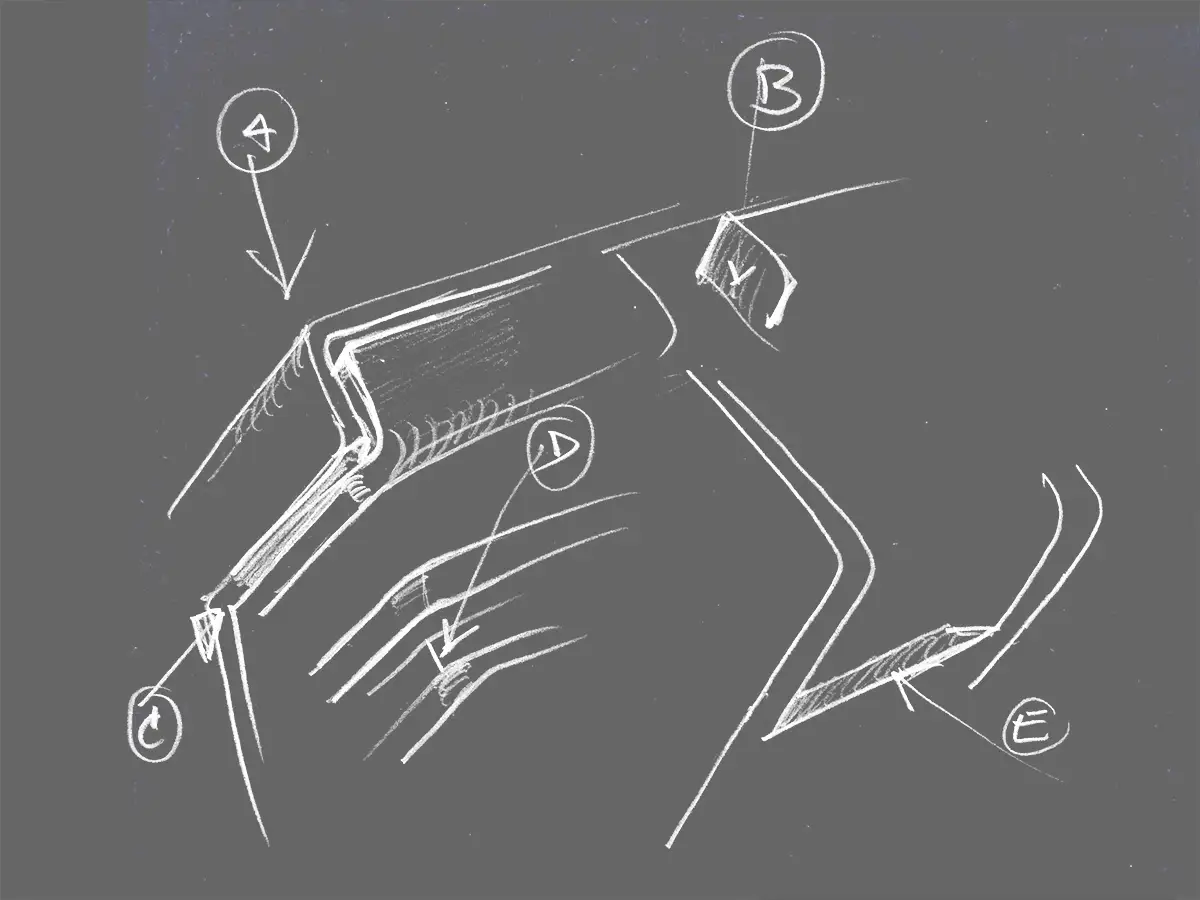
Starting with the side view and the core components — the bulb and reflector seen in section — Gecchelin developed the design by reducing its depth and increasing its width. This accommodated all the technical components while allowing the object’s personality to emerge.
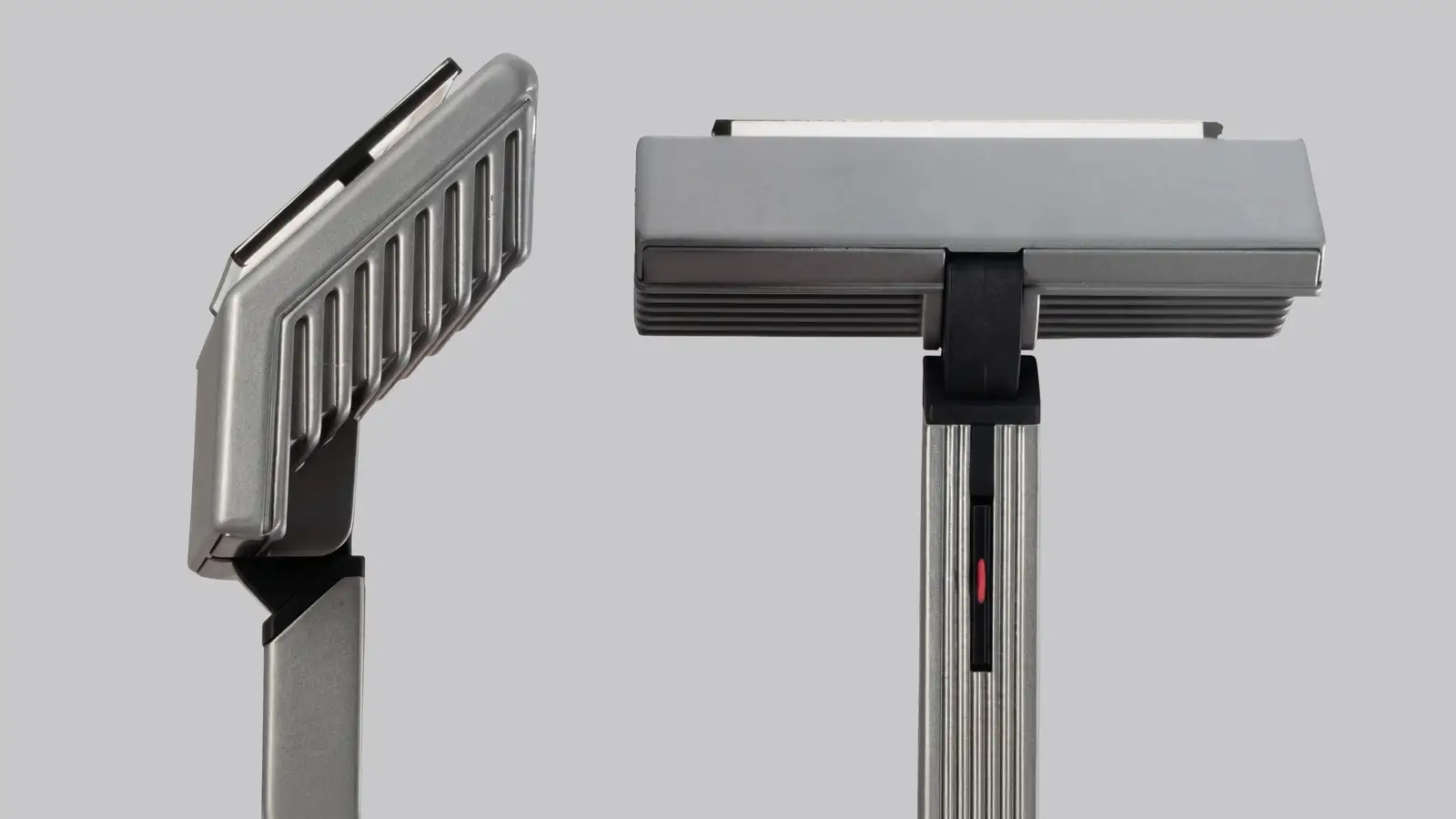
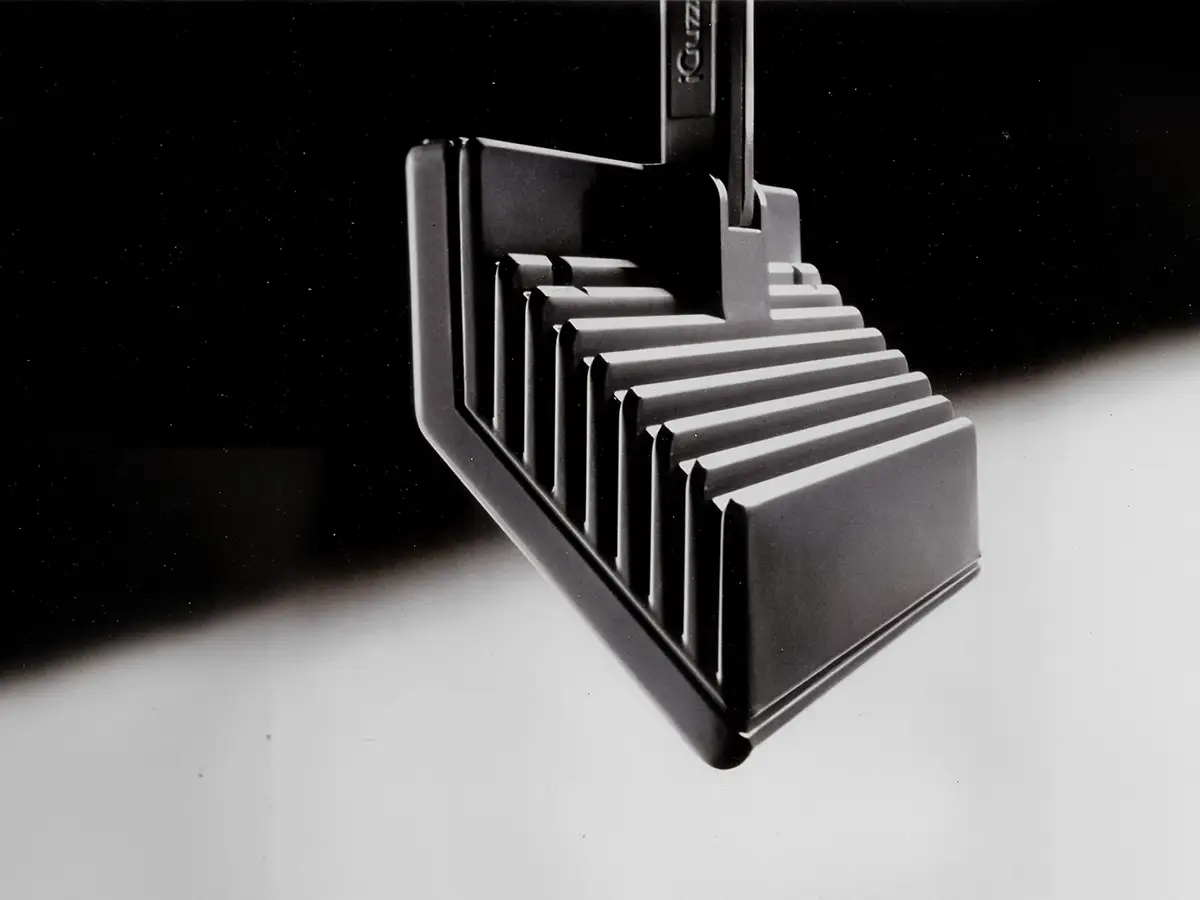
Seen from behind, the spotlight is an ordered sequence of parallel die-cast aluminium fins that dissipate heat, much like those on an engine. Towards the front, they merge into a continuous form that tapers to a blade-like edge. This sequence gives the object direction and makes it read as a series of slender lines rather than a solid block. There is no heat sink with a separate styling treatment applied to it: the same geometry performs both roles.
In the 1980s die-cast aluminium was everywhere, in cars, computer frames, electromechanics and radiators, almost always with a purely technical character and only rarely used to sculpt form. In the Virgola projector that sculptural possibility was there and it was fully exploited: the object does its job and, at the same time, asserts its identity. The edges are softened by radii that give grace to the slender volume; each fin traces a line along which heat and the eye both travel.
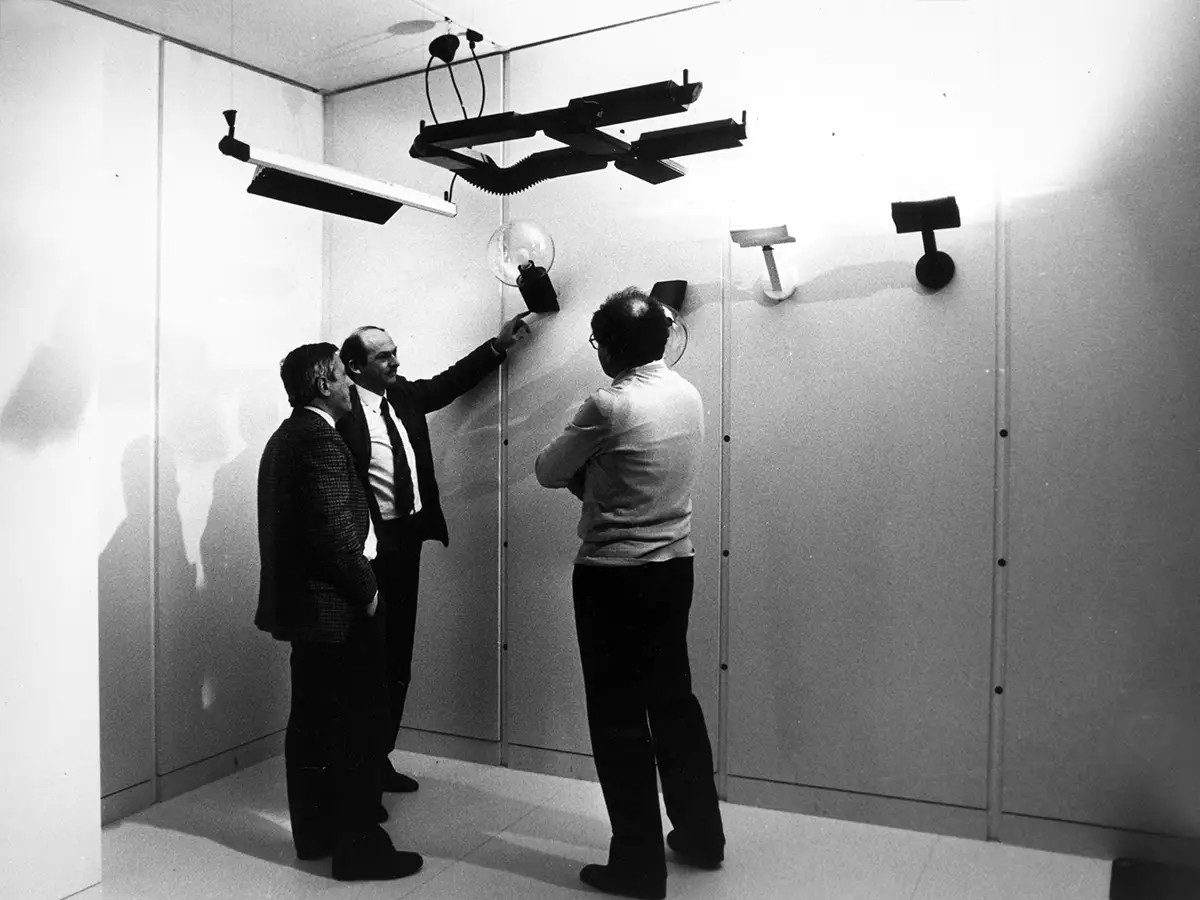
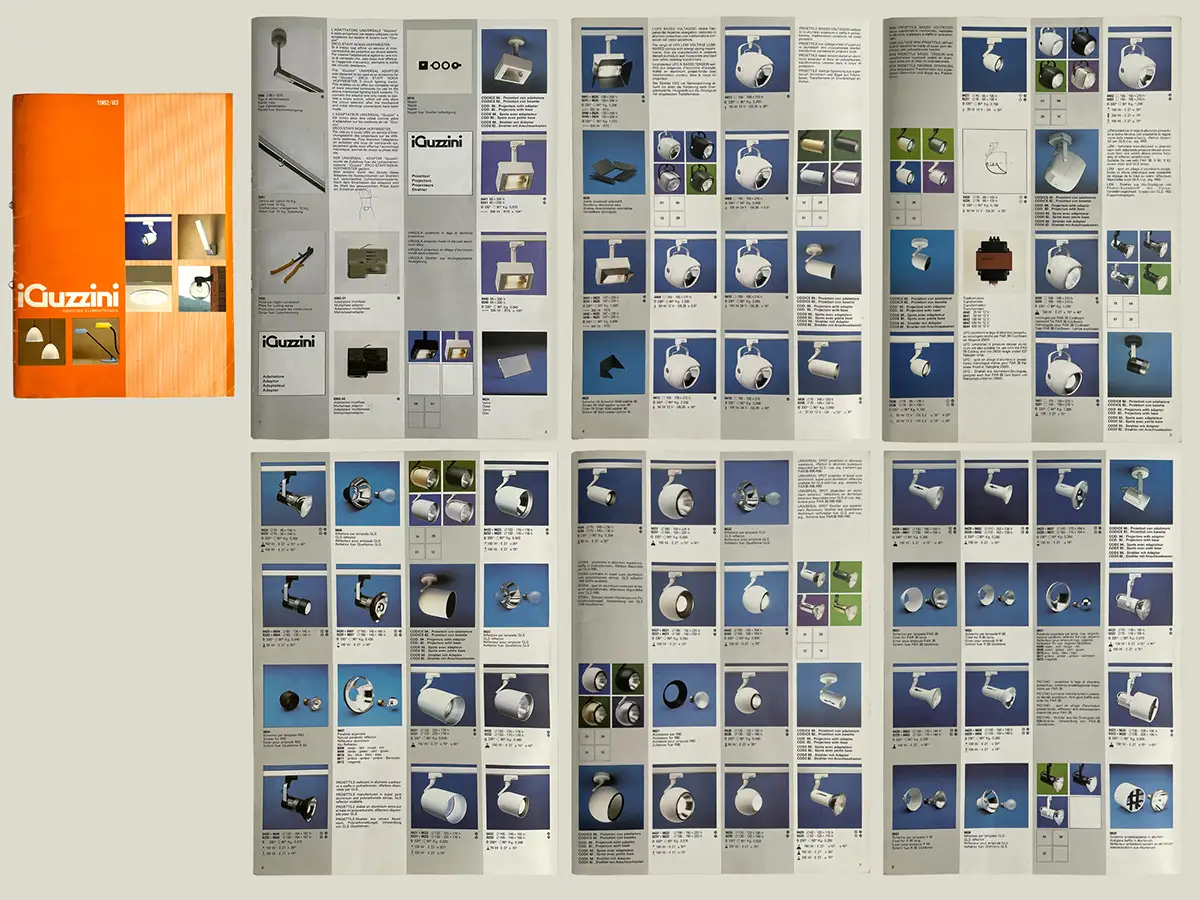
iGuzzini’s Harvey production had an established tradition of moulded plastic lamps, colourful and decorative, alongside a few first-generation track and recessed spotlights. Virgola took it abruptly into the technical lighting market: shops, offices, art galleries and hotels. The track projector was developed into wall, ceiling and floor versions.
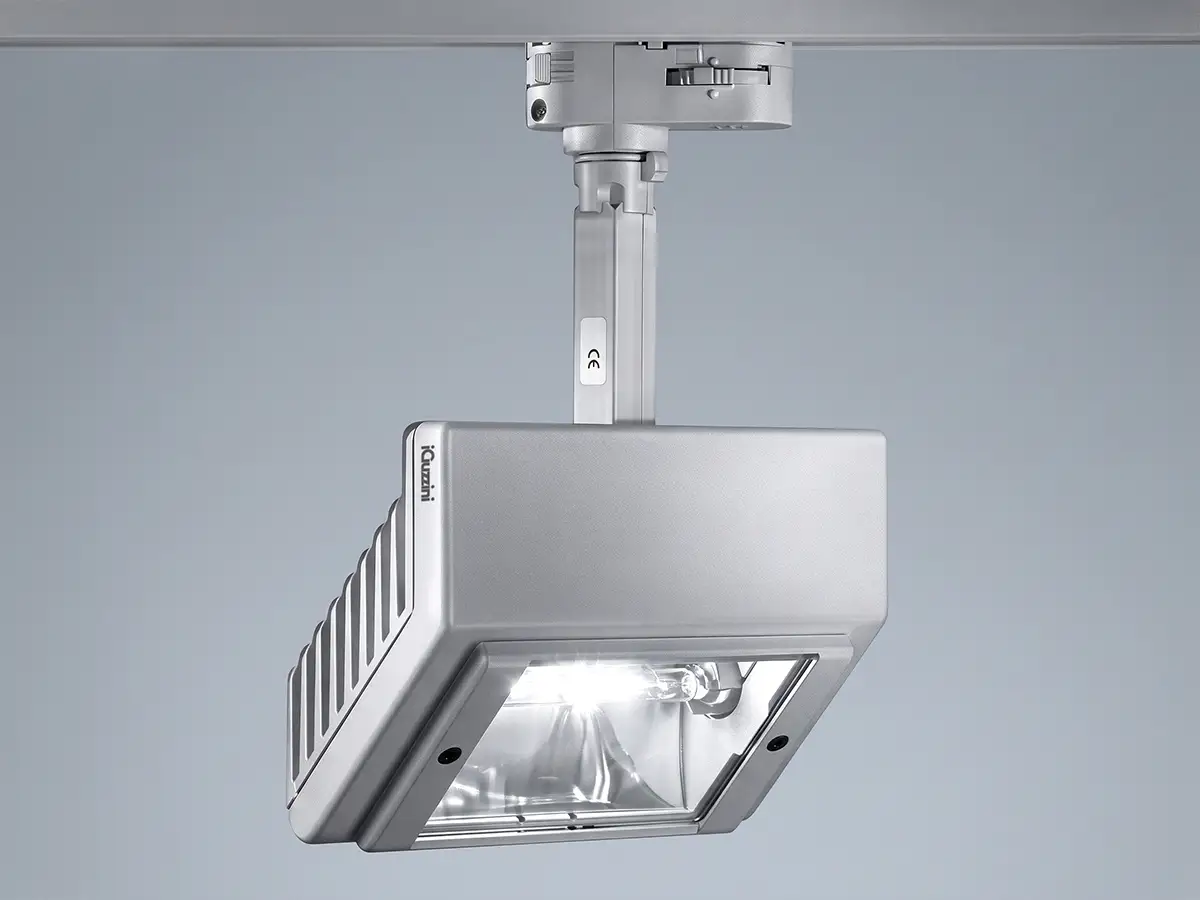
The product’s formal clarity and clean, technical character allowed it to be developed into floor-standing and wall-mounted versions. This coordinated family further supported the company’s expansion into technical lighting at the time.
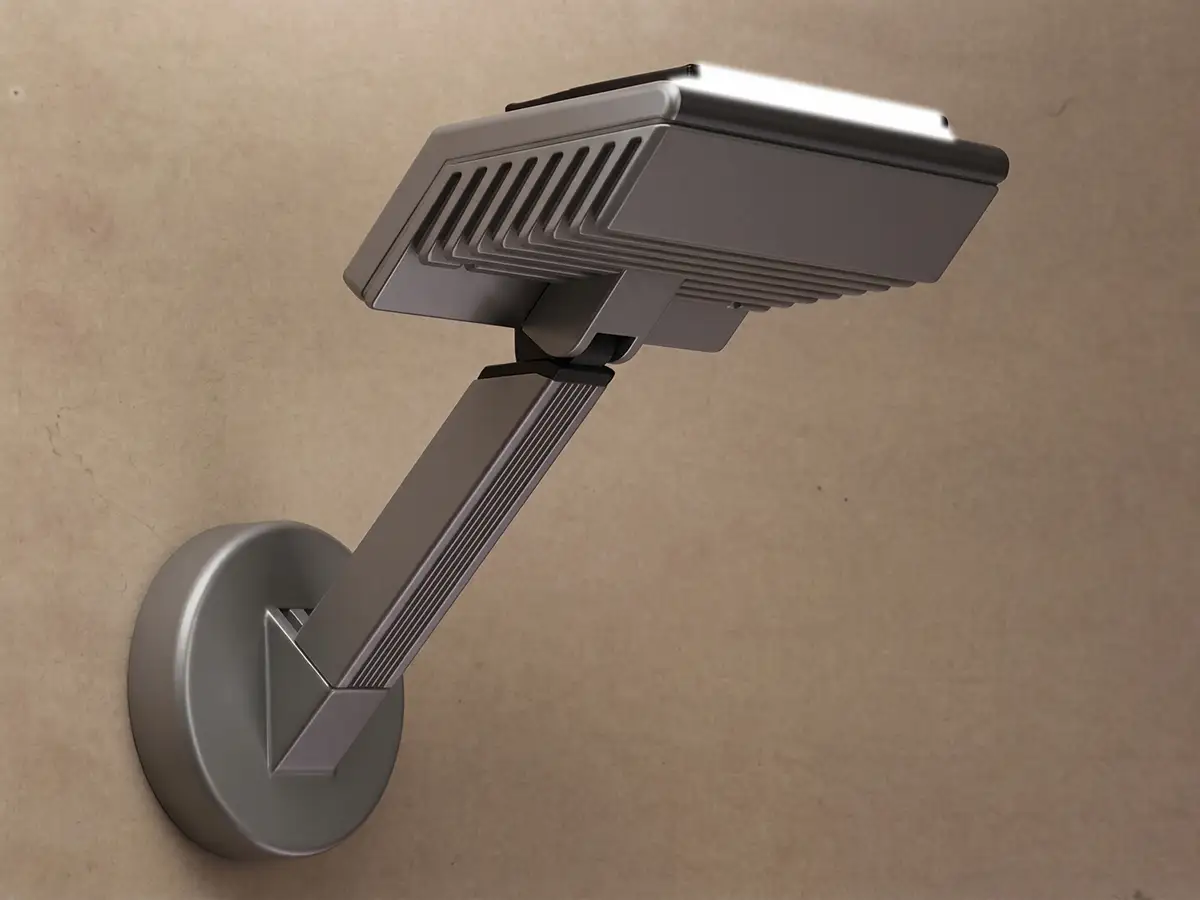
No longer in production, it ushered in the company’s technical lighting era.
What we learnt
The best design rarely arrives at a convenient moment. Virgola was not the first proposal, and it arrived as a hand drawing competing with another design already developed down to the final production drawings. Recognising its potential at that early stage, and accepting that the work already completed would have to be set aside, required someone who truly knew how to lead the company.