
A project stopped just before becoming a product
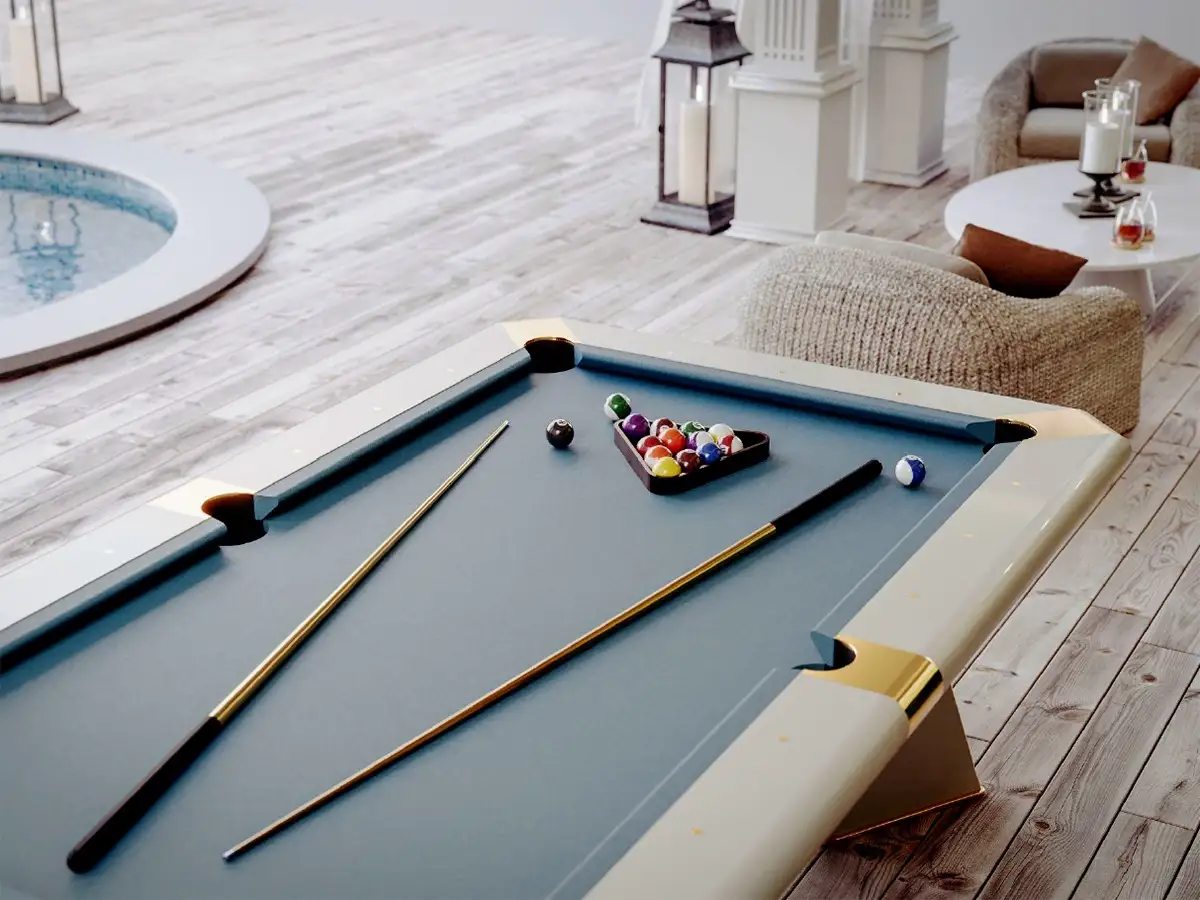
Biliardo outdoor Breeze
A billiard table may look like a piece of furniture, but it is a precision instrument for play. Construction accuracy is essential: the playing surface must be perfectly level, and the cushions must provide a consistent ball rebound. Maintaining these standards outdoors presents a considerable challenge.
- Company
- Italian billiard maker
- Product
- Biliardo outdoor Breeze, outdoor billiard table
- Year
- 2024
- Design
- Lorenzo Gecchelin with Bruno Gecchelin
- Status
- Not produced
The project
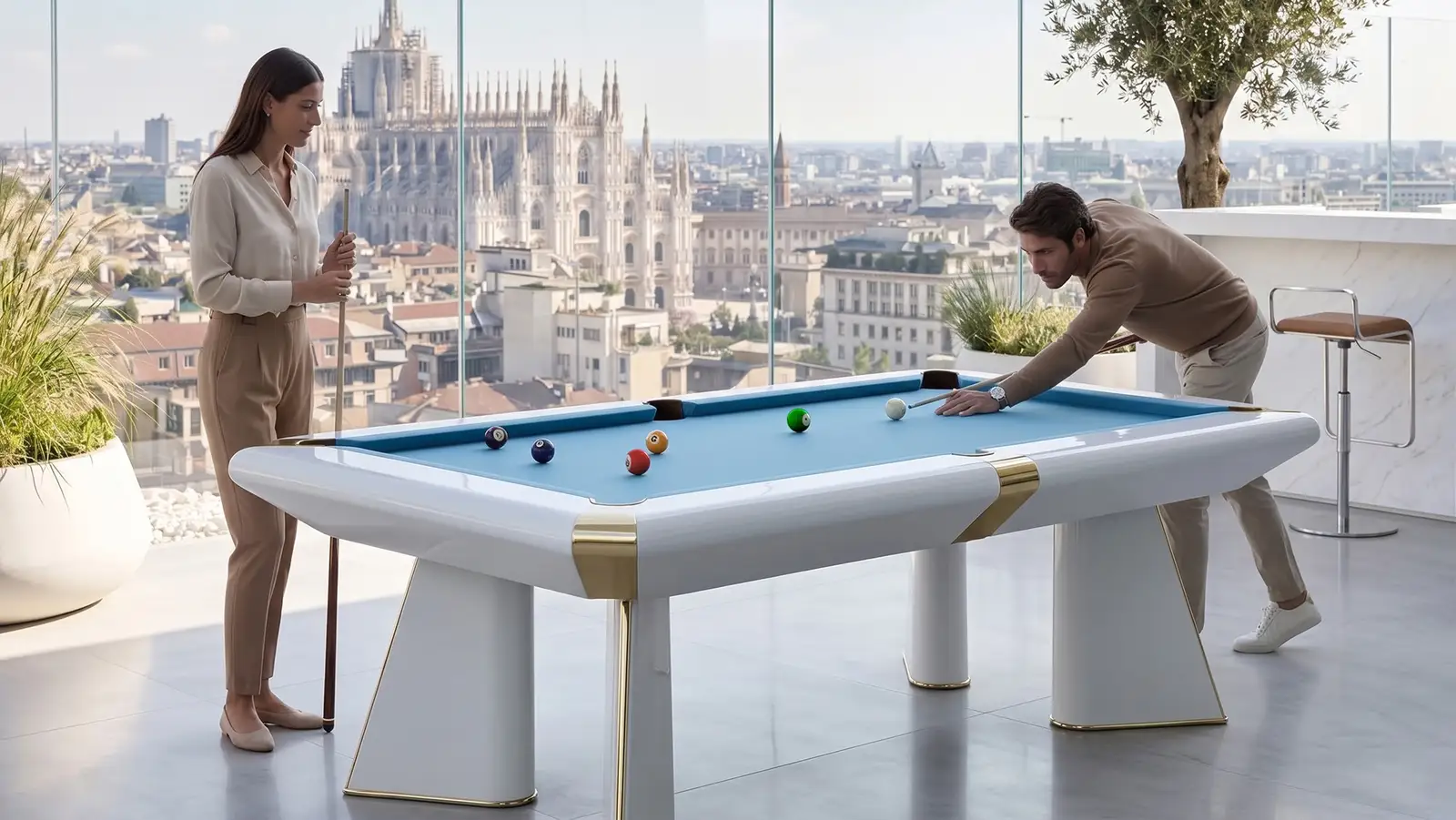
The request came from an Italian company that has been building billiard tables for over two centuries and had no outdoor line. It did not have one because nobody had ever asked, until demand came from private clients in the Gulf countries and, more generally, from high-end hospitality, where the outdoor area is the space that defines a hotel. The company had the demand. It did not have the product, nor the experience to build it for the outdoors with the quality that has always set it apart.
The obvious route was to take an indoor billiard table and replace the materials with outdoor versions. That solution did not hold up, for two reasons that seem separate and are not.
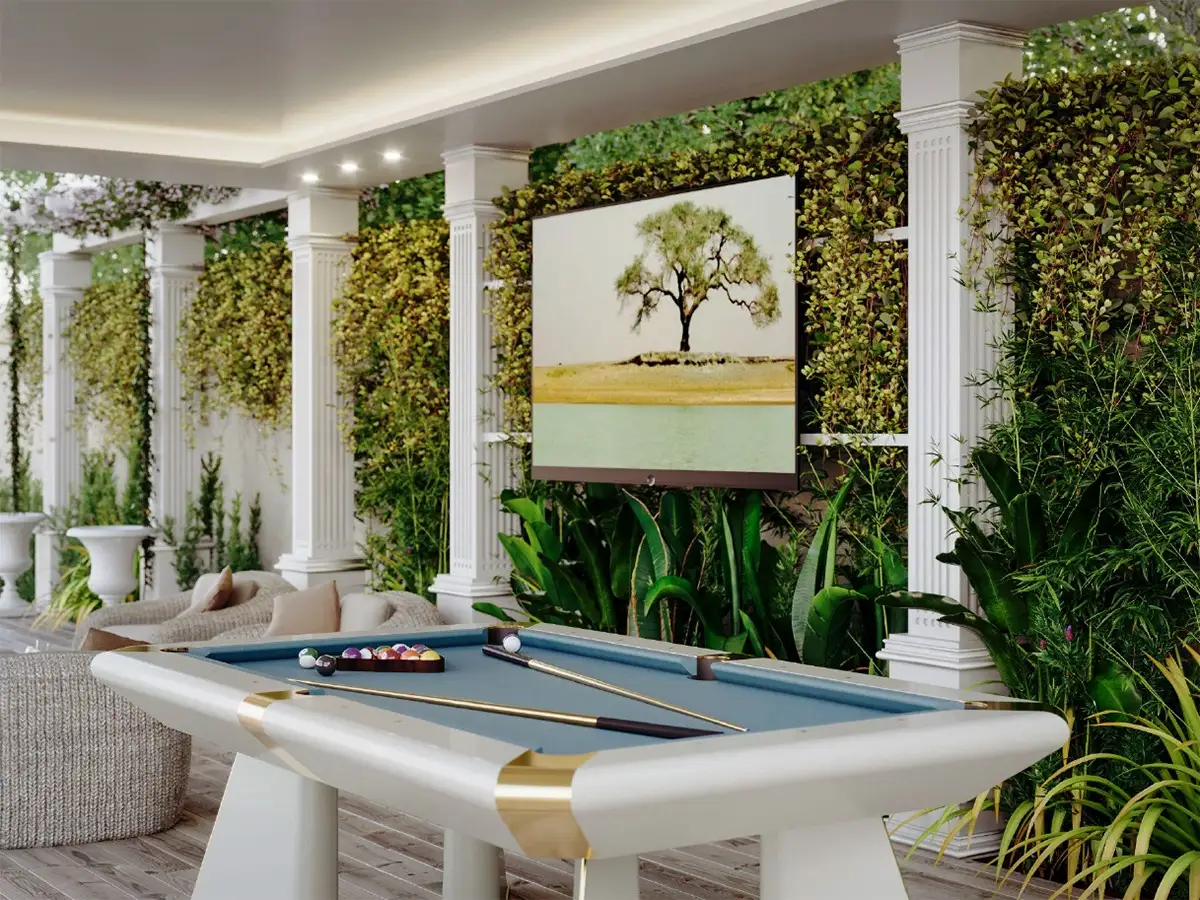
The first is material expansion. The cushion assemblies and playing bed move with changes in temperature and humidity. A table that plays differently in the shade and in direct sunlight is more than a faulty product: it falls short of the playing standard on which the company built its reputation. What deteriorates is not simply the object, but the game — the very reason the object exists.
The second is image. A billiard table designed for indoors, taken outside, reads as an object that ended up there by mistake. In hospitality at that level, this is as serious a problem as the first.
The two have the same origin: an indoor billiard table takes a stable environment for granted, both in its materials and in its form. So adapting an existing product was not enough. It had to be rethought from scratch, designing an object that declared it was made to live outdoors.
The playing bed is where the difference becomes critical. Indoor tables use slate, which can crack outdoors under thermal cycling. Aluminium and galvanised steel were viable alternatives, but introduced another problem: metal expands more than stone. This led to a structural approach in which the rail assemblies and playing bed could move independently, connected through details analogous to expansion joints, so that the playing geometry would remain stable as the components expanded and contracted.
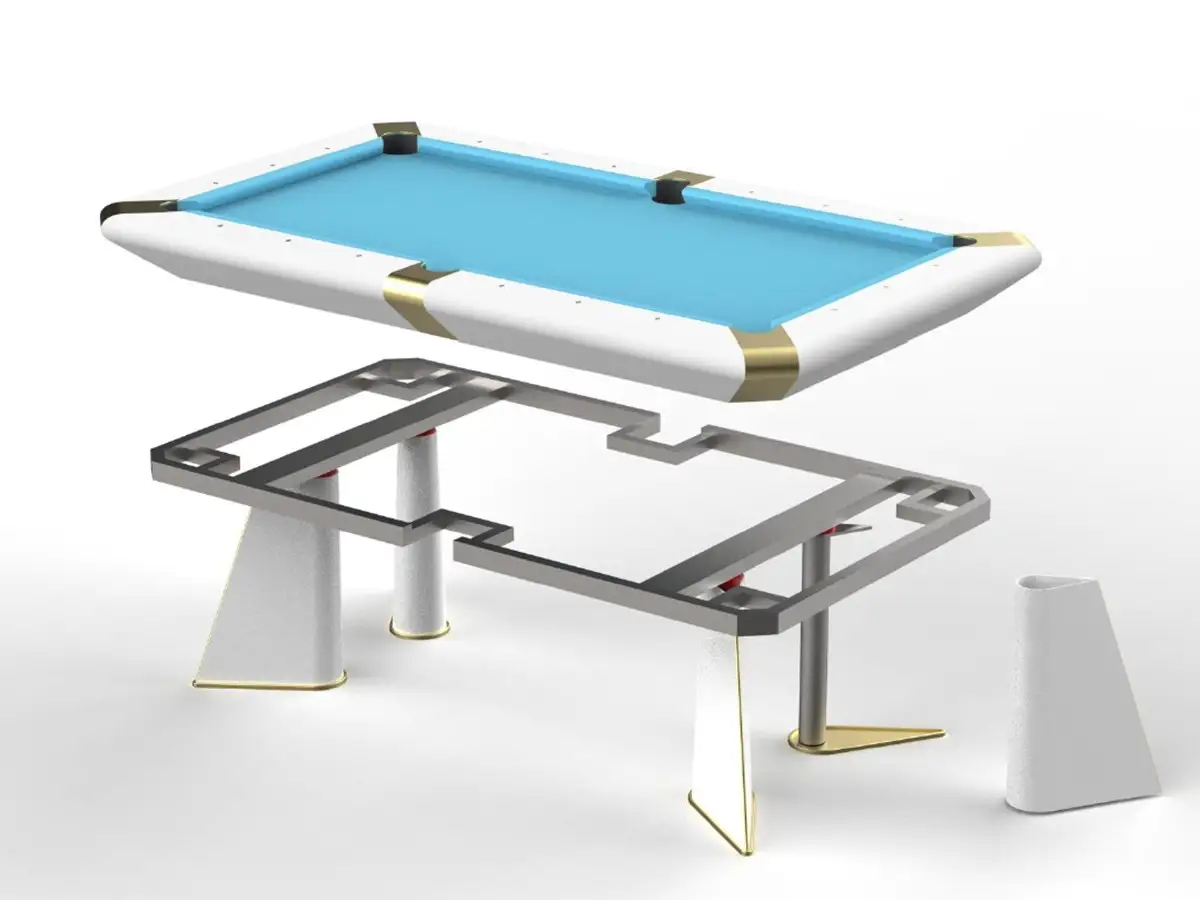
The rebound cushions were specified in natural rubber with weather-resistant additives to improve resistance to UV radiation and heat and help prevent cracking.
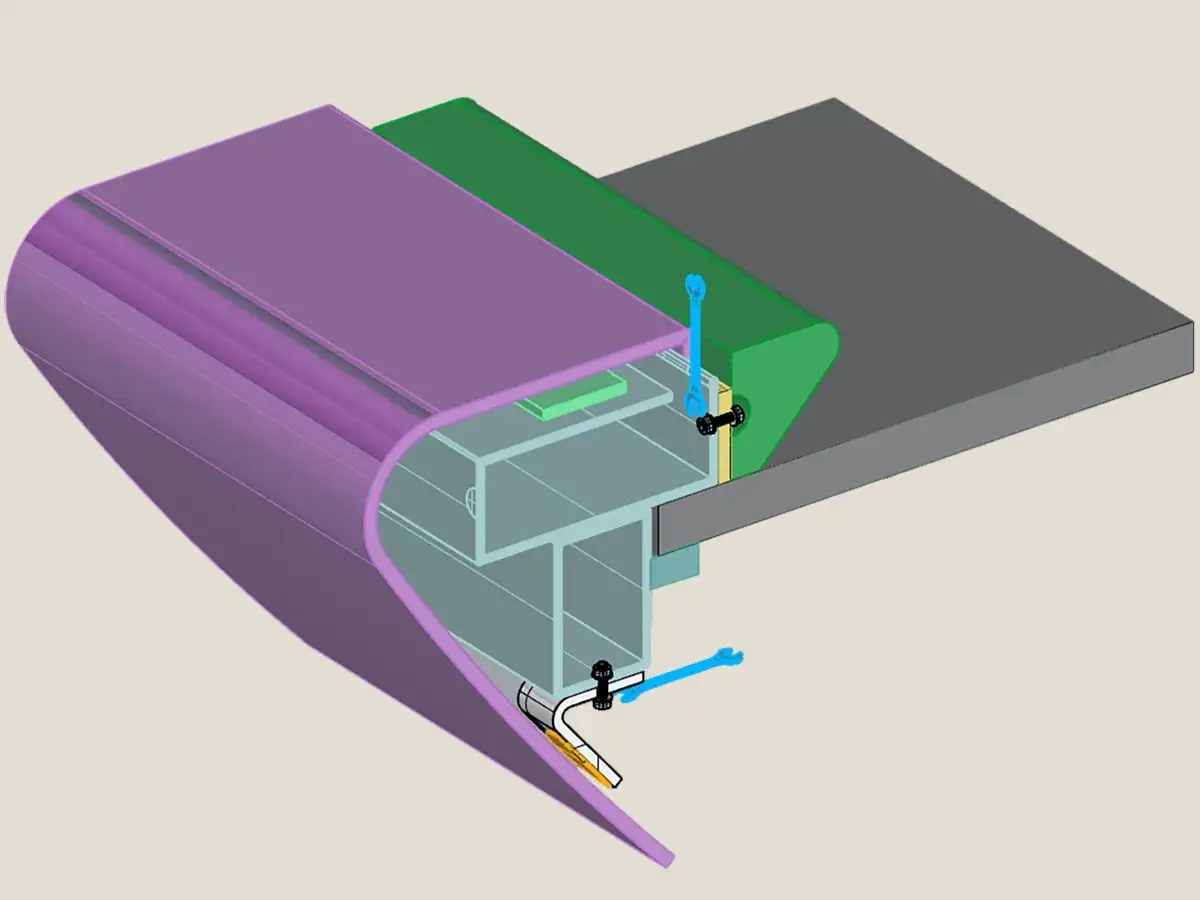
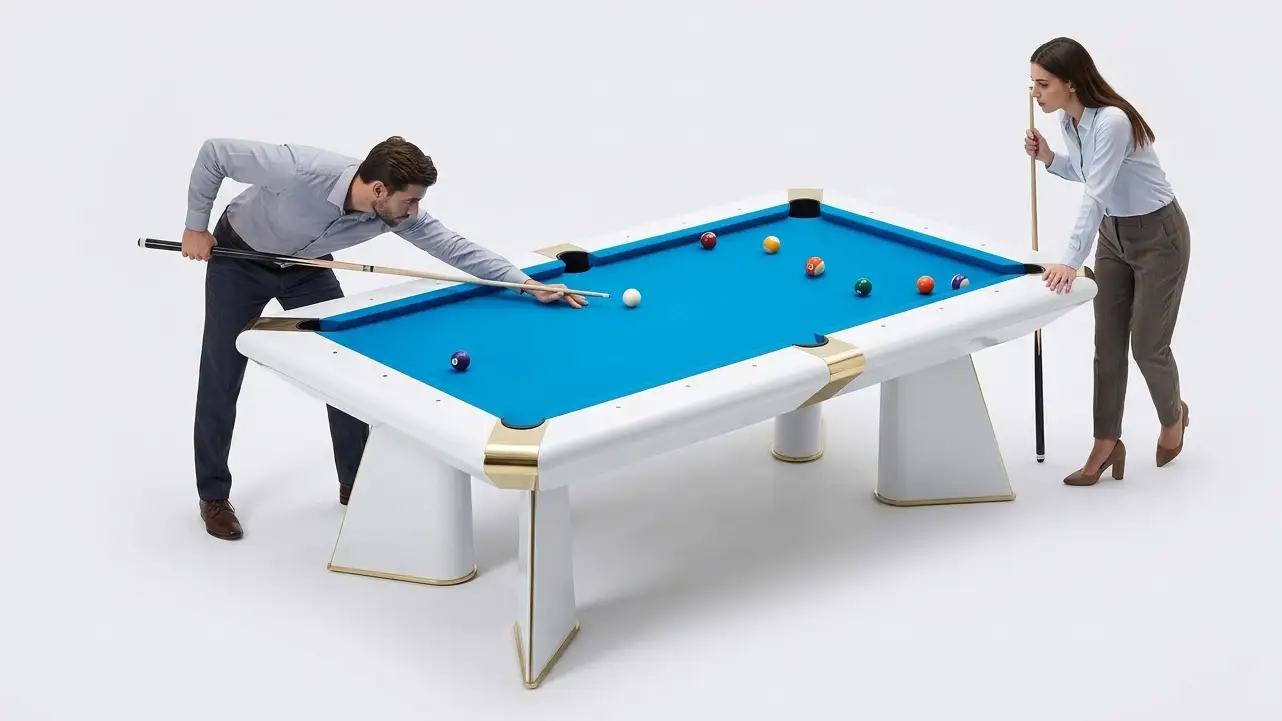
The outer structural rail sections were designed in UV-protected thermoformed PMMA, painted on the inside so that the colour would show through the material. Any RAL colour could be specified. For high-end clients, customisation is integral to the product, not an optional extra. Colour studies therefore explored how the table could coordinate with the materials of its surroundings.
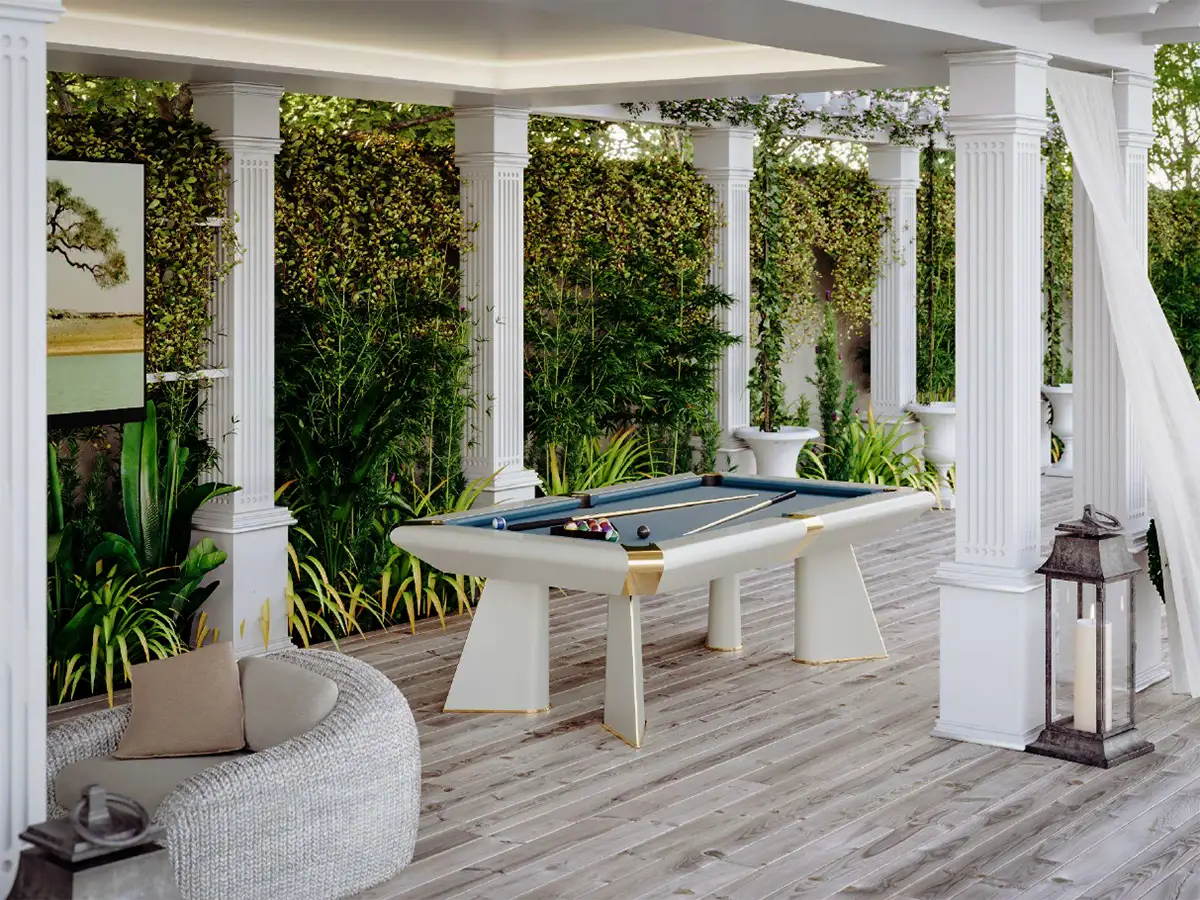
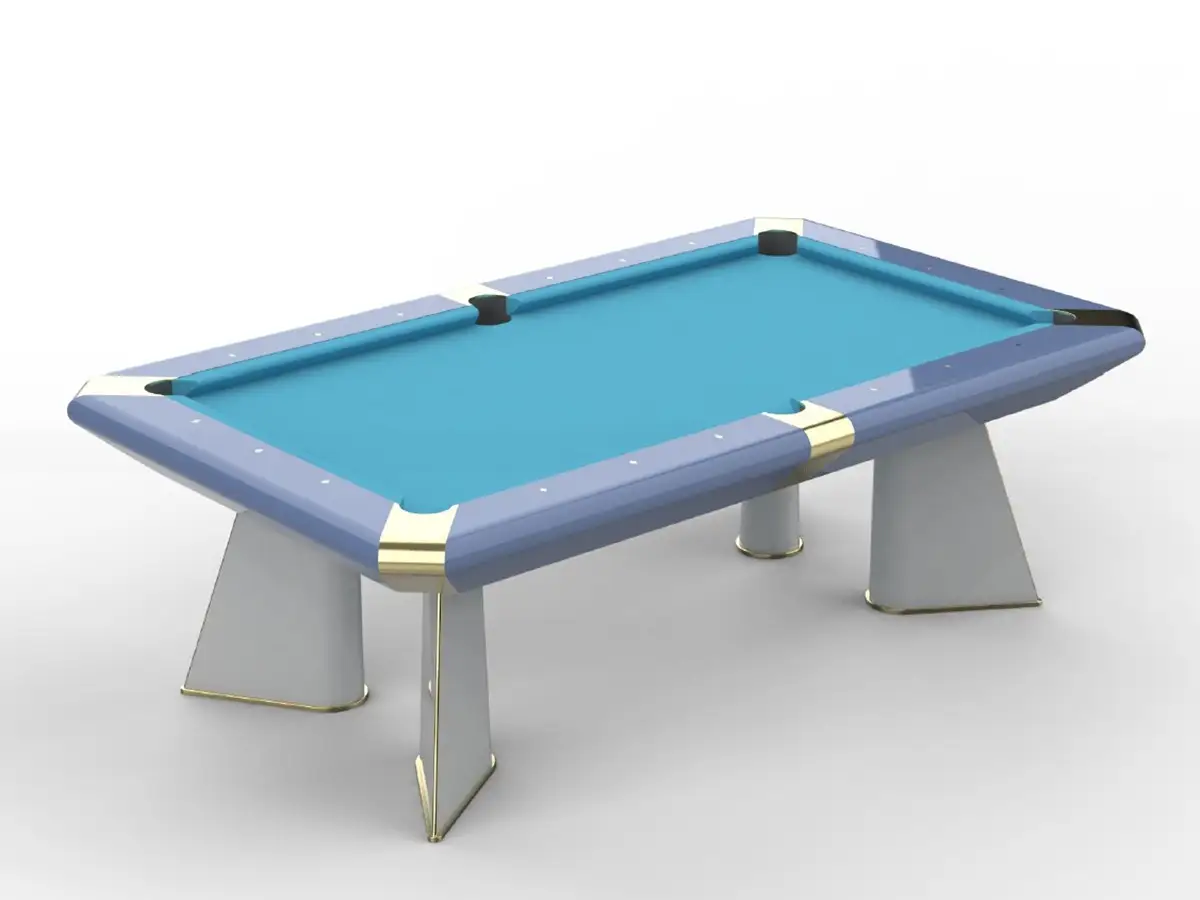
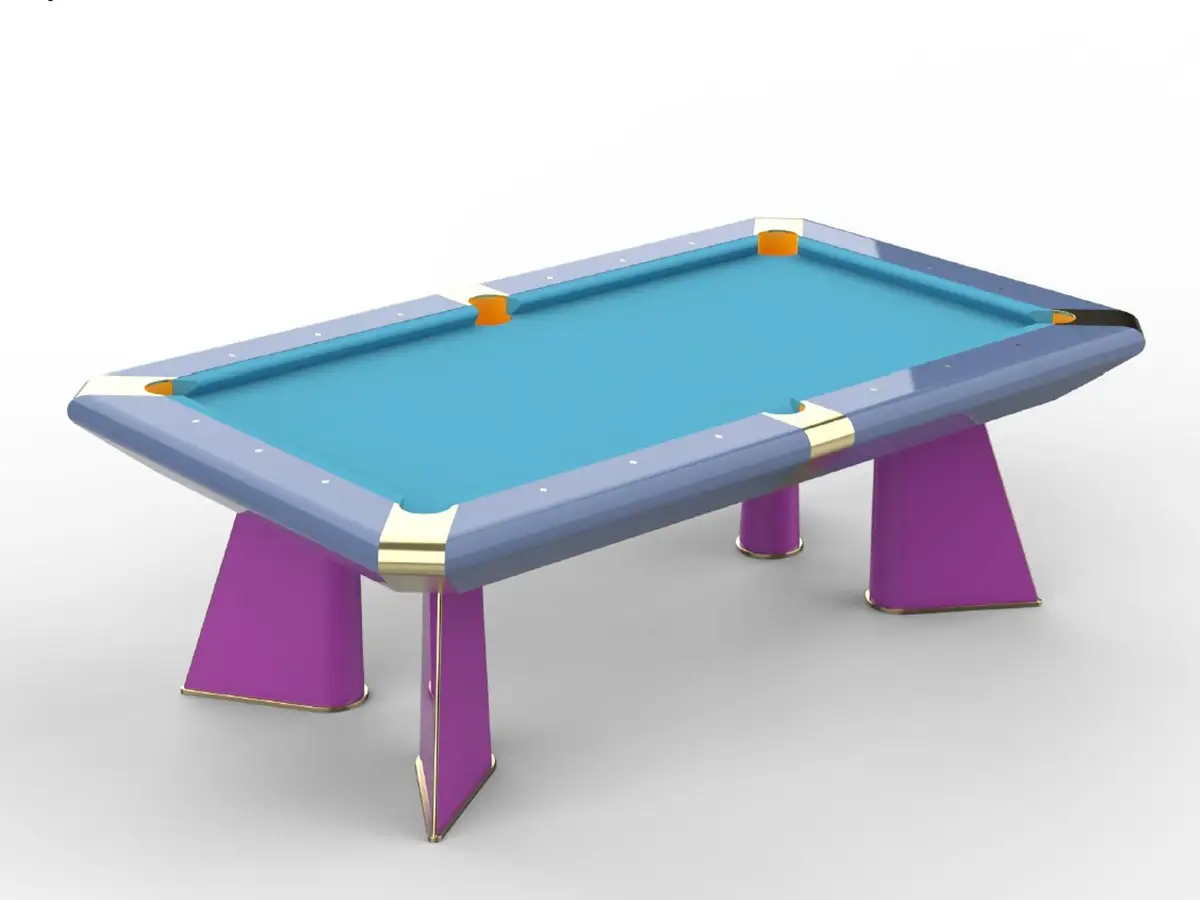
Beyond that point, the studio could no longer develop the project alone. Tolerances, material testing and comparisons between the costs of alternative playing beds had to be assessed with the company’s engineers, using its production facilities and cost data. That stage never took place. The company did not return to the discussion, and the project stopped at an advanced stage of development.
The demand that had prompted the project, however, was real — and remains.
What we learnt
A designer’s work succeeds when the company brings its engineers into the discussion to assess and validate the proposed options. Here, that commitment only went so far, and the project stopped just before becoming a product.