
Shipping and assembly
Demountable glass table
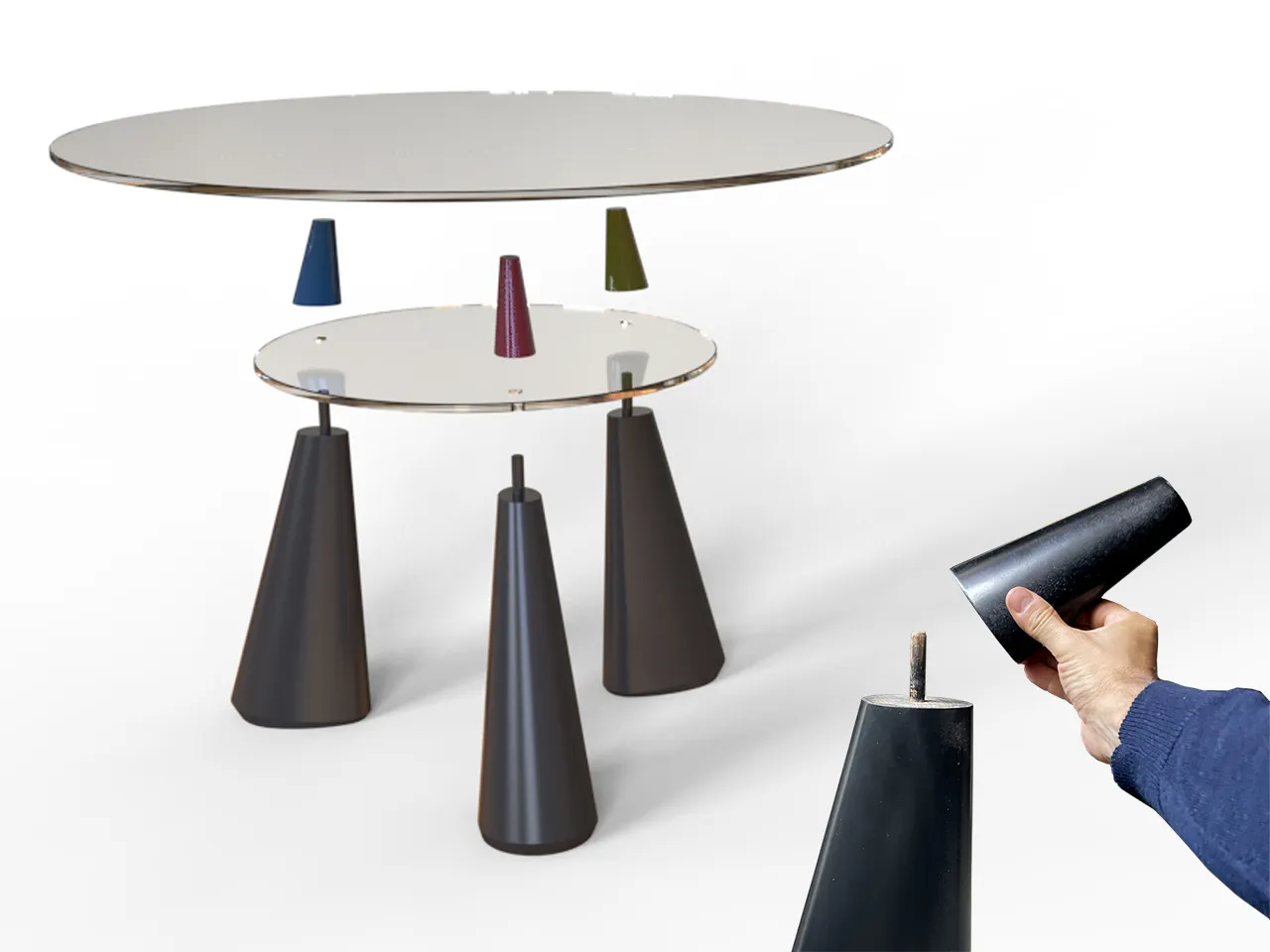
A glass tabletop that simply rests in place, held by its own weight. A lower glass panel with openings holds the legs in position, while the tabletop rests on spacers above it. The components lift apart for disassembly and can be shipped separately.
- 01Glass must remain the protagonist
- 02The glass works structurally with the legs
- Type
- Self-initiated proposal
- Sector
- Glass furniture
- Status
- Prototype in the final materials
01
Glass must remain the protagonist
The table began as a proposal for a company specialising in thick glass bonded with UV-curing adhesives, creating load-bearing assemblies without visible joints. Designing a table for such a specialist was a challenge. Any structure beneath a glass top risks diminishing its character, making it feel less free and less ethereal than glass simply resting on supports. We wanted the glass to remain the defining element, with components that could be separated for shipping and reassembled at home.
02
The glass works structurally with the legs
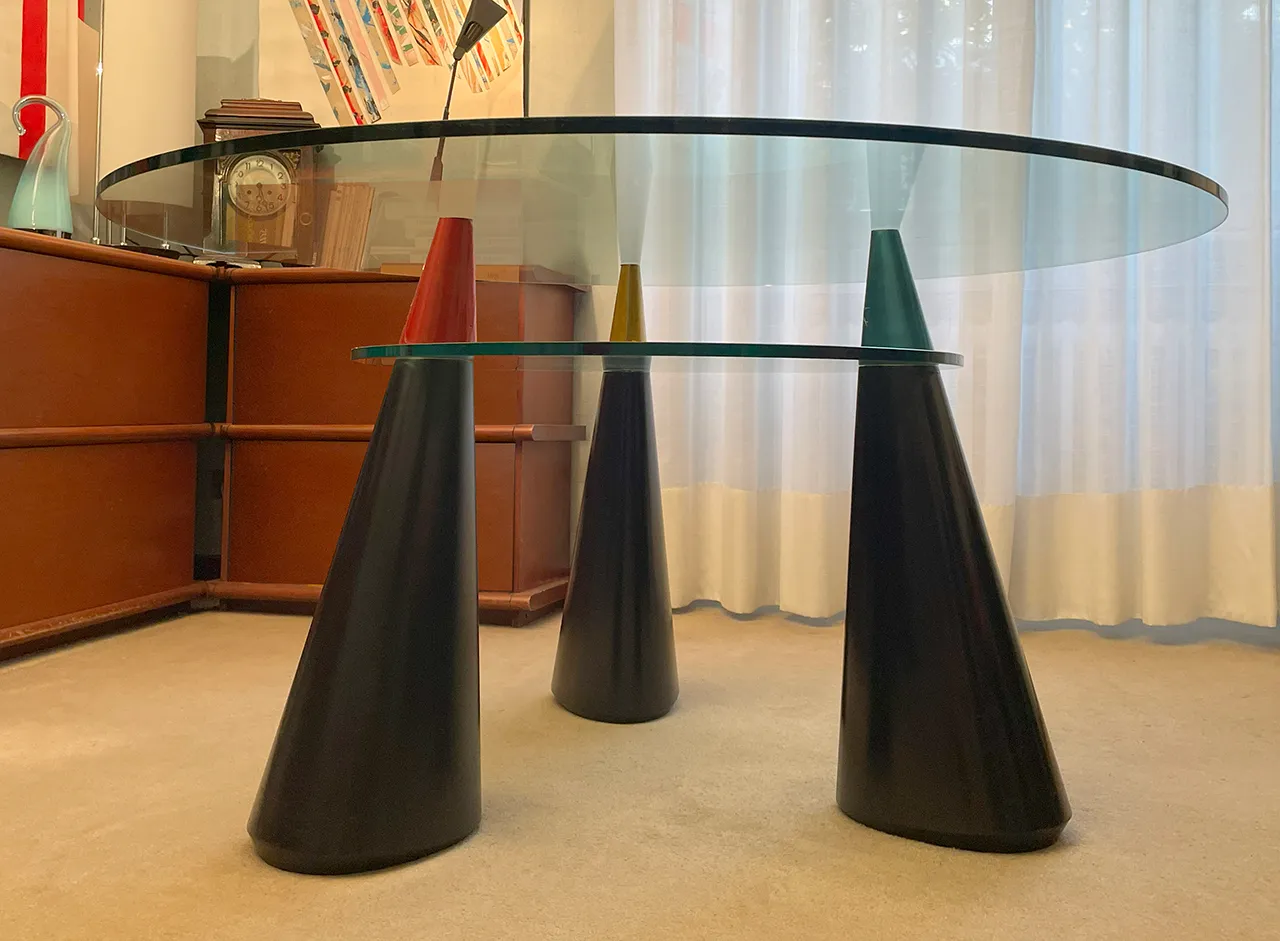
We used the glass itself as part of the structure. The legs are heavy vertical elements. A smaller glass panel below the tabletop, with three or four openings, holds them in position. Spacers rise from the legs to support the tabletop, which remains in place under its own weight. No screws or adhesive are needed: the components are stacked to assemble the table and lifted apart to dismantle it. The legs can be made from turned wood, as in the prototype, or fabricated from sheet metal into box sections. The principle works for both the three-legged round table and the four-legged rectangular version.
Where it can lead
Resting freely on its supports, the glass regains the sense of lightness and freedom inherent in its transparency.