
Manufacturability
Folded sheet-metal bookcase
How can sheet metal lose its sharp-edged appearance? By folding it back on itself around a generous radius until it becomes a substantial upright. Two uprights support shelves, cabinets and drawers: a proposal for a company already skilled in metalworking.
- 01The inherent character of sheet metal
- 02A wide fold turns it into volume
- Type
- Self-initiated proposal
- Sector
- Metal furniture
- Status
- Concept
01
The inherent character of sheet metal
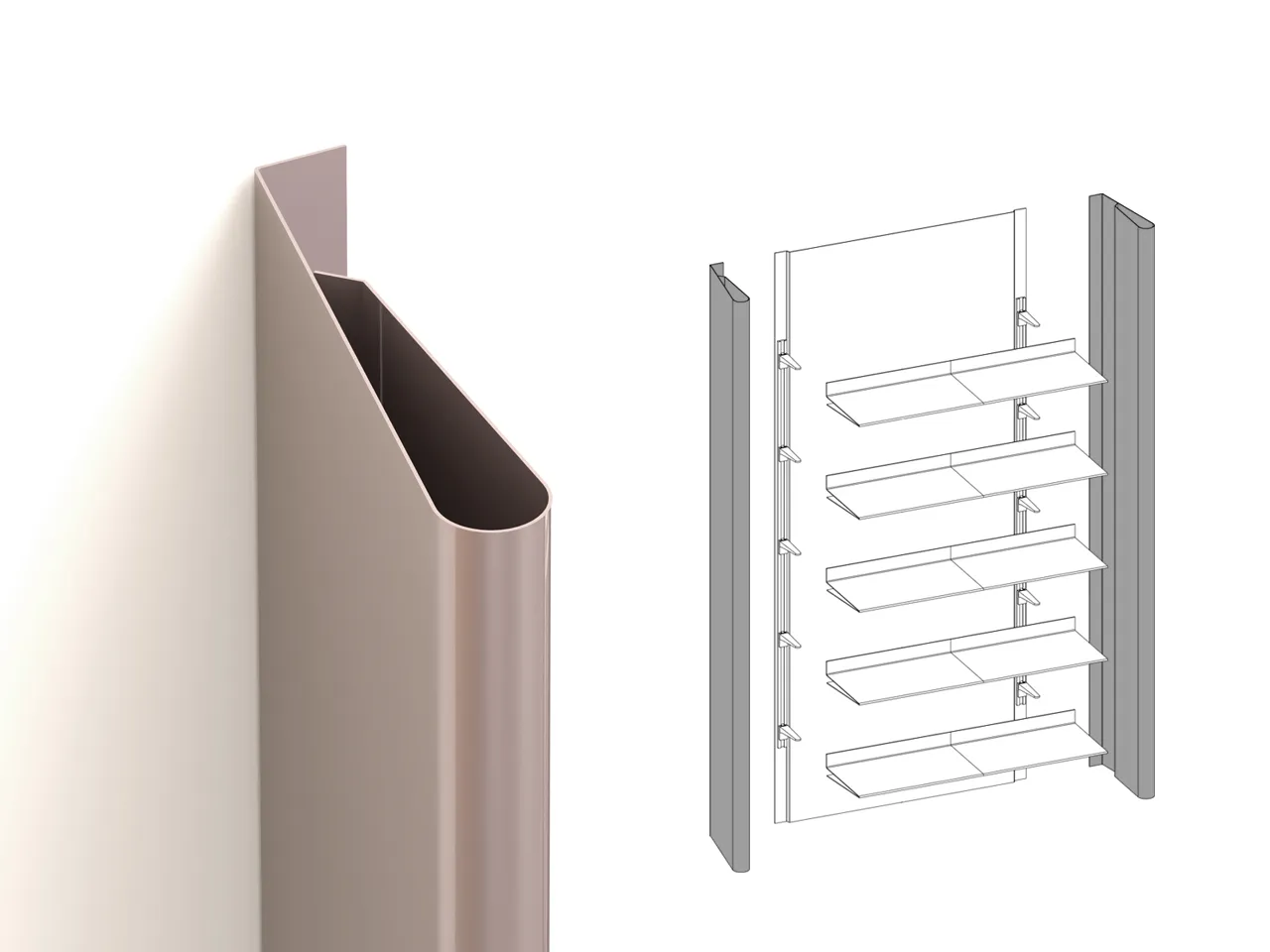
We started with the material the company knows best, drawing on its extensive expertise in metalworking and electroplating. Sheet metal has a distinctive character: it is thin, and its edge looks sharp even before it is touched. We wanted to use it as the structure of a bookcase without it looking like a sheet simply folded at an angle, giving the piece a stronger sense of volume and presence.
02
A wide fold turns it into volume
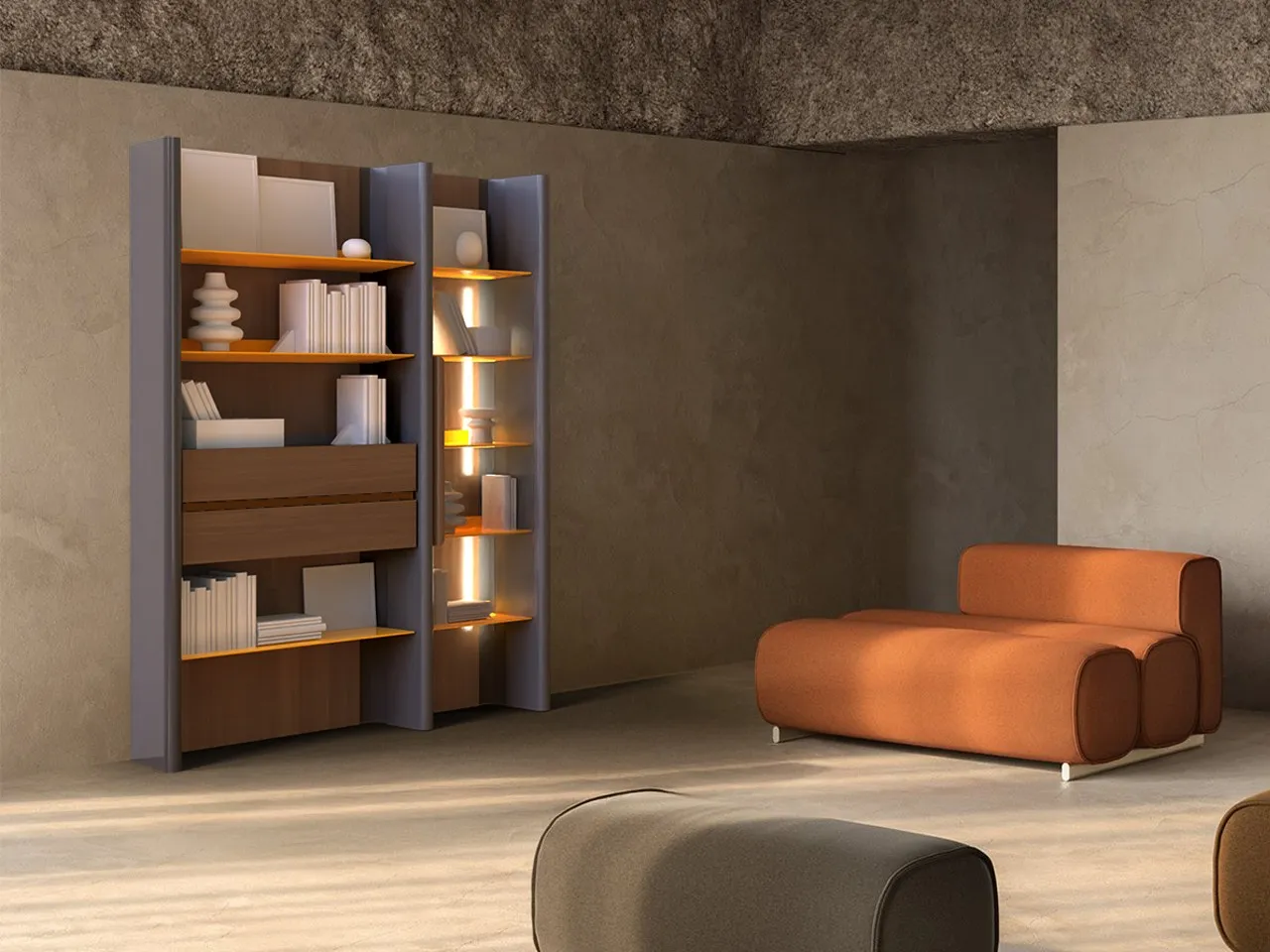
Folding the sheet back on itself around a generous radius was enough. The upright acquires a soft, substantial presence while remaining a sheet of metal: minimal material and a simple manufacturing process. This became the basis of a system. Two uprights support modules 60 or 110 centimetres wide, fitted between them: back panels; metal, glass or MDF shelves; drawers; cabinets with flap doors; glass-fronted display cabinets; and LED modules. The same operation — the fold — creates both form and structure.
Where it can lead
Reinterpreting a familiar furniture type by giving an everyday material — sheet metal — a new sense of volume.