
Ergonomics
Colors
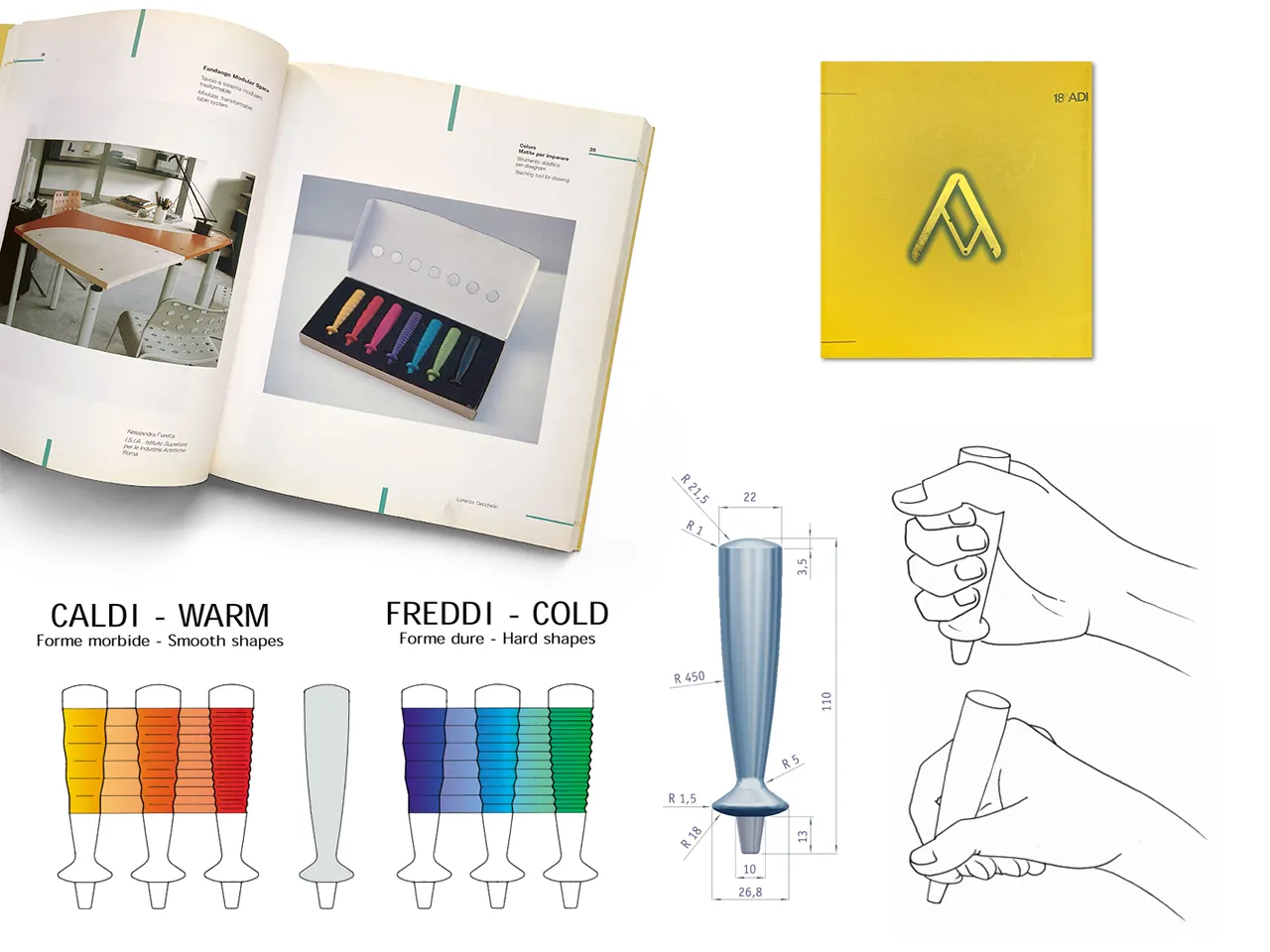
Pencils designed to help children who find it difficult to distinguish colours identify them by touch. Rounded ridges indicate warm colours; angular ridges indicate cool colours, with a shape suited to a fist grip. Recognised with an award in 1998, the design is now being reimagined in recycled graphite waste, with no sharpening required.
- 01Recognising colours by touch
- 02Reimagined in recovered graphite
- Type
- Independent research
- Sector
- Stationery, recycled materials
- Status
- Concept
01
Recognising colours by touch
We began with an observation: people who find it difficult to distinguish colours can be helped by associating each colour with a tactile quality. Pencils in warm colours have rounded ridges; those in cool colours have angular ridges, while black is smooth. For children, there is a second consideration: at preschool age, pencils are often held in a fist grip. The set of seven pencils addresses both colour recognition and grip. In 1998, the project received the Targa Giovani at the 18th ADI Compasso d’Oro and was published in the award catalogue, but it did not enter production.
02
Reimagined in recovered graphite
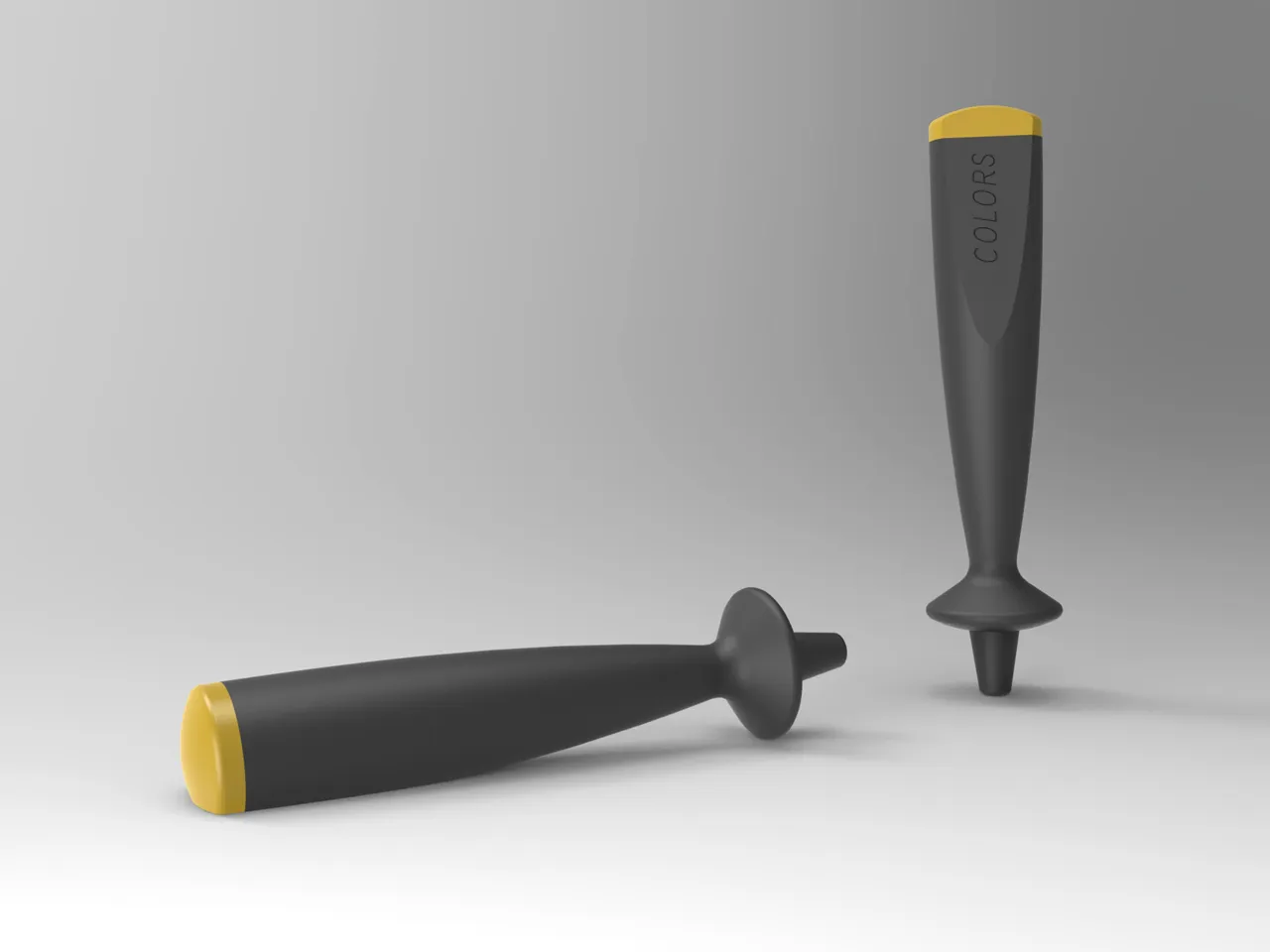
The project remained on hold until a chance encounter with a company making pencils from waste graphite powder recovered from the manufacture of electrodes and diamond cutting tools. This provided the technical starting point for rethinking Colors. Reusing an industrial by-product builds on the original ideas and adds a new feature: the pencil never needs sharpening. Only the tip wears down during use, leaving the ridges that form the grip intact — and preserving the tactile colour code.
Where it can lead
A design conceived for conventional materials and manufacturing can take on new meaning when reimagined around a recovered material and the thinking behind its reuse.